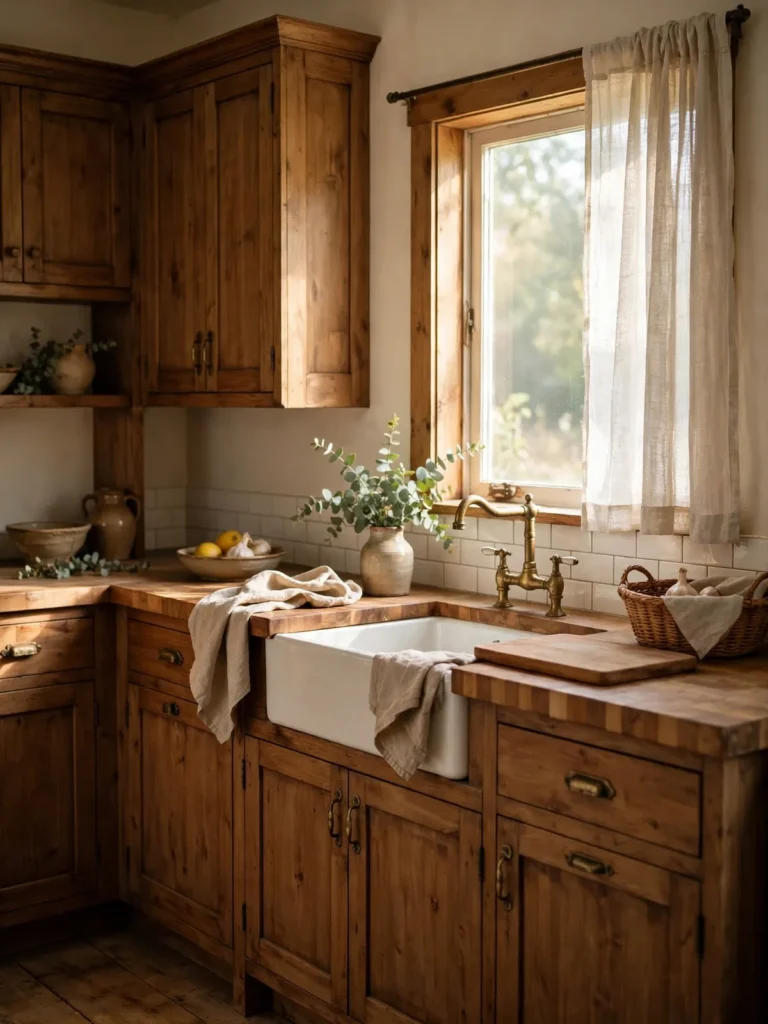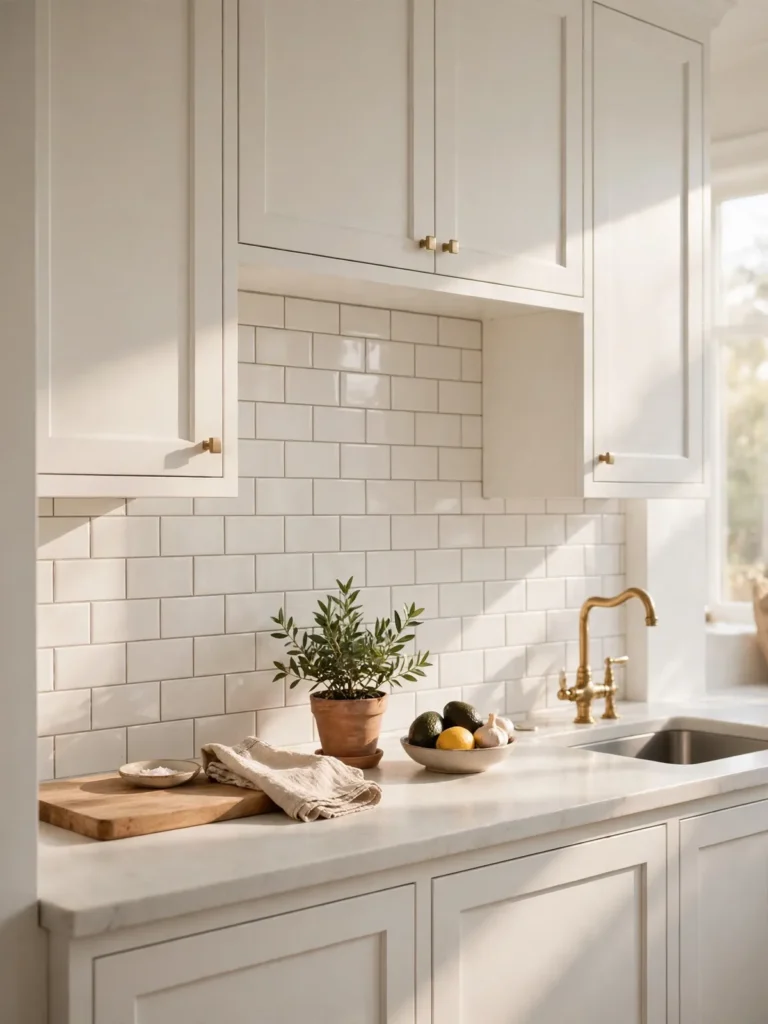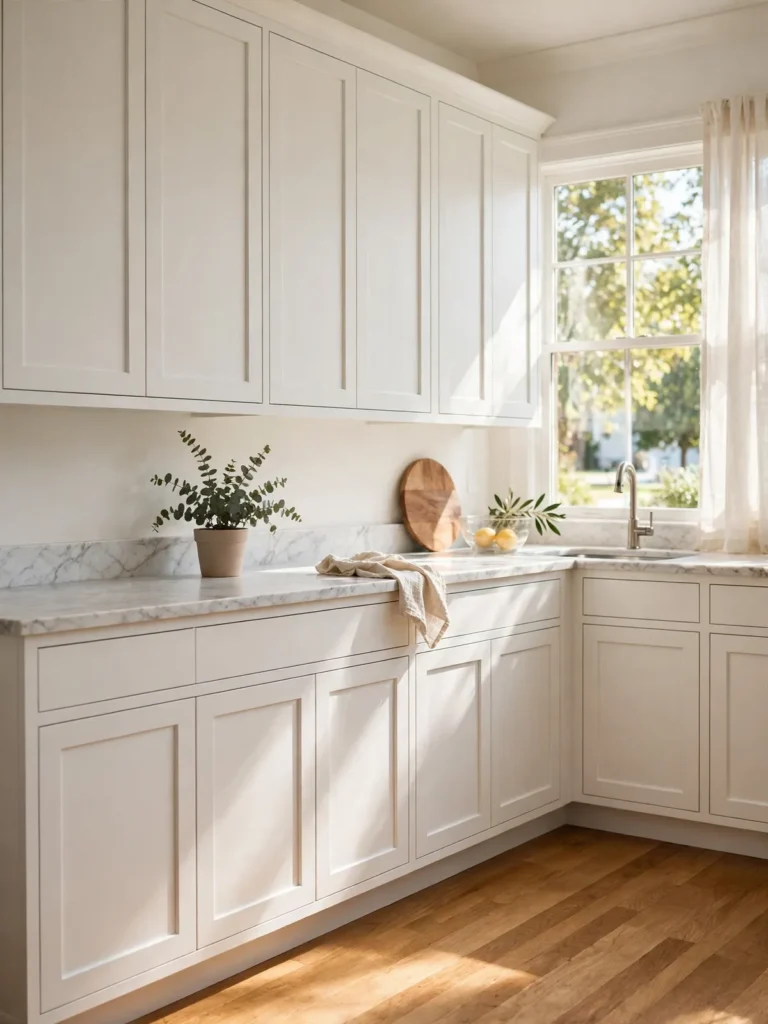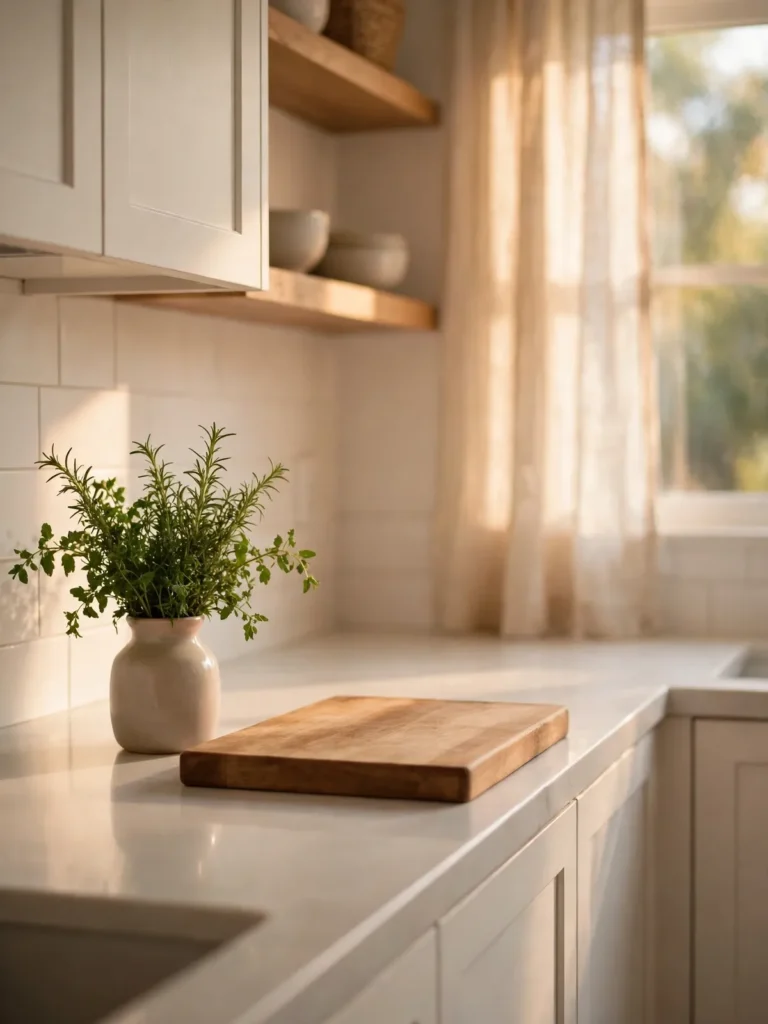
Open Kitchen Shelf Styling Ideas
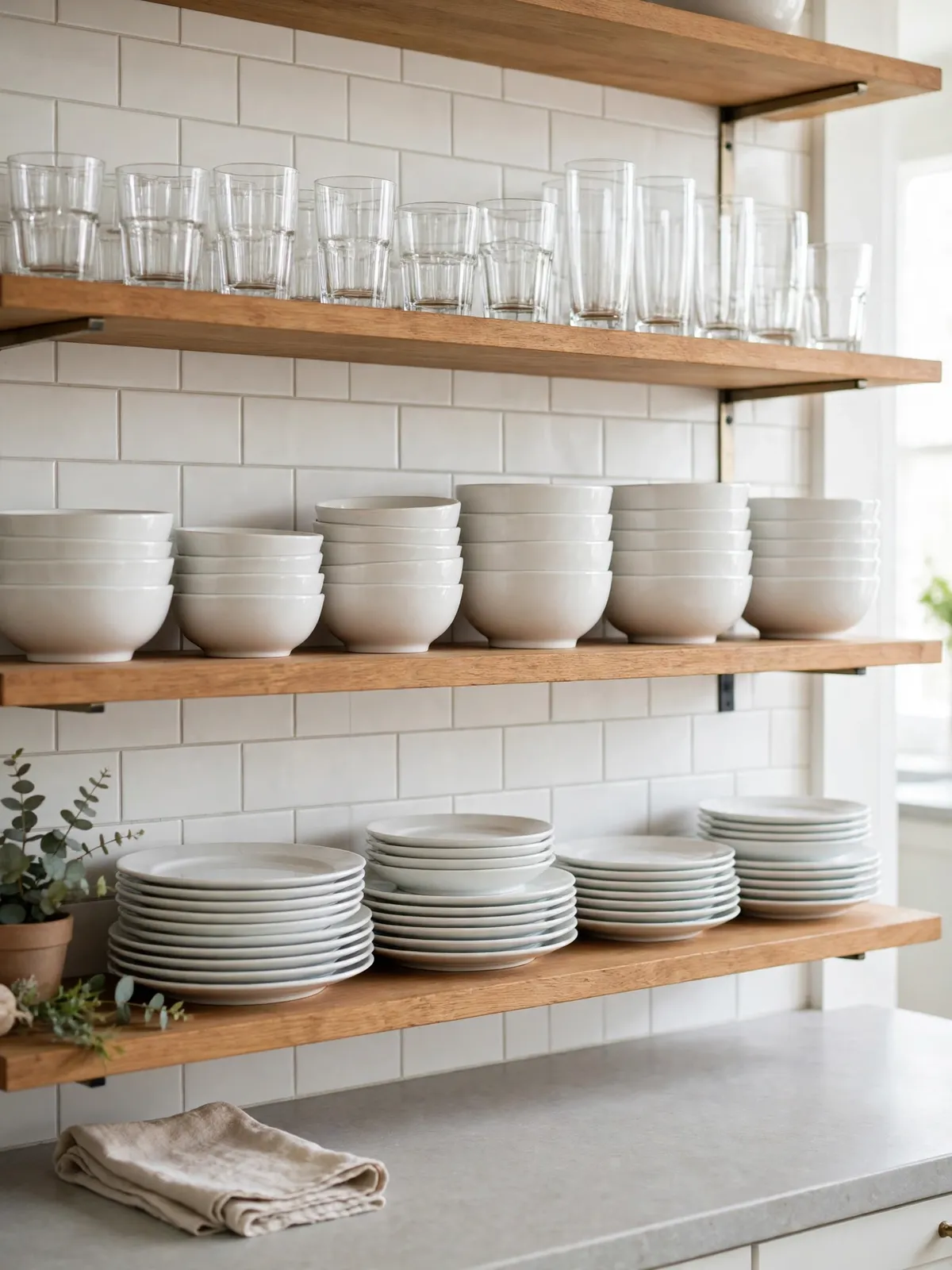
Open kitchen shelves can make a kitchen feel light and welcoming, and they put the things you use every day right where you can reach them. Instead of hiding dishes behind closed doors, you get to show off the plates, bowls, and glasses you actually like, and the whole kitchen feels more open because of it.
Styling open shelves is not about buying a lot of new decor. It is mostly about picking the right pieces, giving them room to breathe, and keeping the look simple enough to live with. This guide walks through easy ideas that work in real kitchens, so your shelves look good and stay useful.
1. Why Open Shelves Work in Kitchens
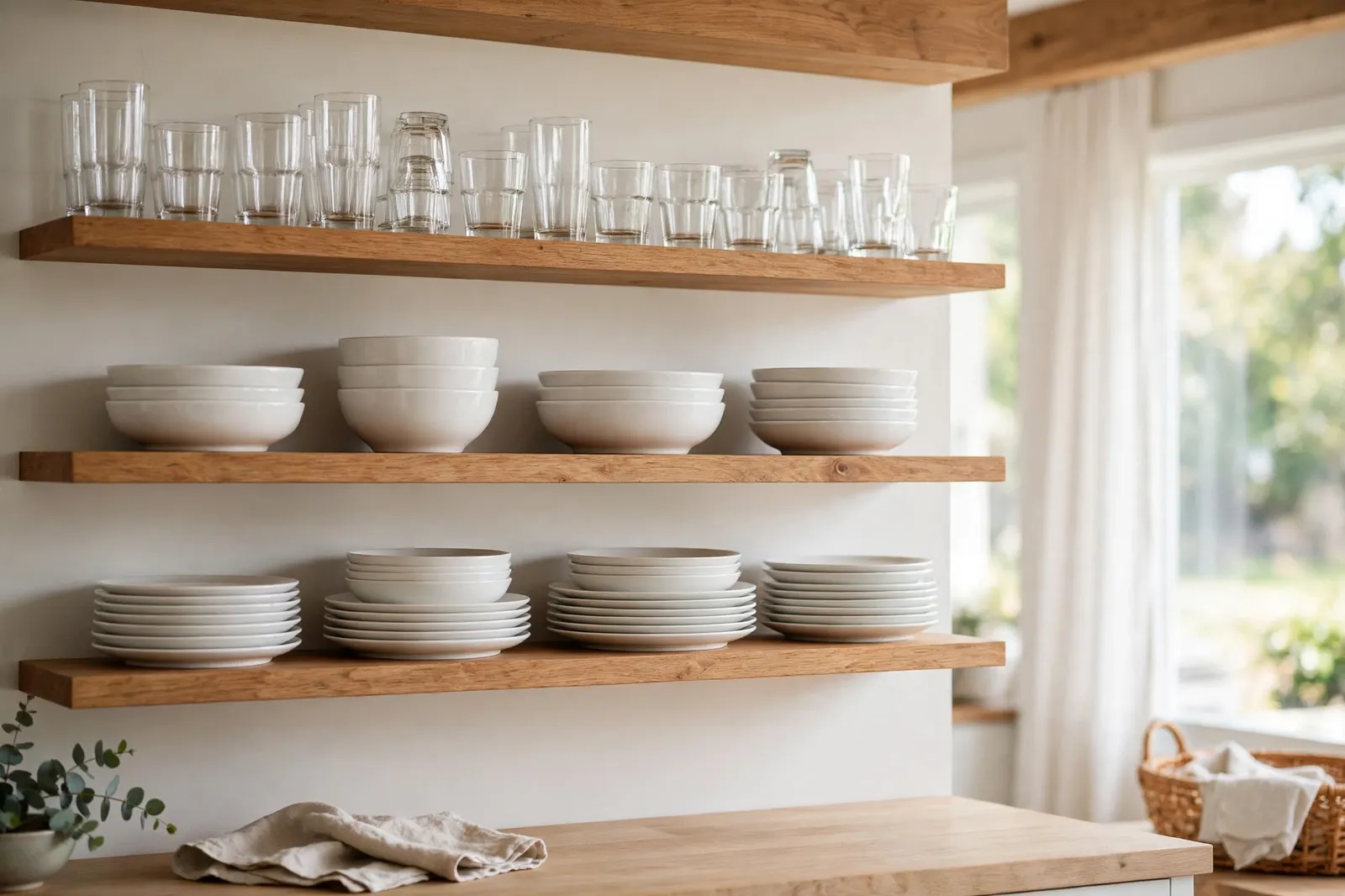
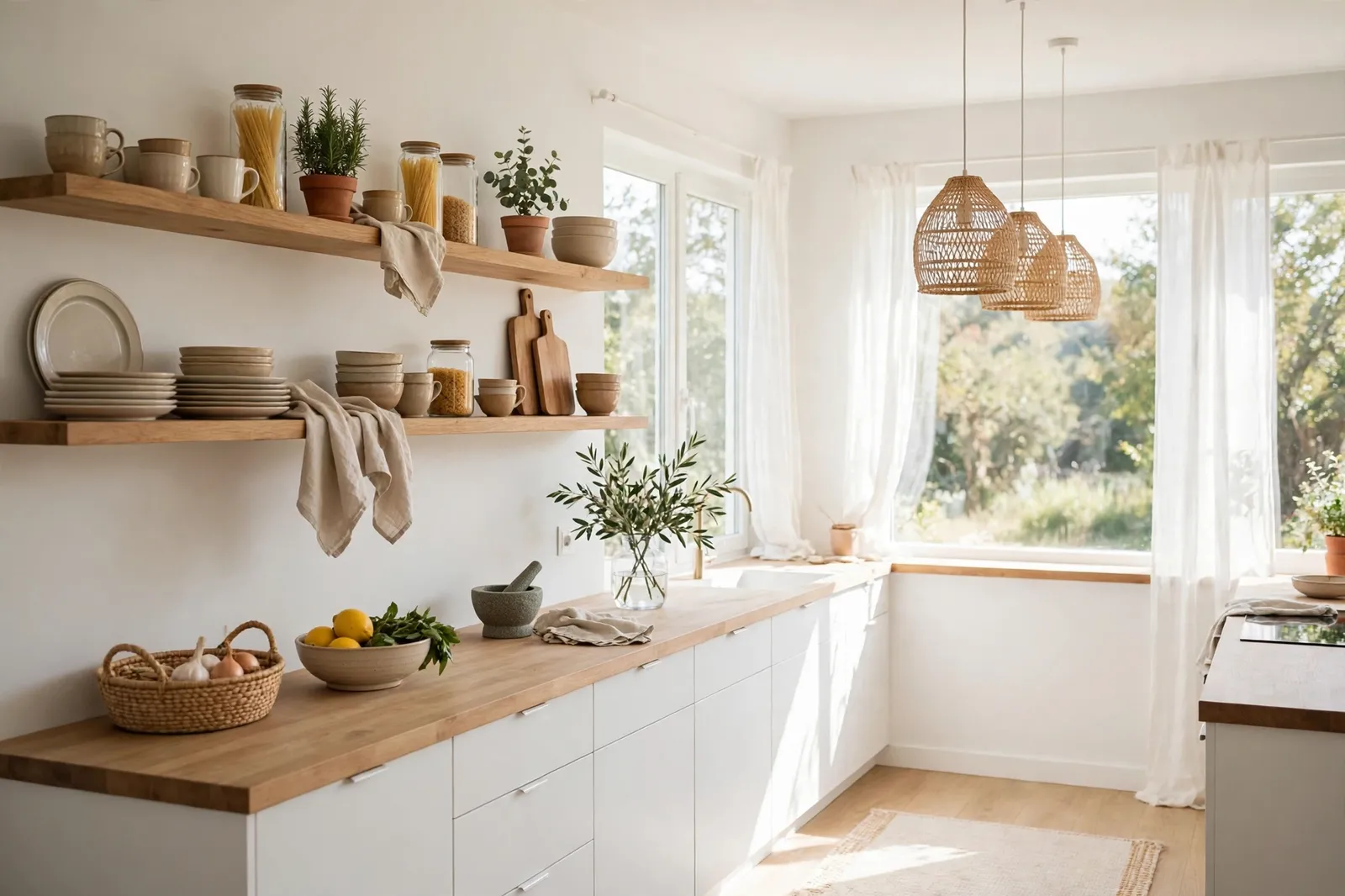
Open shelves make a kitchen feel bigger, especially a small one. Closed cabinets can make a wall feel heavy, while open shelves let light and air move through the room. They also make it easy to grab a plate or a glass without opening and closing doors all day.
They work best when you treat them like a mix of storage and display. The dishes you use daily go on the shelves, and the prettier pieces sit where you can see them. When the shelves hold things you truly use, they never feel like wasted space, and the kitchen feels lived in rather than staged.
2. Start With Everyday Dishes
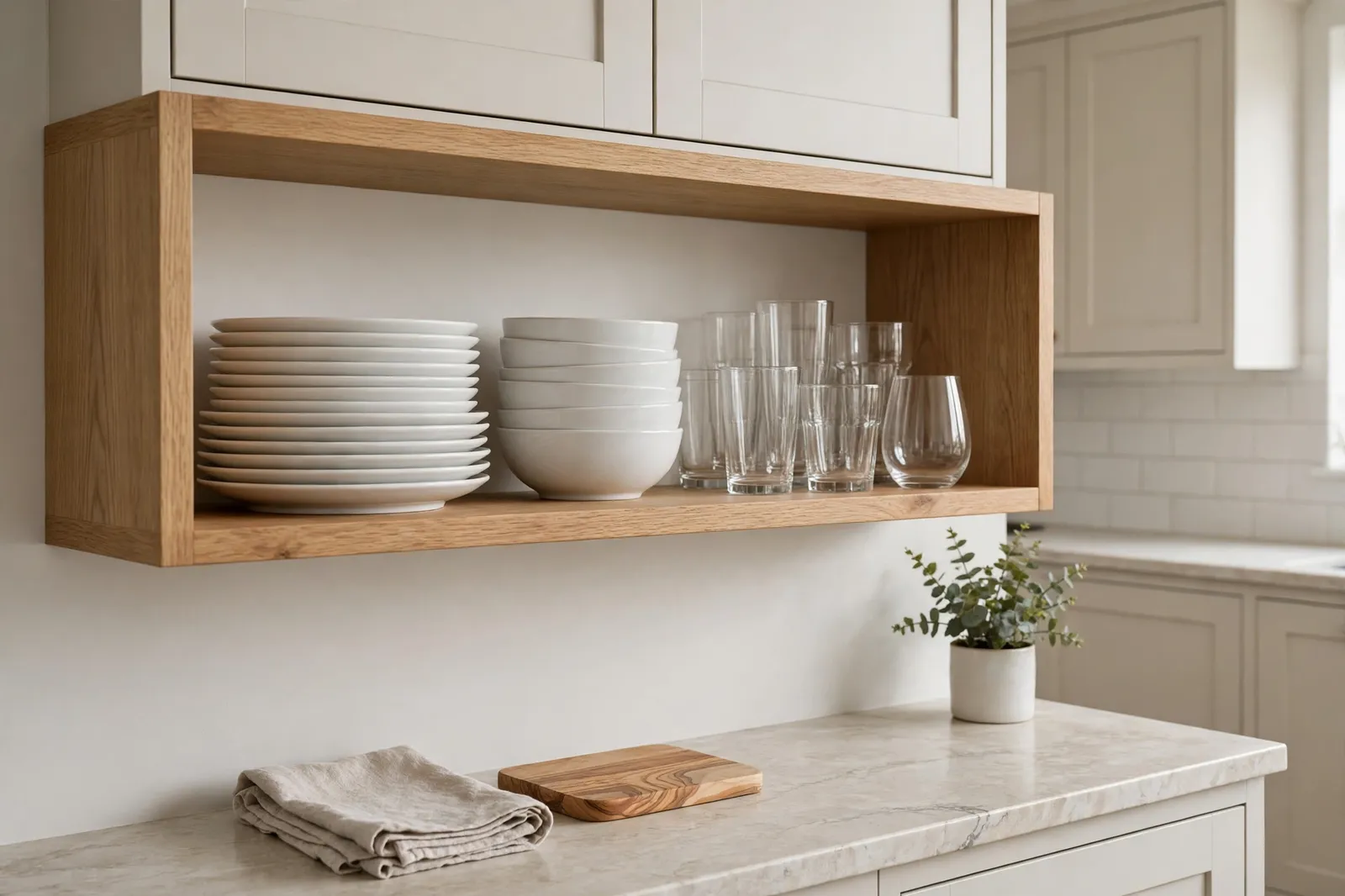
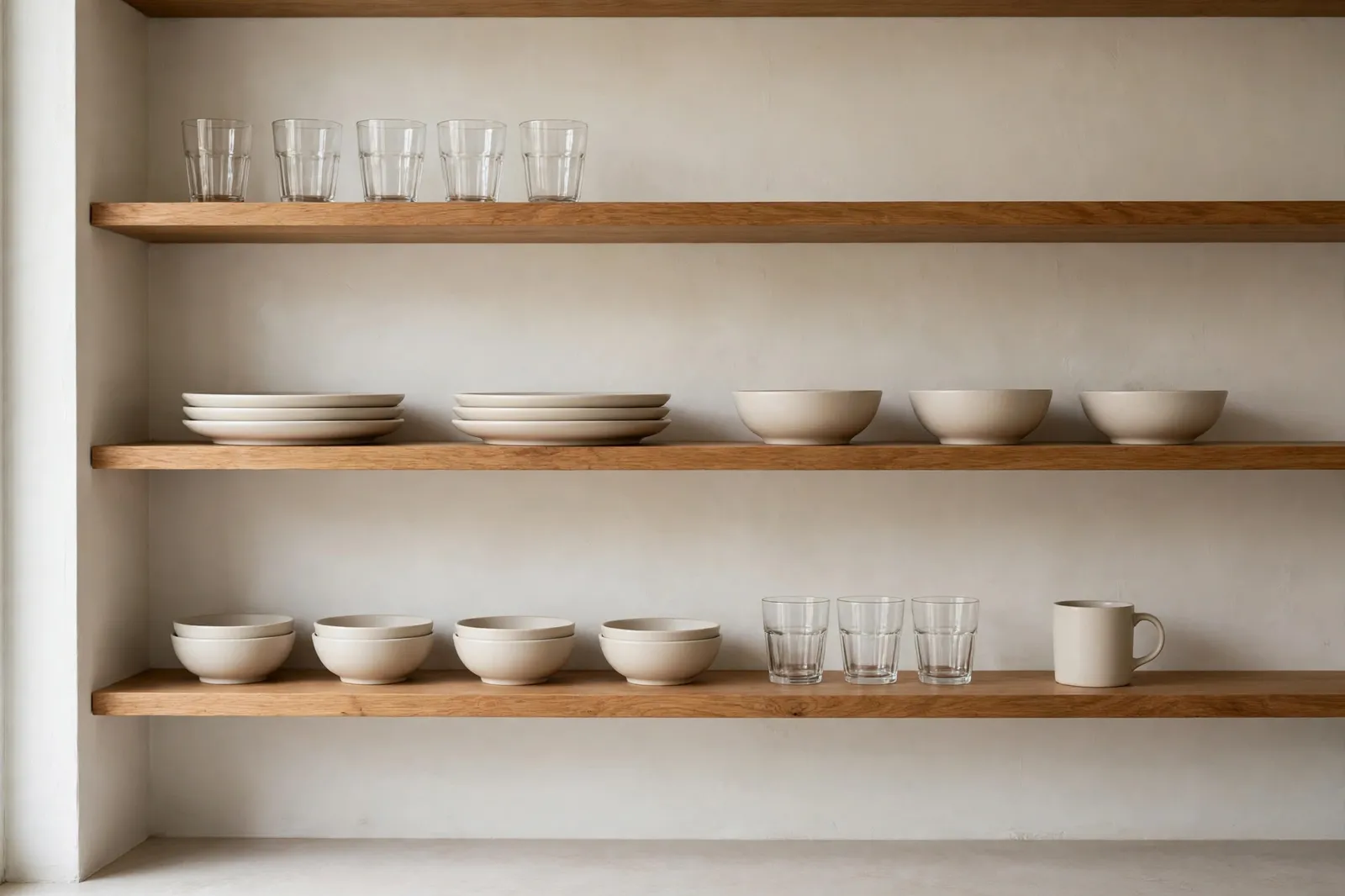
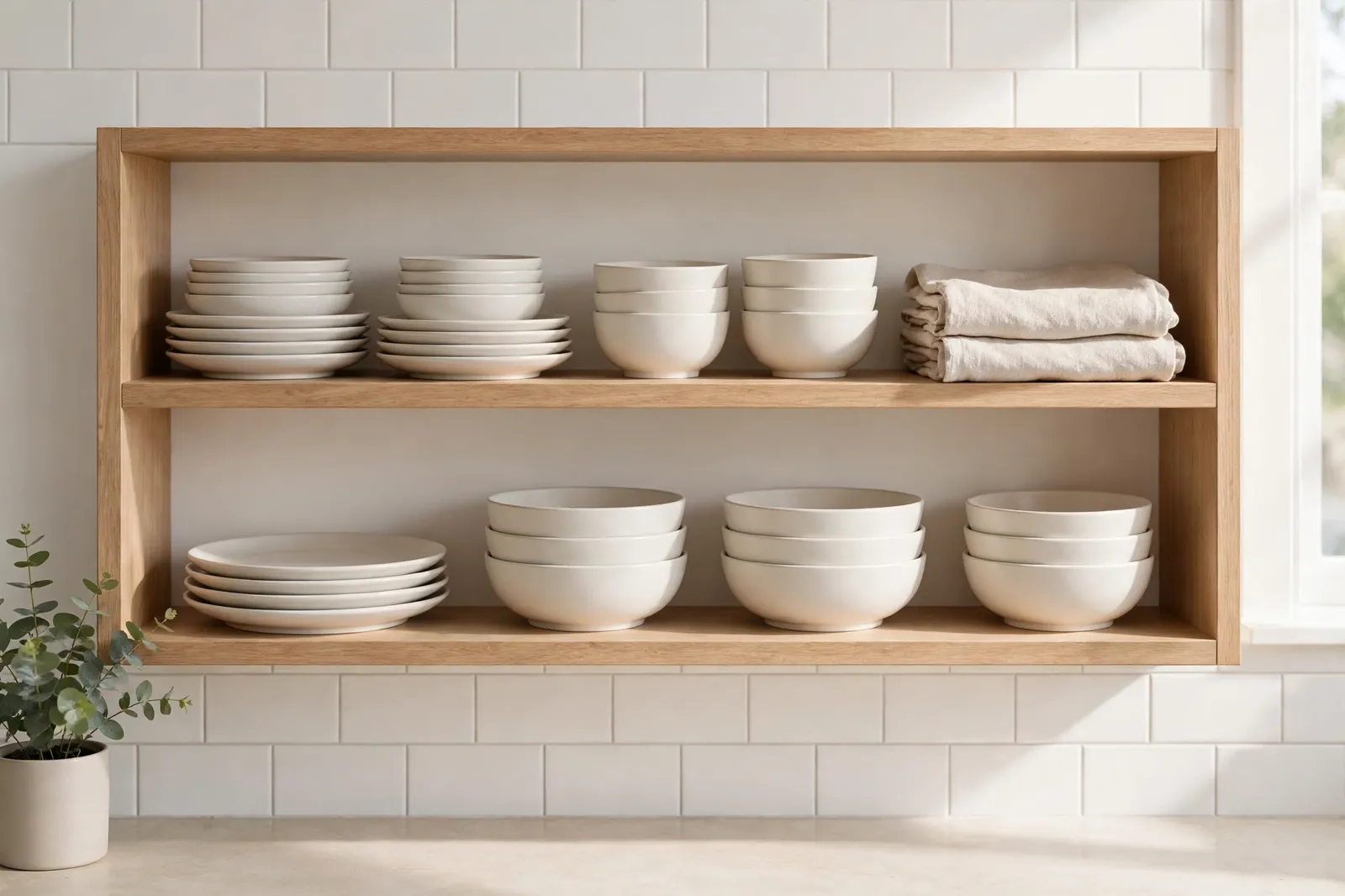
The easiest way to style open shelves is to start with the dishes you already use. Stack white plates, line up bowls, and group glasses together, and you already have a clean look. Simple dishes in one or two colors look calm and tidy, even when the shelf is full.
Do not save your best dishes for guests and hide them away. If you love a set of bowls or a few pretty mugs, put them on the shelf where you see them every day. Everyday dishes are made to be used, and when they look good, the shelf looks good without any extra effort.
3. Mix Shapes, Sizes, and Heights
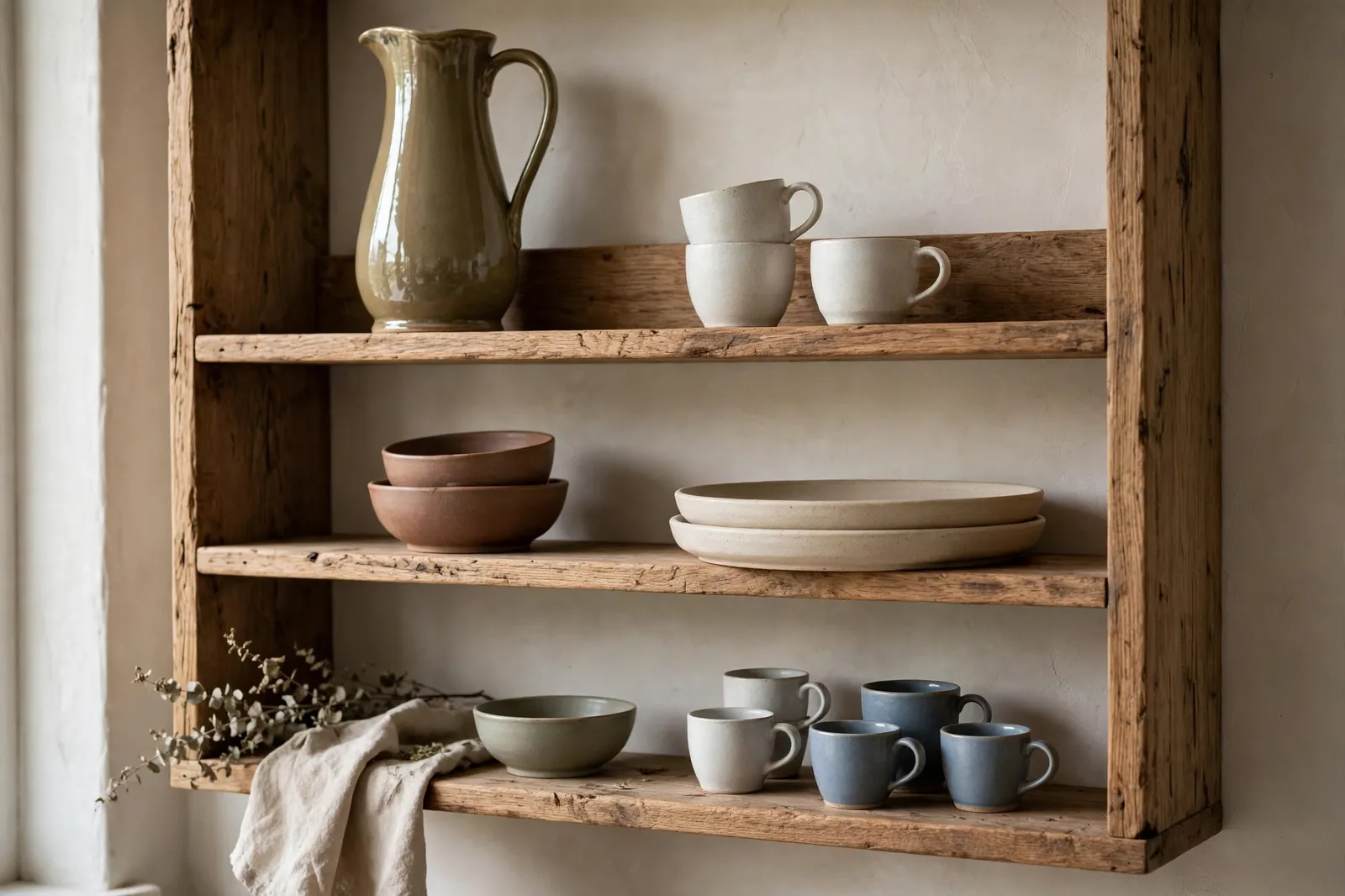
A shelf full of items that are all the same size can look flat and dull. Mixing tall pitchers with short bowls, wide plates with small cups, gives the shelf a natural rhythm that is easy on the eyes. The variety makes the shelf feel collected over time, not bought all at once.
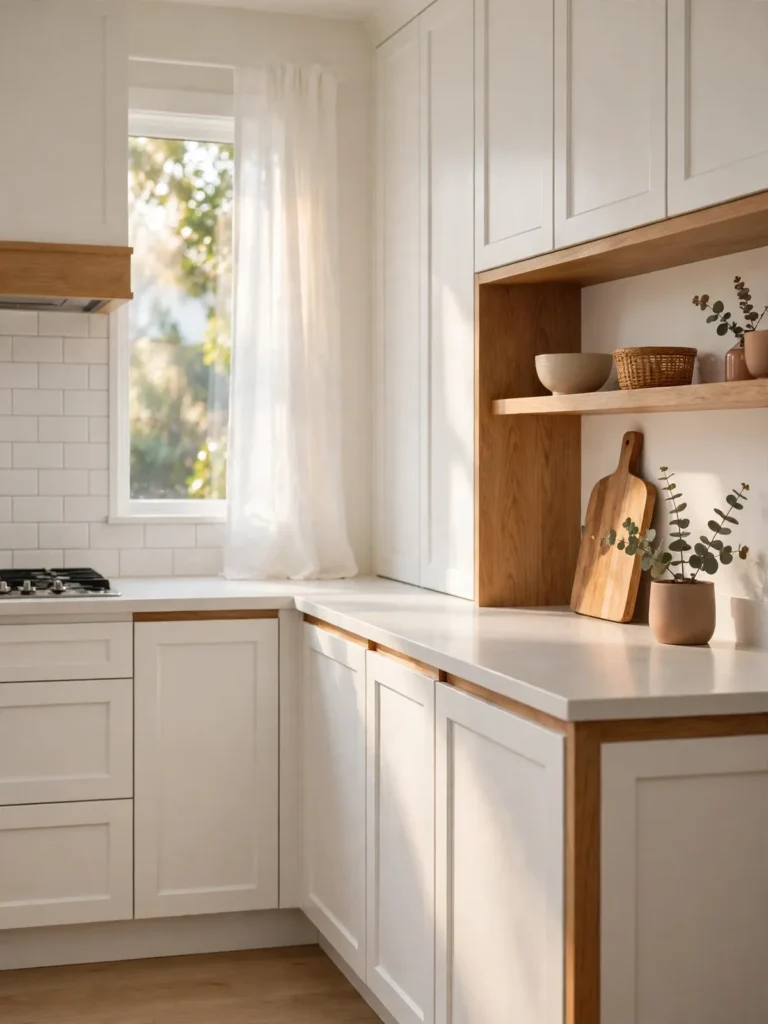
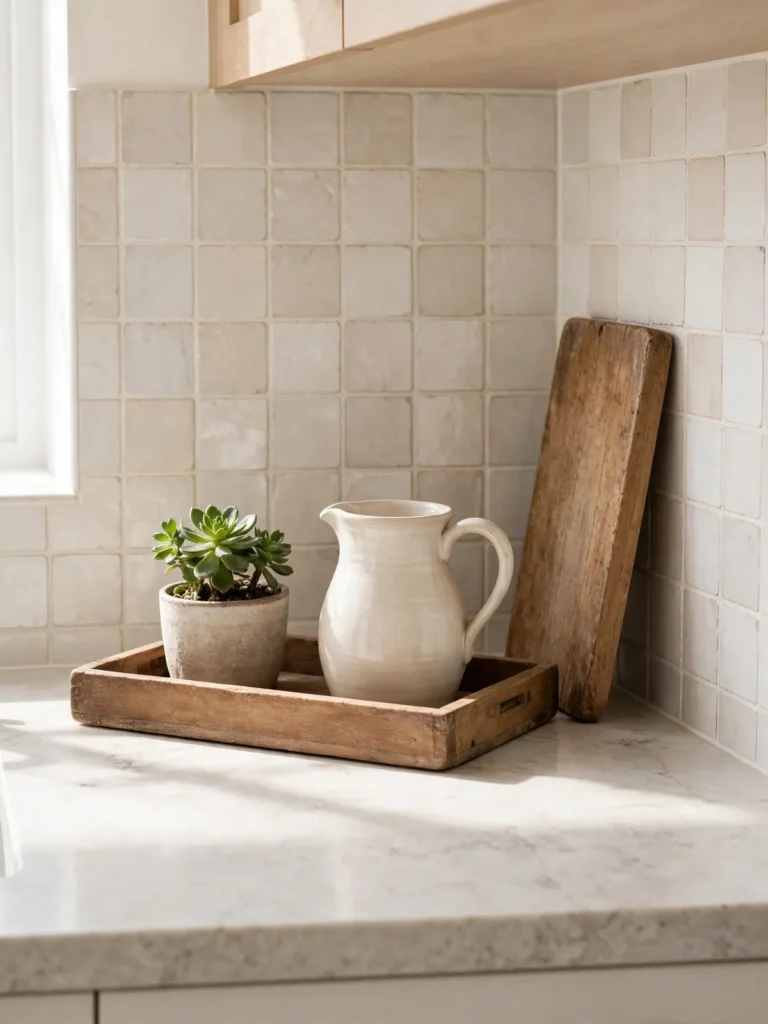
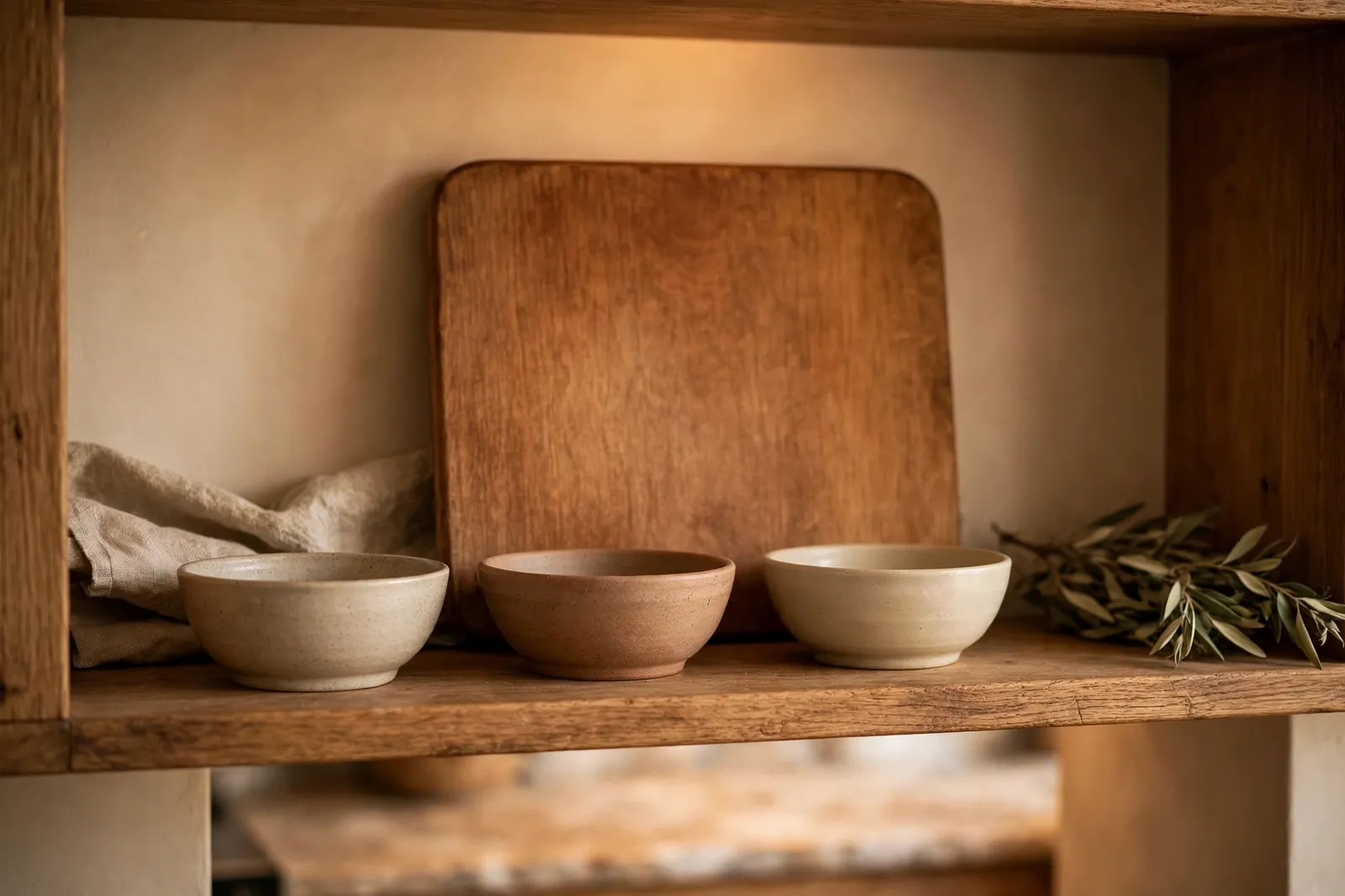
Try standing a cutting board upright at the back of a shelf, then placing shorter bowls in front of it. The board adds height, and the bowls keep the front of the shelf easy to reach. Small changes like this make a big difference, and you can move things around until the mix feels right.
4. Leave Breathing Room Between Items
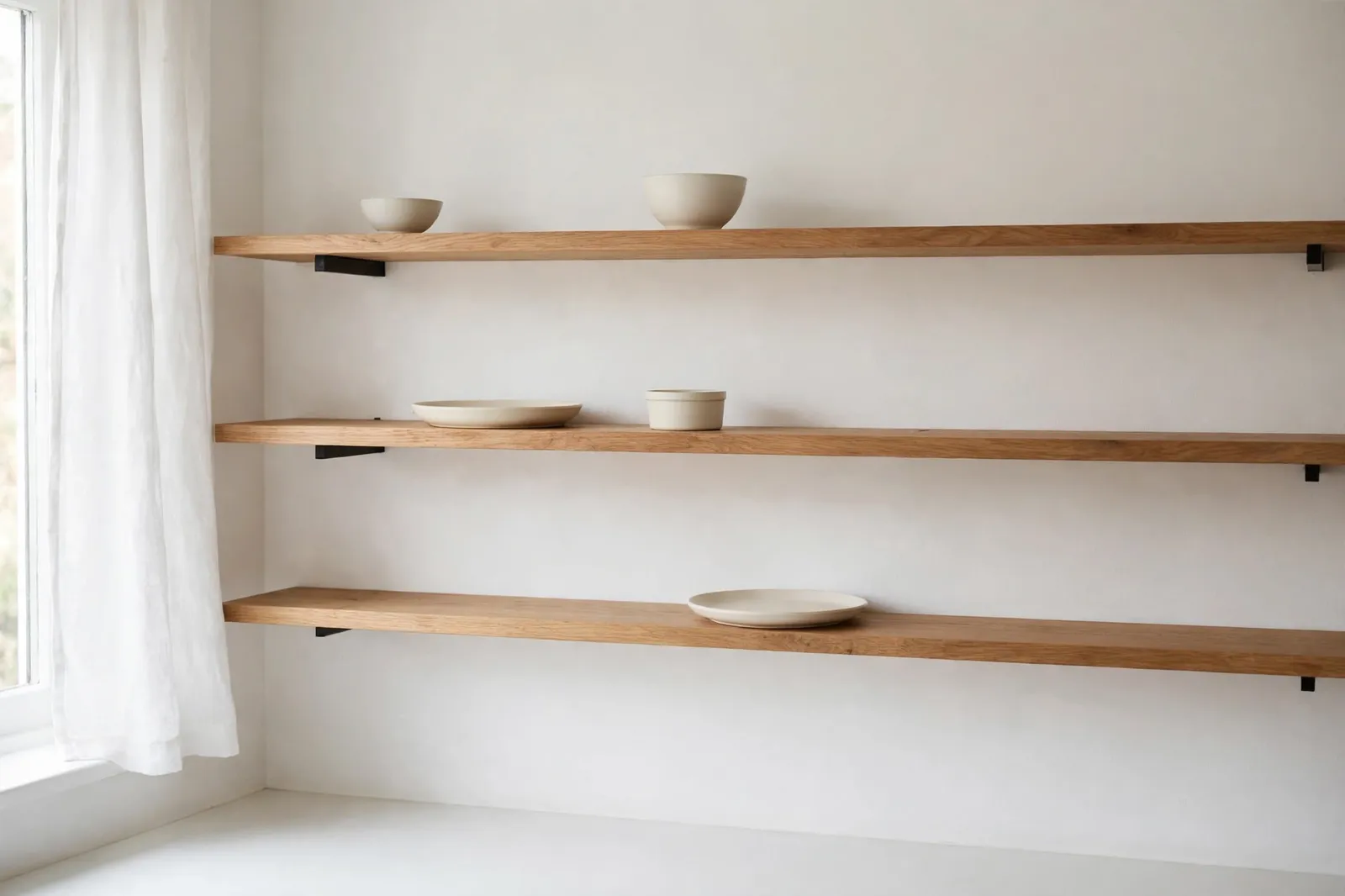
The biggest mistake with open shelves is filling every inch. When items are packed tight, the shelf looks messy, and it is hard to take anything down without knocking something over. A little empty space between groups makes each piece stand out and keeps the shelf easy to use.
Leave a gap between stacks of plates and the next group of bowls, and do not push things right up against the sides of the shelf. If a shelf looks crowded, take two or three items off and see how it feels. Most shelves look better with less on them, not more.
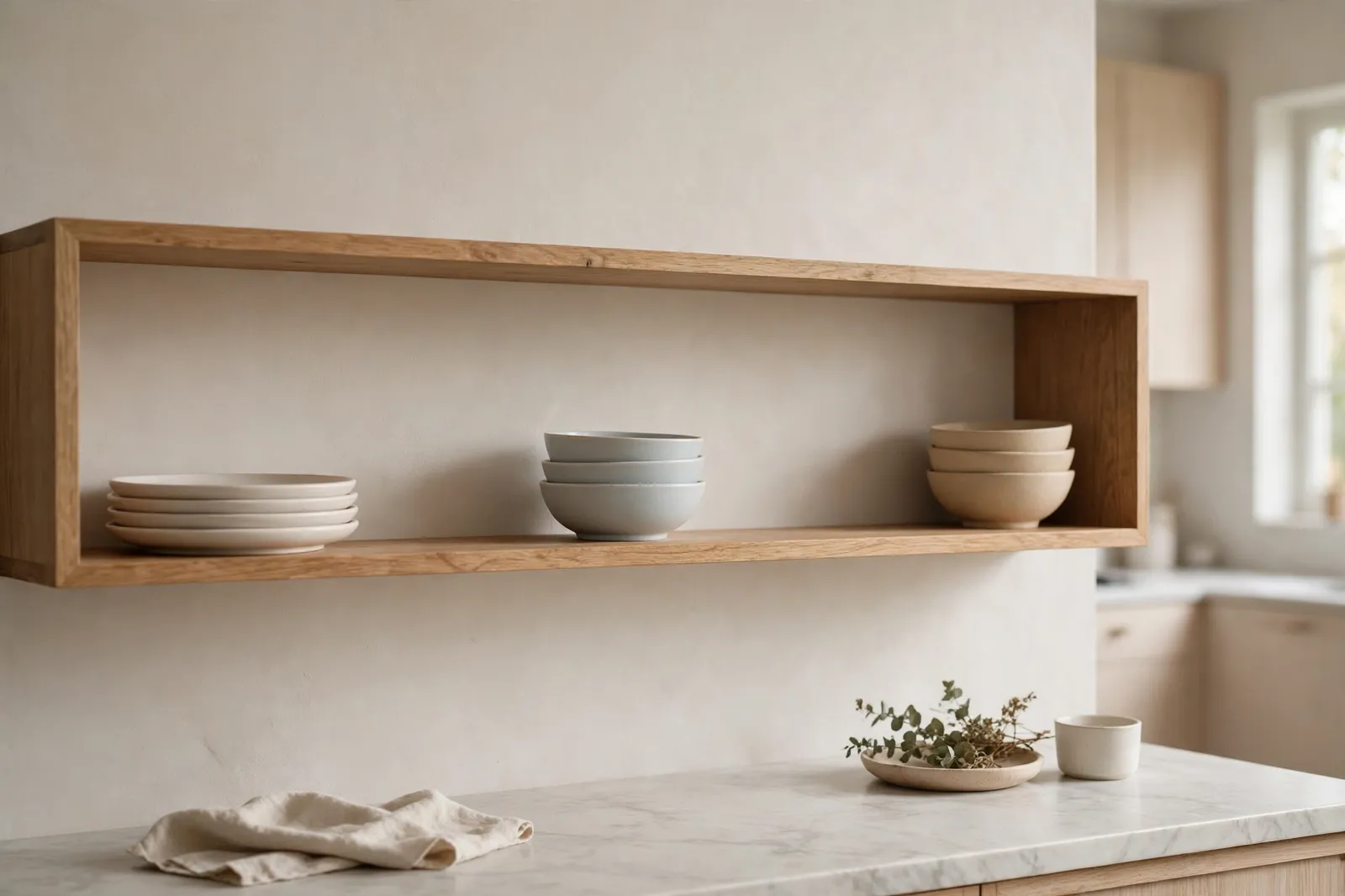
5. Add One Natural Element Per Shelf
One natural touch per shelf is enough to warm up a kitchen without making it look busy. A small potted herb, a wooden bowl, or a linen towel folded over the edge adds texture and color in a quiet way. These pieces soften all the plates and glass and make the shelf feel like part of a home.
Pick things that can handle kitchen life. Herbs like basil or mint do well near a window, and wood bowls wipe clean easily. Avoid anything too delicate or hard to clean, because kitchen shelves collect dust and cooking grease, and the natural piece should be easy to look after.
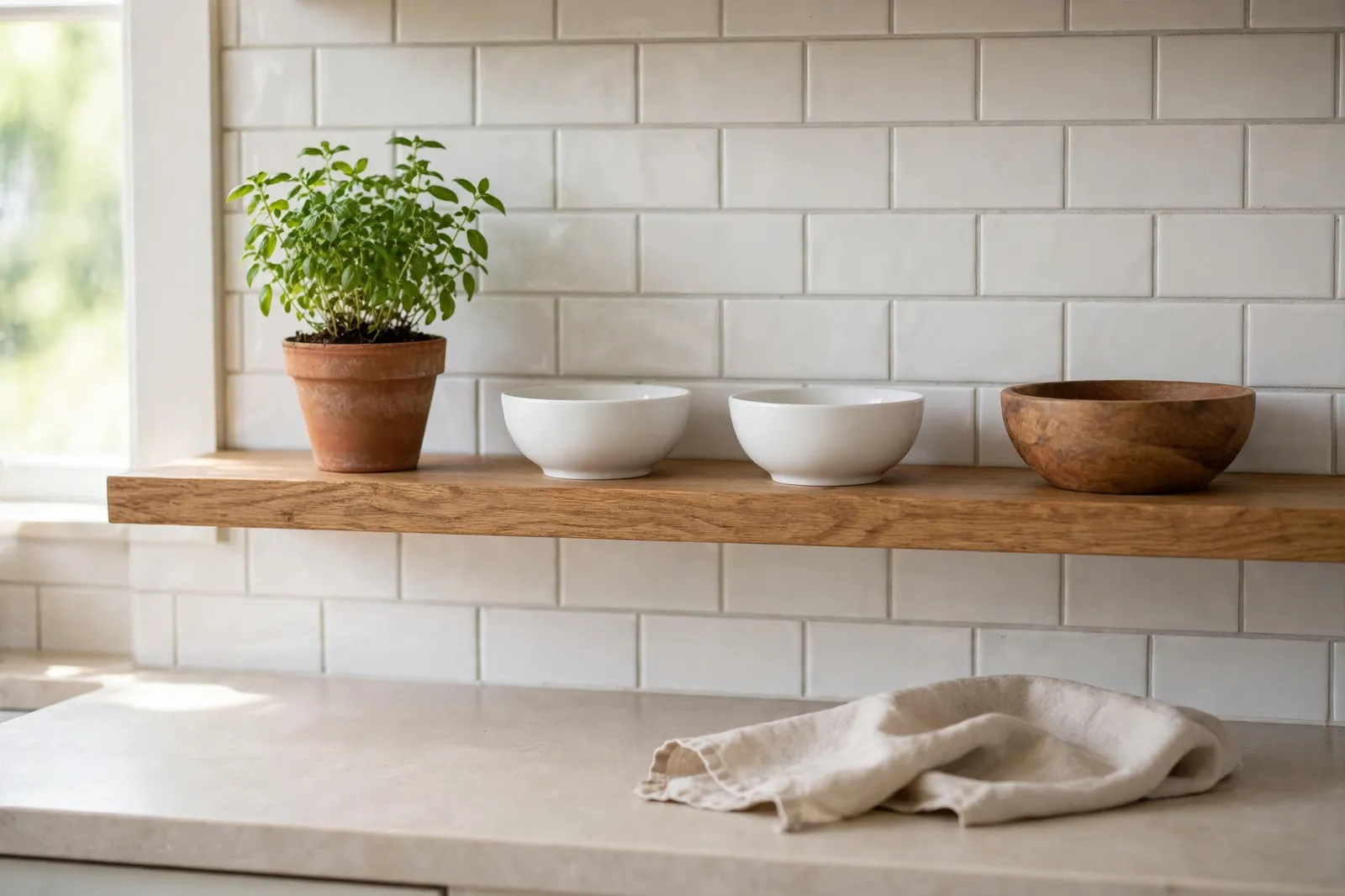
6. Keep Heavy Items Low
Heavy items belong on the lowest shelf, where they are easy to lift and safe to reach. Stacks of plates, large bowls, and cast iron pieces are much easier to handle at waist height than above your head. Keeping them low also keeps the shelf from looking top-heavy.
Lighter things, like glasses, small bowls, and decor pieces, can go higher up. If a shelf holds something heavy, make sure it sits flat and steady, with nothing balanced on its edge. Your shelves will last longer, and you will not dread reaching for a heavy stack every day.
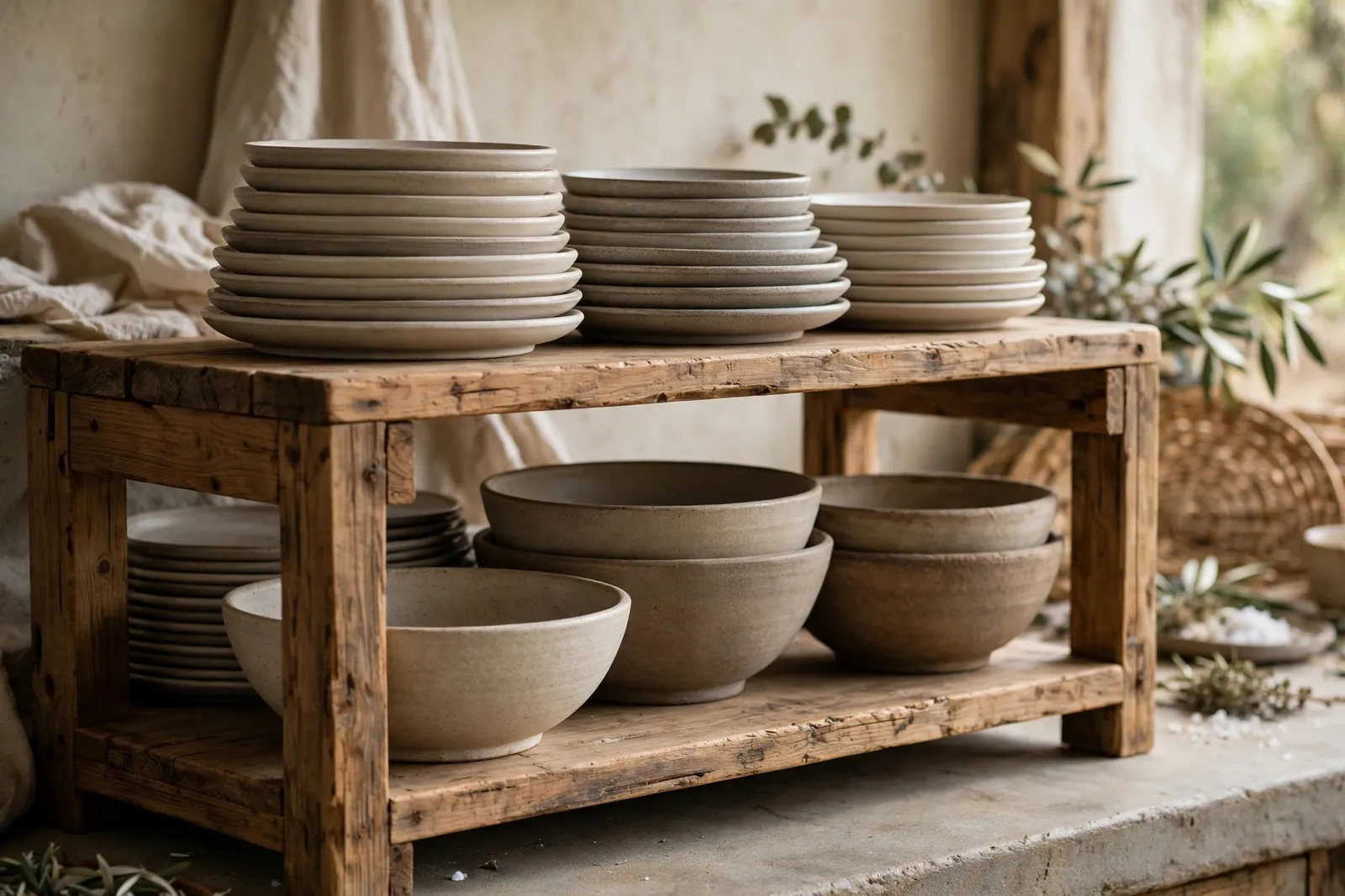
7. Style by Color or Material
Grouping items by color or material is a simple way to make shelves look pulled together. All white dishes on one shelf, warm wood pieces on another, and clear glass grouped together each read as one calm group. You do not need to match everything, just keep the colors close.
If your dishes are many colors, pick one main color and let the rest be quiet neutrals. A shelf of cream and white dishes with a few blue bowls mixed in looks calm, while dishes in five bright colors can look scattered. Stick to a small color story, and the shelf will look tidy even when it is full.
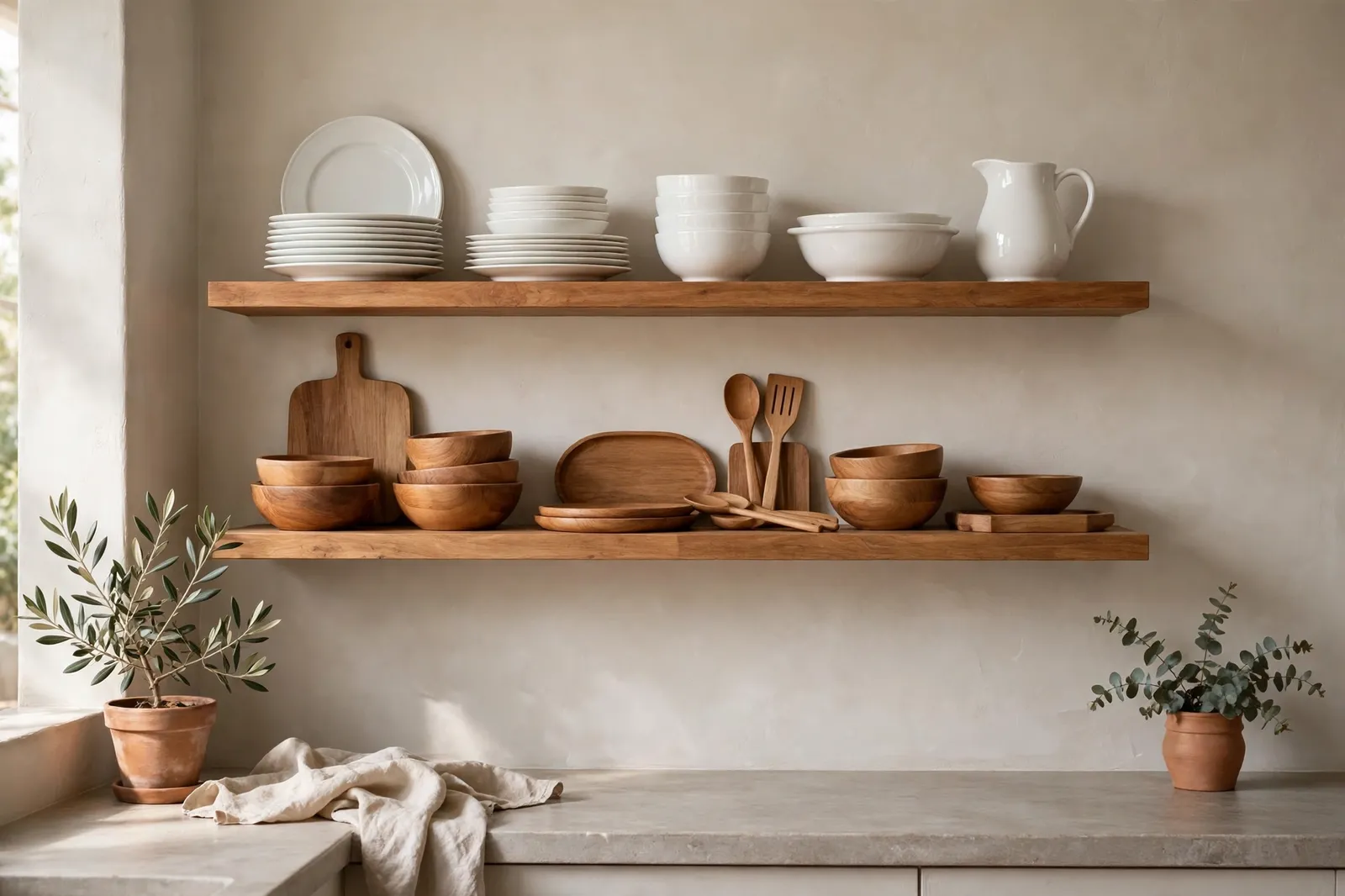
8. What Not to Put on Open Shelves
Some things do not belong on open shelves, no matter how pretty they look. Anything chipped, stained, or mismatched in a way that bothers you will show every day, so keep those pieces in a closed cabinet. The same goes for plastic containers, cleaning supplies, and anything with a loud label.
Very tall or awkward items can also cause trouble, because they block the view of the shelf behind them and are easy to knock over. If you rarely use something, it does not earn a spot on an open shelf. Save the open space for the pieces you reach for often and enjoy looking at.
9. Keeping Open Shelves Clean and Tidy
Open shelves need a quick wipe more often than closed cabinets, because dust settles on everything. A fast wipe once a week keeps plates and glasses clean, and it takes only a few minutes if you do it regularly. Keep a cloth nearby so the job feels small, not like a big clean-up.
It also helps to put things back in the same spot after you wash them. When every item has a home, the shelf stays tidy on its own, and you notice right away when something is out of place. A short weekly wipe and a simple put-back habit are all it takes to keep open shelves looking good.
Frequently Asked Questions
What looks good on open kitchen shelves?
Simple everyday dishes look best: white plates, plain bowls, clear glasses, and a few wooden pieces. Add one natural touch per shelf, like a small herb plant or a linen towel, and keep the colors close so the shelf looks calm.
How do I style open shelves without clutter?
Leave breathing room between groups of items, and do not fill every inch of the shelf. Group similar things together, stick to one or two main colors, and take a few pieces off if the shelf looks crowded.
What should I avoid putting on open shelves?
Avoid chipped or stained dishes, plastic containers, cleaning supplies, and anything with a loud label. Also skip very tall or awkward pieces that block the view or tip over easily, and anything you rarely use.
How often should I clean open kitchen shelves?
Wipe the shelves and the items on them once a week to keep dust away. A quick weekly wipe only takes a few minutes, and putting things back in the same spot after washing helps the shelves stay tidy between cleans.
Related ideas
If you are styling the whole kitchen, these guides go well with this one. Start with these kitchen decorating ideas for a beautiful and functional kitchen for the room as a whole, then see these kitchen counter decor ideas without creating clutter for the counters below your shelves, and these living room decorating ideas if you want the next room to feel just as welcoming.