Transitional Interior Design Ideas for a Timeless Home
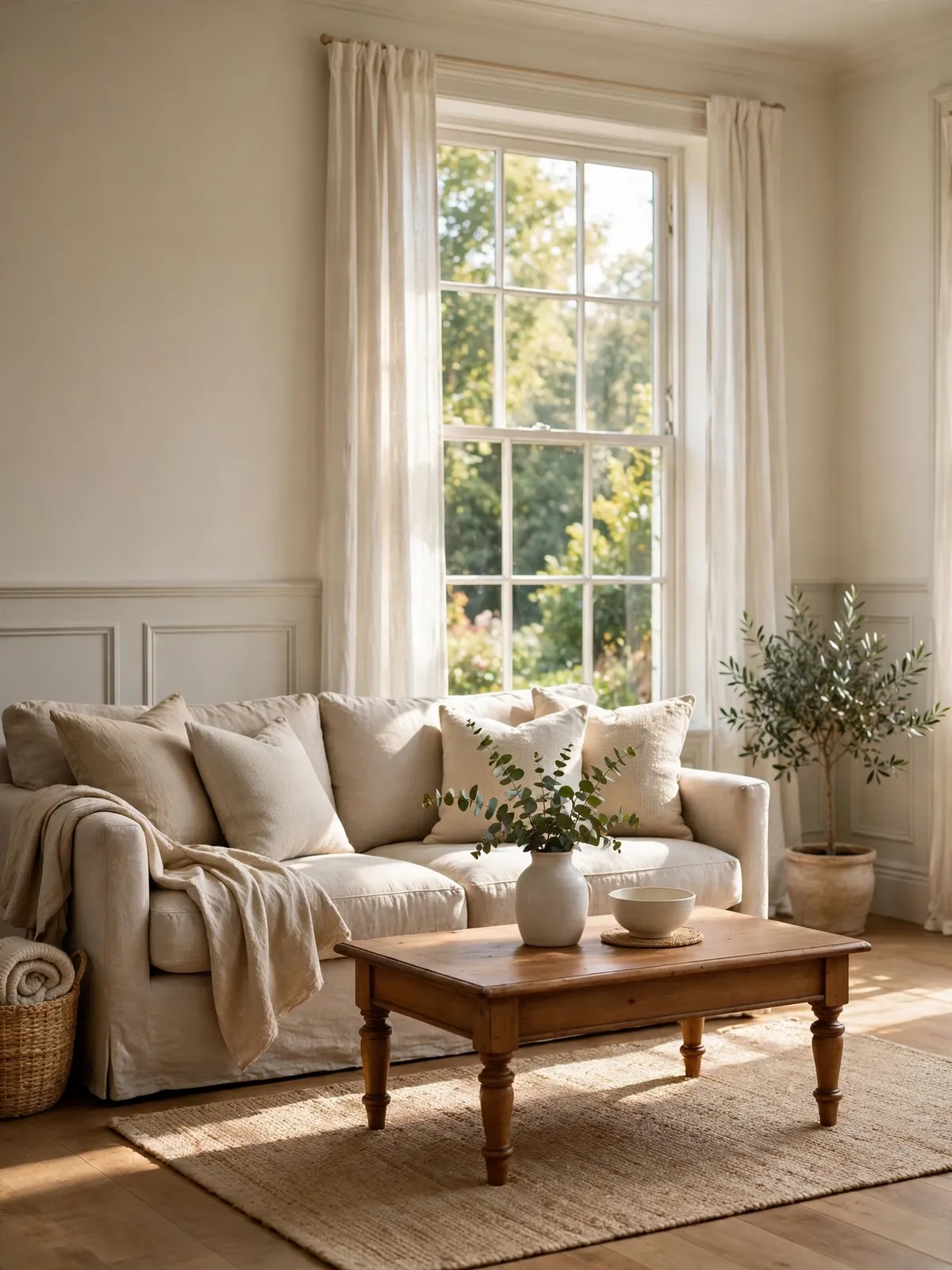
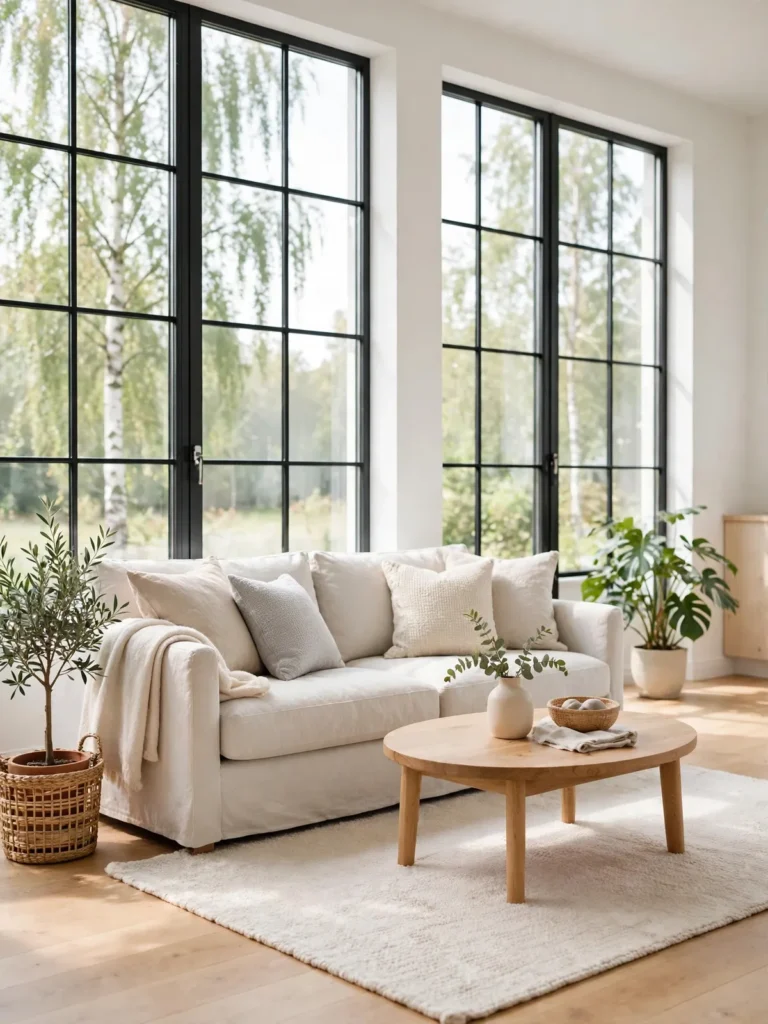
Transitional design sits right in the middle of classic and modern, and that is why it works so well. It takes the warm, comfortable feel of a traditional home and pairs it with the clean, simple lines of modern style. The result is a home that feels calm and welcoming, and never looks dated.
The best part is that you do not need to start over to get the look. A few thoughtful changes — softer colors, furniture with simple shapes, and a mix of textures — can give any room that timeless feel. Here are easy transitional interior design ideas to help you get started.
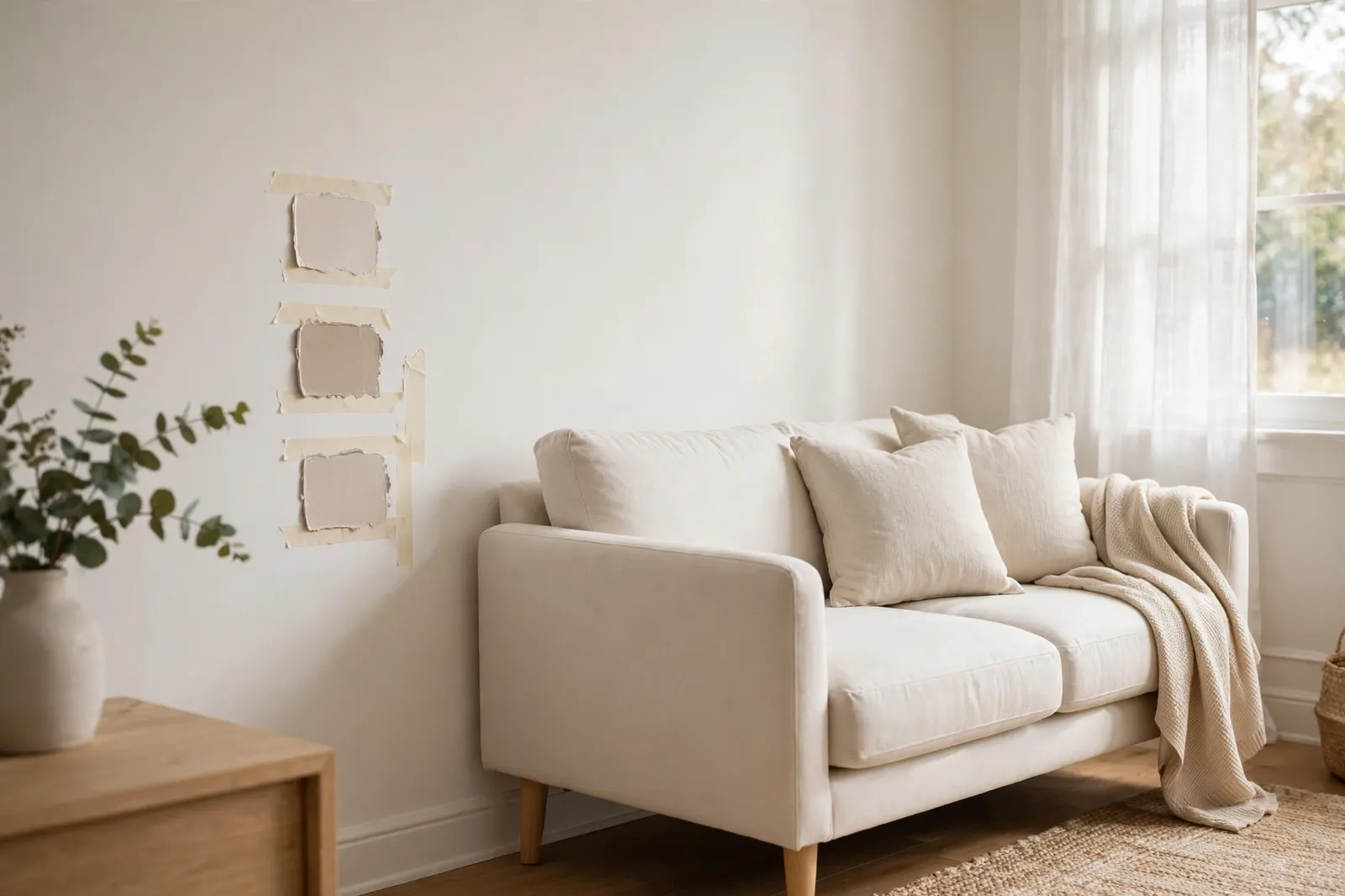
1. Start With a Soft, Neutral Color Palette
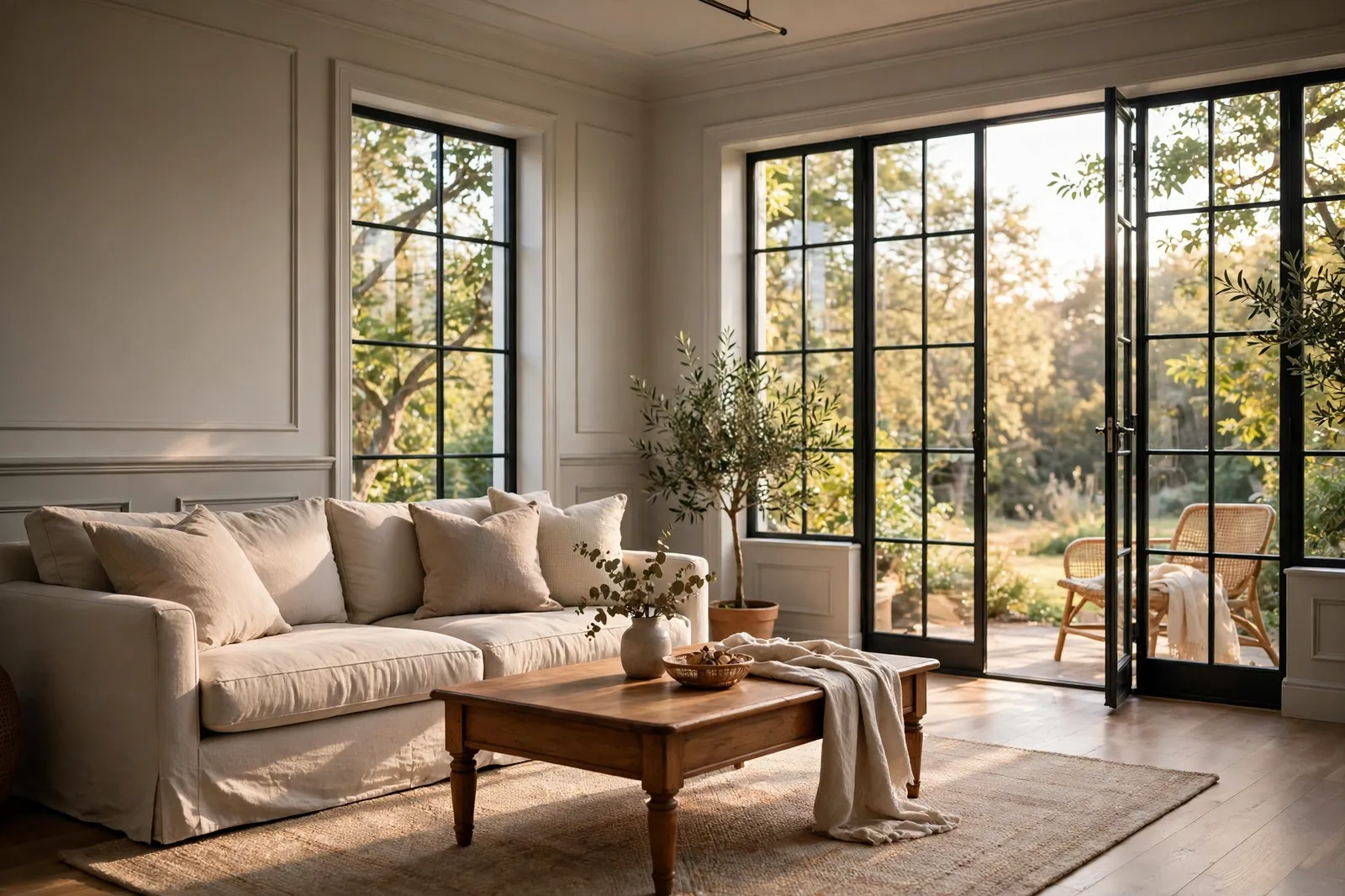
A transitional home starts with color. Think warm whites, soft grays, warm beige, and gentle taupe — colors that feel calm and go with almost everything. These shades give you a quiet backdrop, so the furniture and decor can do the talking.
You can add a little depth with soft blues, sage green, or warm charcoal in small touches, like cushions or a rug. Keep the strongest color to one or two spots in the room so it feels balanced, not busy. If you are not sure where to start, paint the walls a warm white and build from there.
2. Mix Classic Pieces With Modern Lines
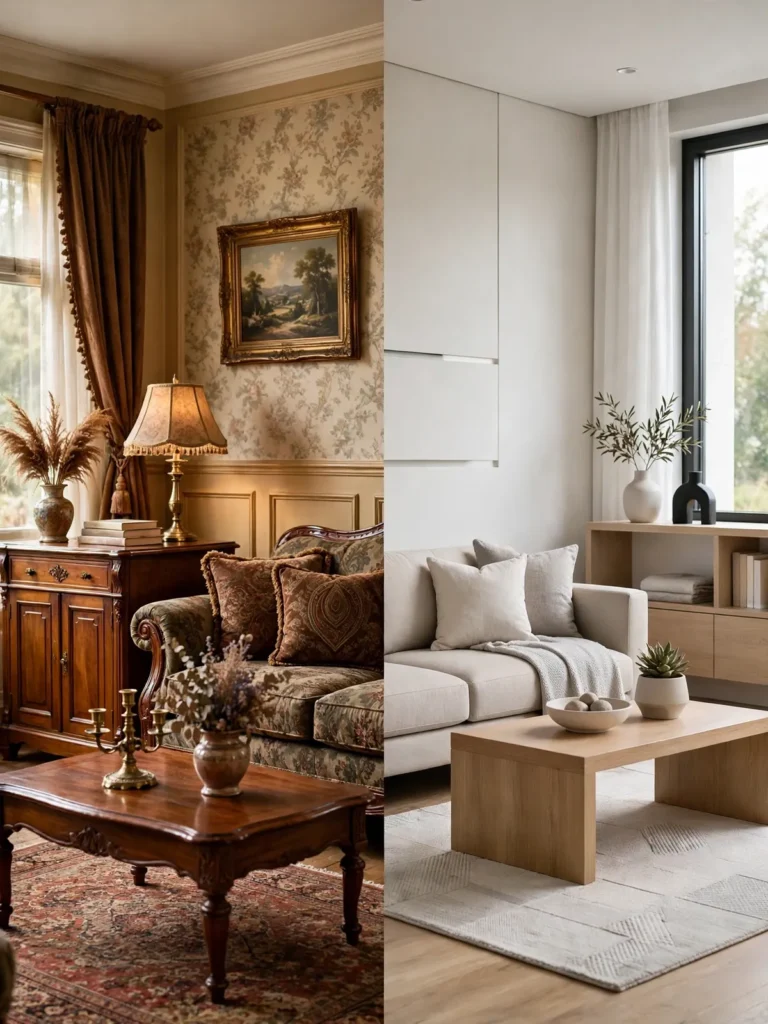
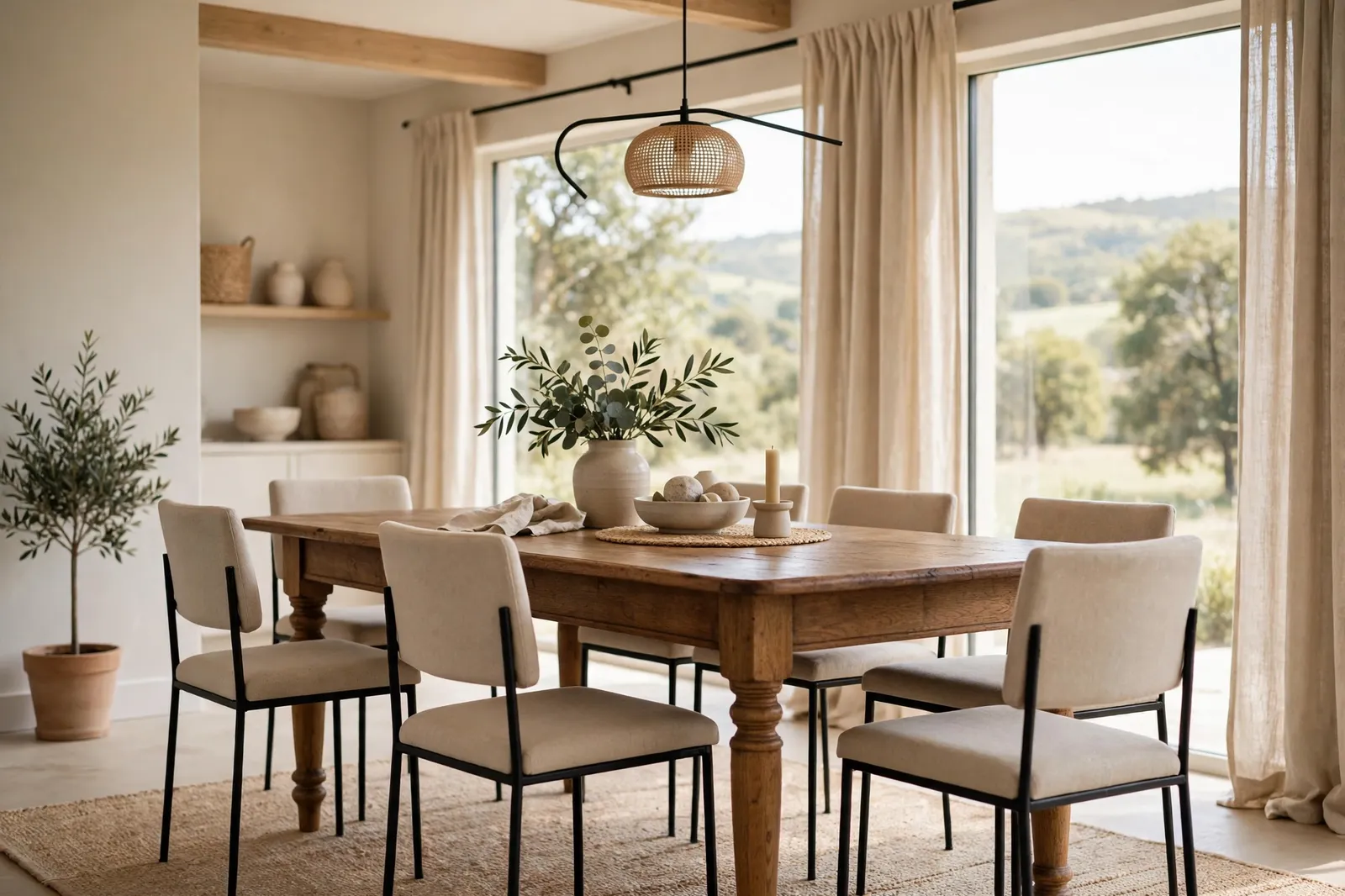
Transitional style is all about the mix. A classic wooden dining table looks fresh next to modern chairs with simple, clean lines. A traditional sofa feels new again when you pair it with a plain, low coffee table.
The trick is to keep both sides simple. Let the classic pieces bring the warmth and the modern pieces bring the clean lines. When the two styles share the same colors, the room feels pulled together instead of like two different rooms in one.
3. Choose Furniture That Works in Any Style
The right furniture is the backbone of a transitional home. Look for pieces with simple shapes — a sofa with straight lines and soft cushions, a dining table with a clean top, a bed with a plain headboard. Nothing too fancy, nothing too stark.
Comfort matters just as much as looks. Transitional furniture is meant to be lived in, so pick pieces that feel good to sit on and hold up to daily use. Solid wood, good fabric, and simple shapes last longer than trendy pieces, and they look just as good in ten years as they do now.
4. Layer Textures for Warmth
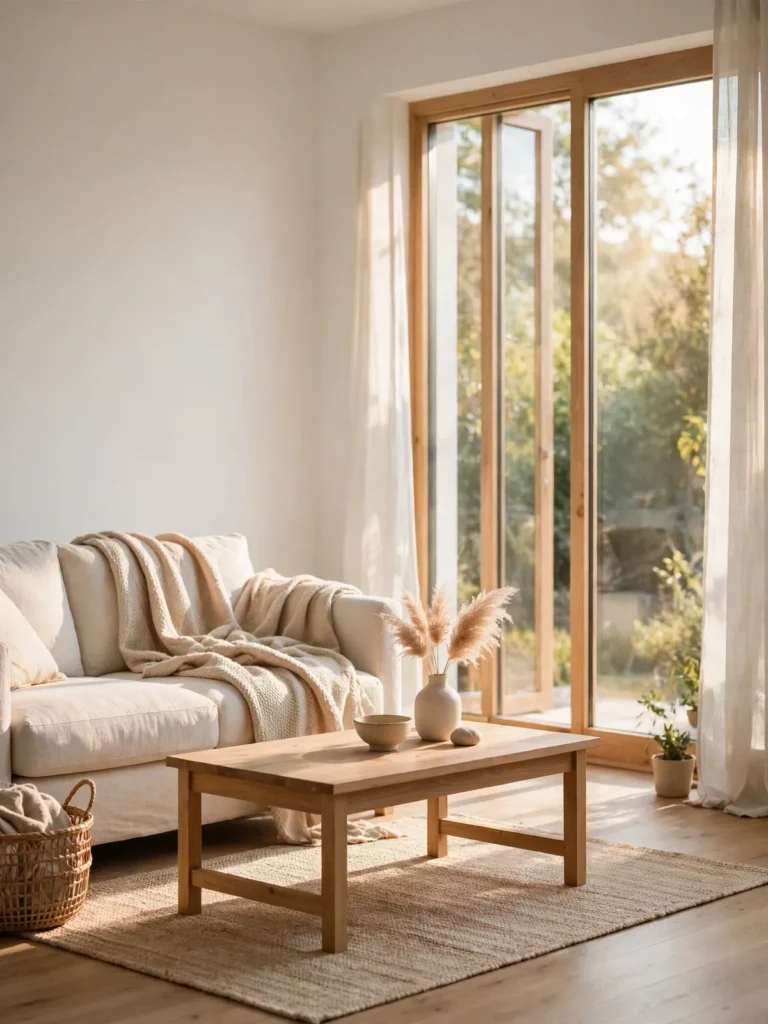
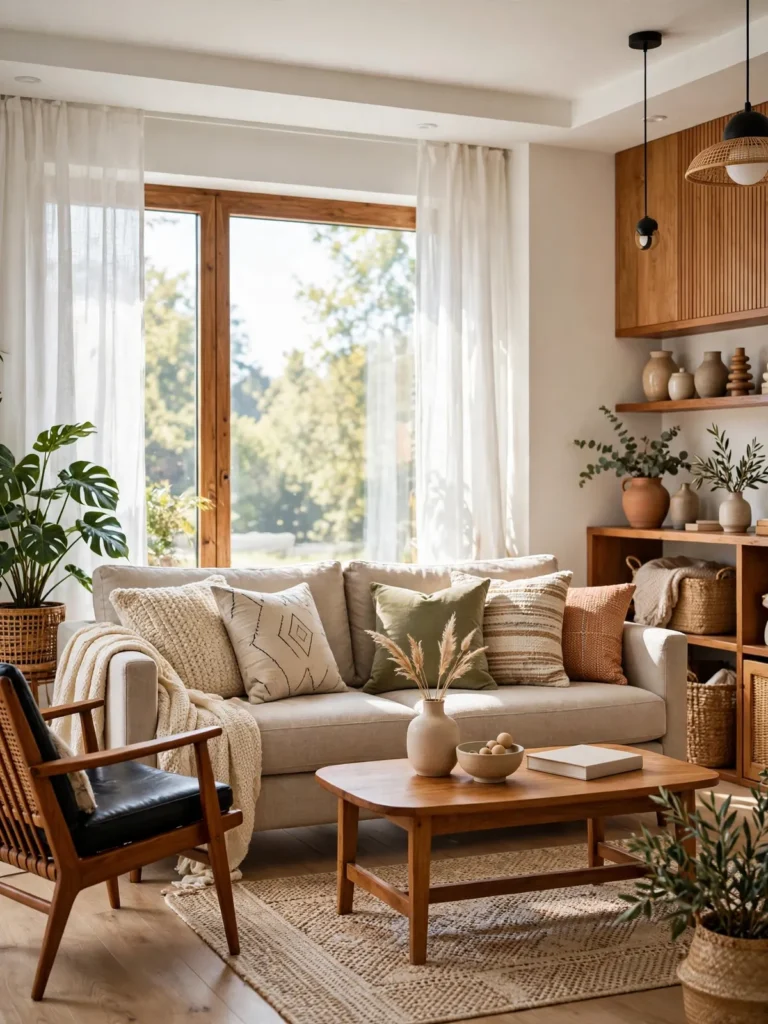
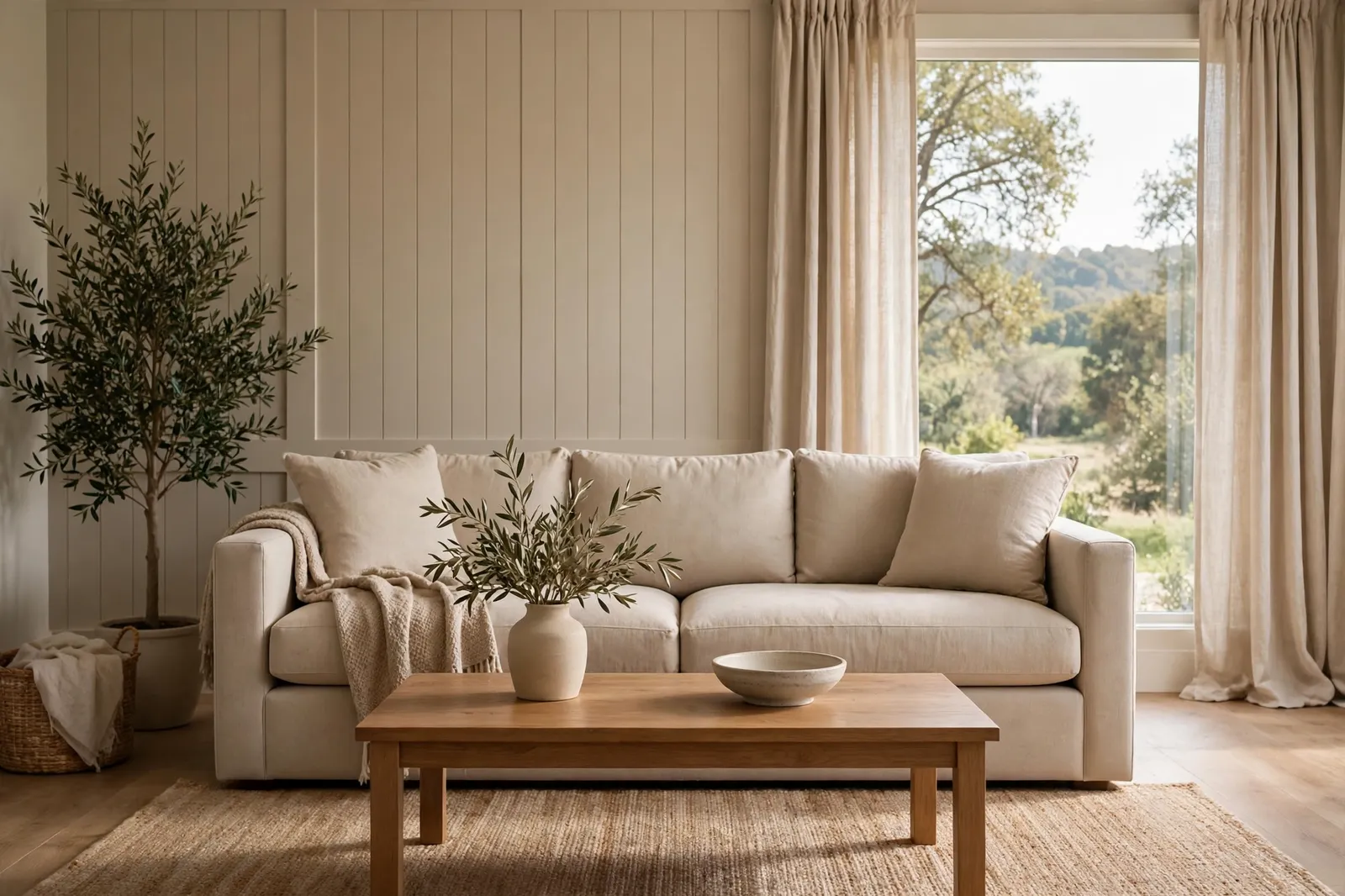
Texture is what keeps a neutral room from feeling flat. A linen cushion, a soft wool throw, a smooth wooden side table, and a woven rug all add something different. Together they make a room feel warm and lived in without adding any clutter.
You do not need a lot of pieces — just a few textures in each spot. Try a soft rug under the coffee table, a throw over the arm of the sofa, and a couple of cushions in different fabrics. Keep the colors close to each other and let the textures do the work.
5. Keep the Layout Simple and Open
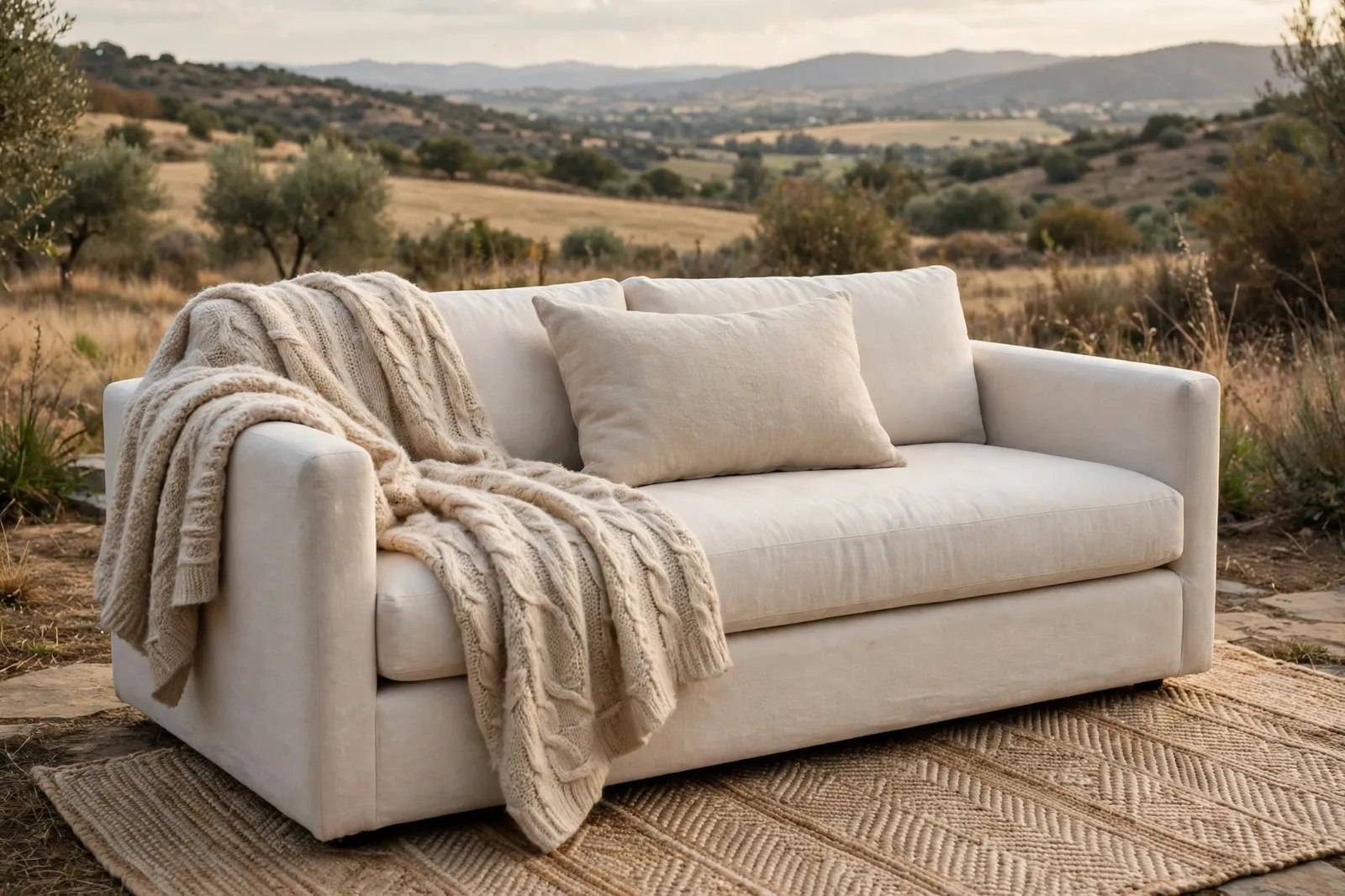
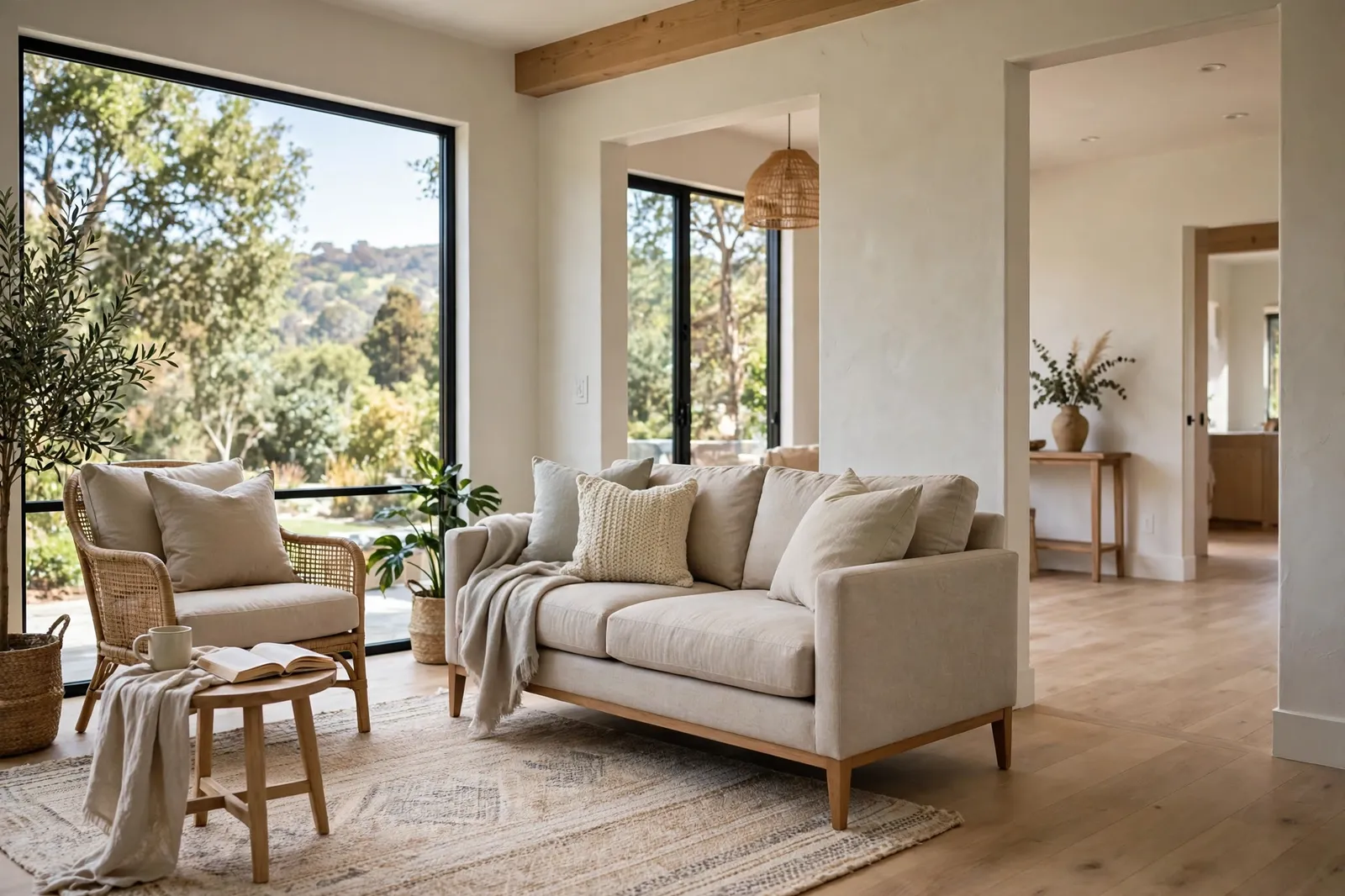
A transitional room should feel easy to move through. Give each piece of furniture some space, and keep the main walkways clear. A sofa pulled a little away from the wall and a clear path to the door make the whole room feel more relaxed.
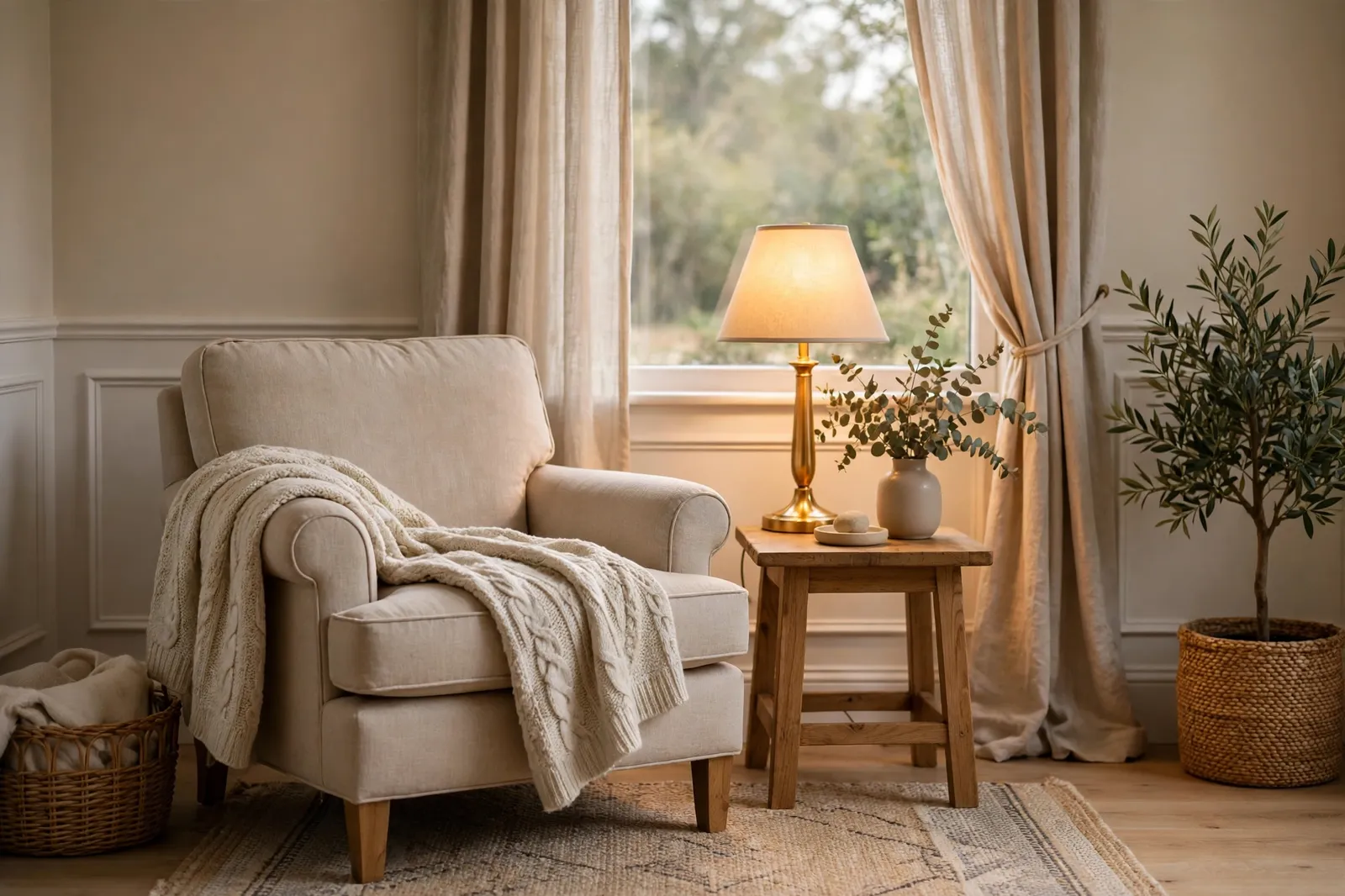
It helps to group things in a simple way — a seating area around the coffee table, a reading chair by the window, a side table where you need one. When everything has a clear spot, the room feels calm and the design has room to breathe.
6. Add Timeless Touches With Wood and Metal
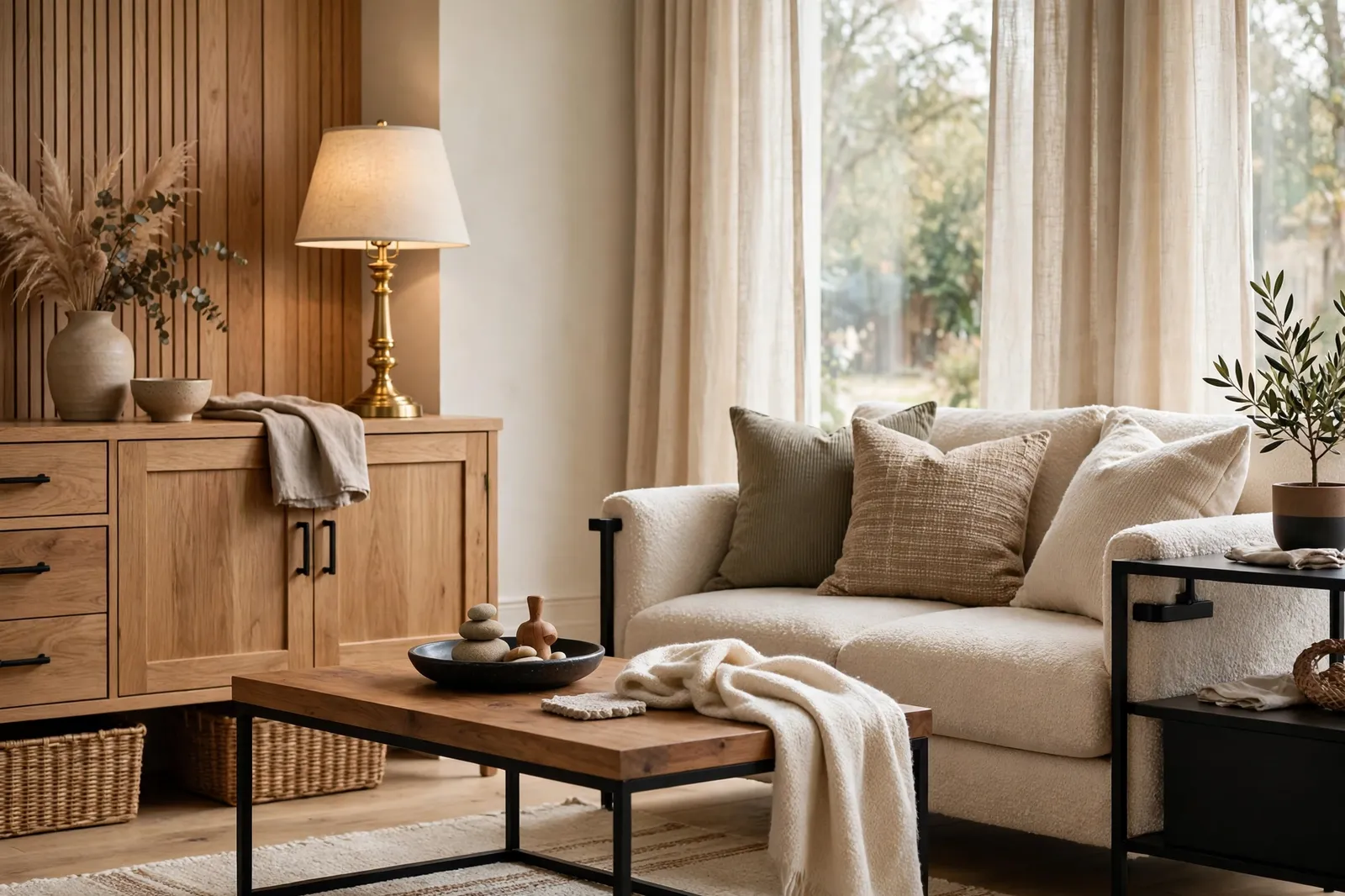
Wood and metal are the workhorses of transitional design. Warm wood brings in the classic side — a wooden coffee table, a simple bookshelf, or a timber-framed mirror. Brushed brass or matte black metal brings in the modern side, in lamp bases, cabinet handles, or a picture frame.
Keep the finishes simple and use the same metal in a few spots so it looks planned, not random. A brass lamp and a few brass handles are enough to tie a room together. The point is warmth and balance, not matching everything perfectly.
7. Let in Light and Keep It Soft
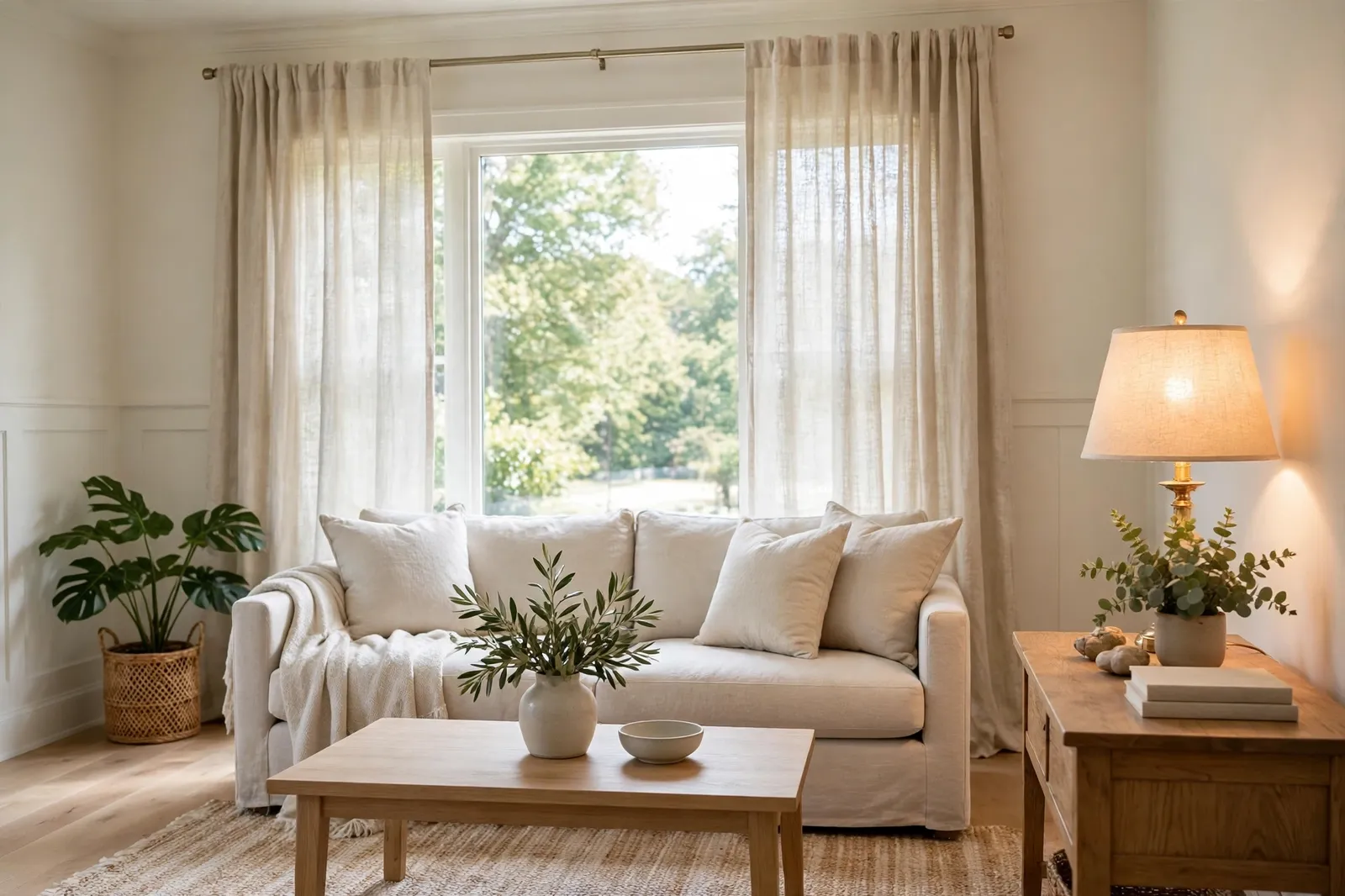
Light makes a big difference in a transitional home. Keep the windows clear during the day and use simple curtains in a light fabric that let the daylight in. A bright room feels fresh and open, even with simple furniture.
In the evening, go for warm, soft light. A table lamp with a warm bulb, a floor lamp in the corner, or a simple pendant over the dining table all work well. Avoid bright white overhead lights — soft, warm light is what makes the room feel inviting at night.
8. Choose Art and Decor That Won’t Date
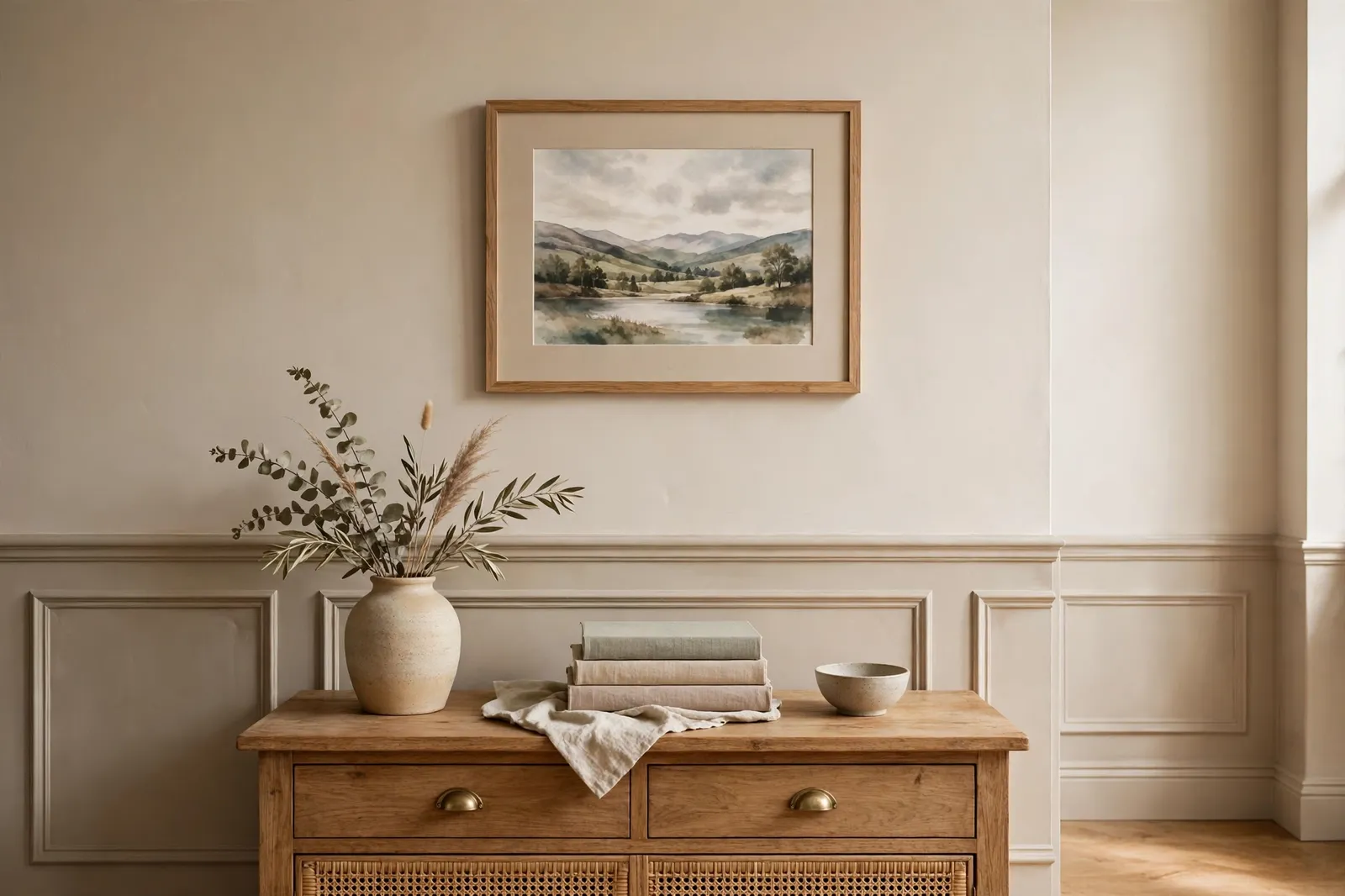
The decor you pick should be things you will still love in a few years. A simple framed landscape, a black-and-white photo, or a piece of art in soft colors fits a transitional home well. Skip the trendy prints and go for pieces that feel calm and personal.
Less is more here. One good piece on a wall has more impact than a wall full of small frames. A vase, a stack of books, or a simple bowl on a table is enough to finish a room without making it feel crowded.
9. Make the Bedroom and Bathroom Feel Timeless Too
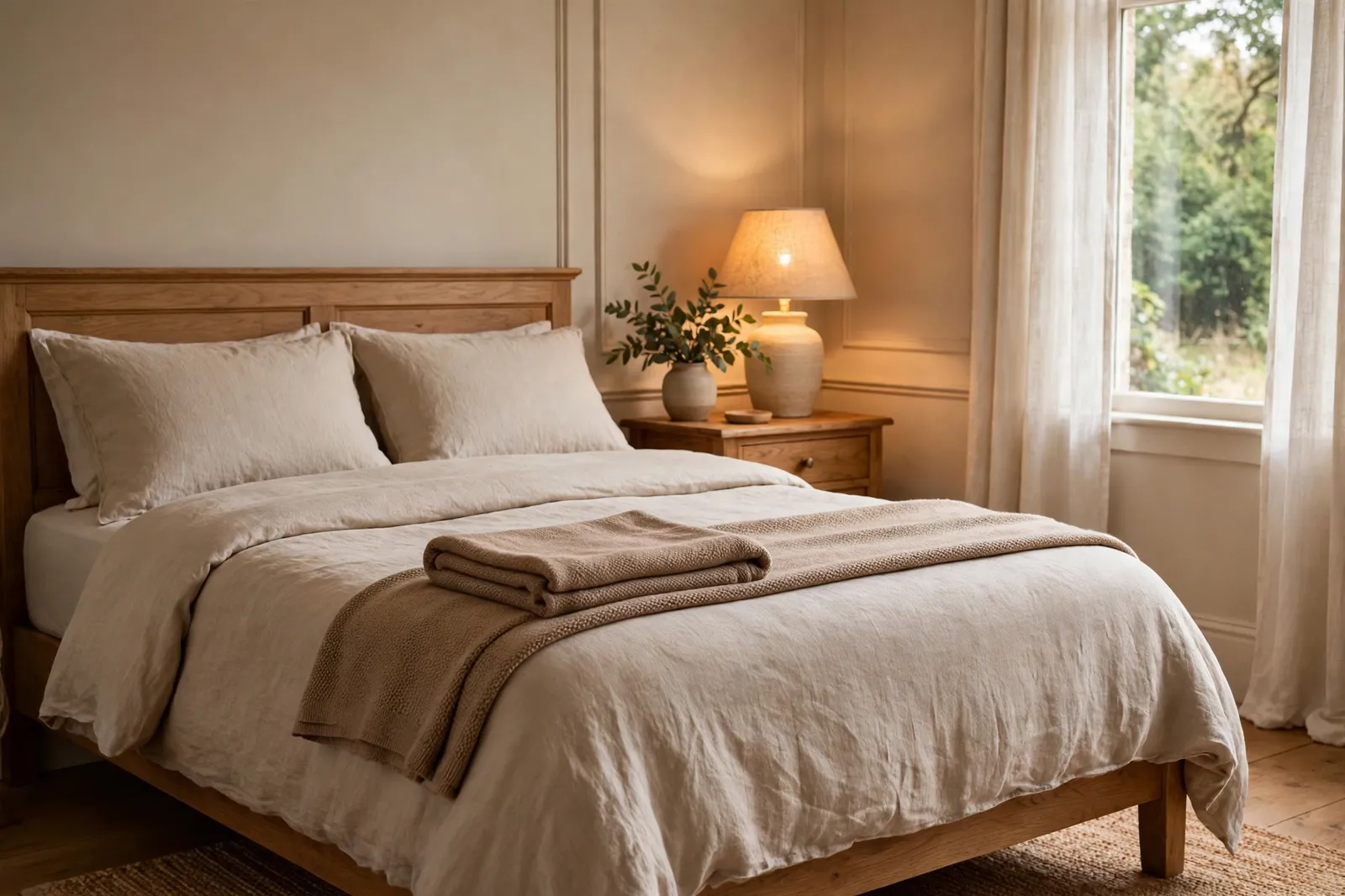
Transitional style works in every room, not just the living room. In the bedroom, keep the bed simple with soft linen bedding in a warm neutral, one or two cushions, and a throw at the foot of the bed. A plain headboard and a clear bedside table keep the room calm and easy to rest in.
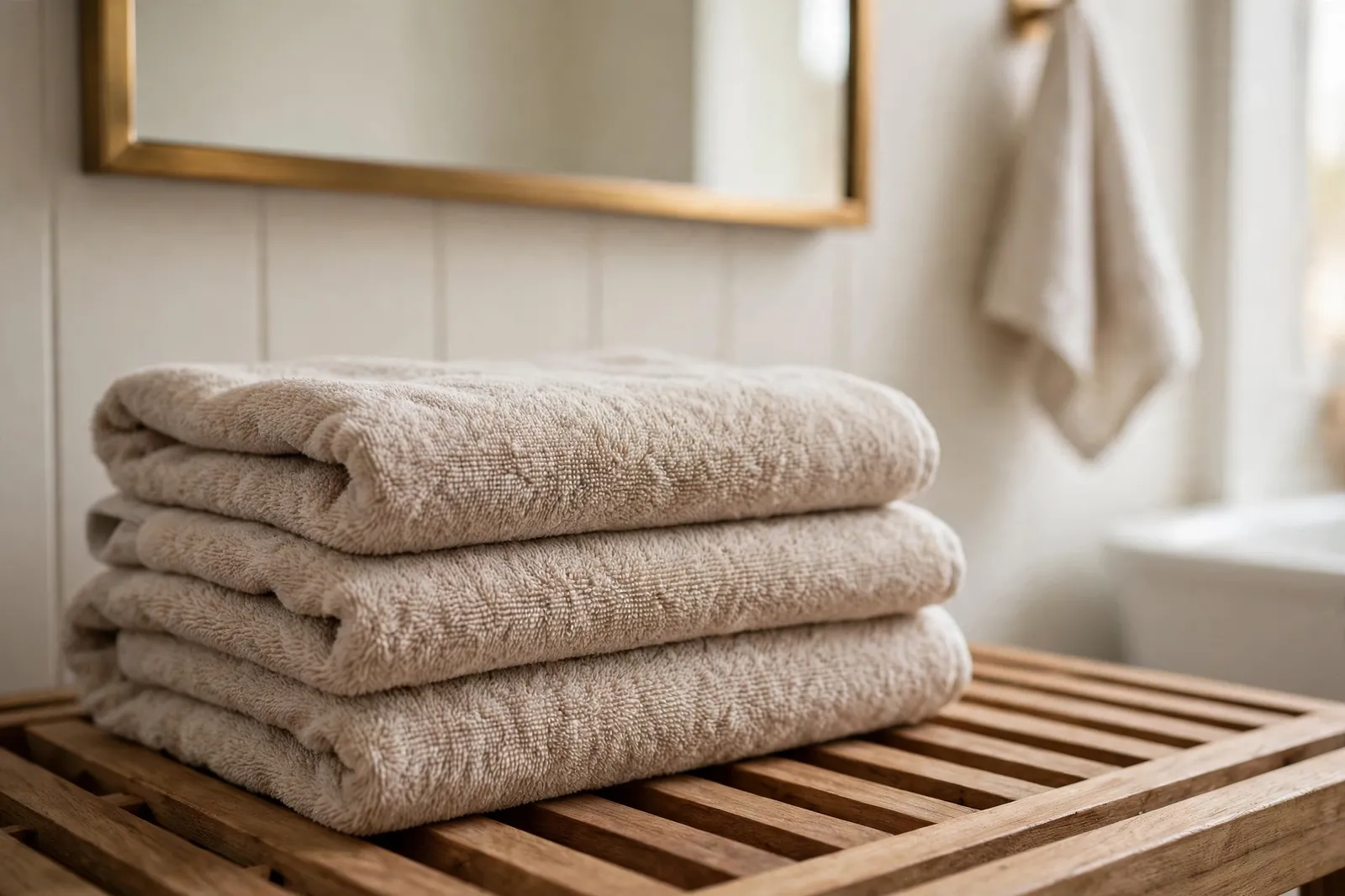
In the bathroom, a folded stack of soft towels, a wooden bath mat, and a simple mirror with a warm metal frame can make a plain room feel like a quiet retreat. Keep the counter clear and store the everyday items in a basket or a closed cabinet, so the room stays calm and tidy.
Frequently Asked Questions
What is transitional interior design?
Transitional interior design is a mix of traditional and modern styles. It keeps the warm, comfortable feel of classic design and pairs it with the clean lines and simple shapes of modern design. The result is a calm, balanced home that does not look dated.
How is transitional style different from traditional and modern?
Traditional style leans on ornate details, dark woods, and rich patterns, while modern style uses sharp lines, bold colors, and very little decoration. Transitional style sits in the middle: it uses simple shapes like modern design, but with warmer colors and softer textures like traditional design.
What colors work best in a transitional home?
Warm whites, soft grays, warm beige, and taupe are the best starting point. Add soft blues, sage green, or warm charcoal in small touches for depth. The key is to keep the palette small and calm, so the room feels balanced instead of busy.
Can I mix transitional style into a home I already have?
Yes, and you do not need to start over. Begin with the color palette and a few simple swaps — lighter curtains, a plain rug, or a wooden side table. Add one or two modern pieces next to the furniture you already love, and the room will start to feel transitional.
Related ideas
Popular Home Decor Styles and How to Choose Yours explains how transitional style fits among the other popular looks, so you can see if it is the right one for your home. Modern Farmhouse Decor Ideas for a Warm Home shares the same warm, welcoming feel with a cozier twist, and Minimalist Home Decor Ideas That Still Feel Cozy shows how to keep a simple space warm — a trick that works just as well in a transitional home. You might also like Coastal Home Decor Ideas Inspired by the Beach and How to Mix Home Decor Styles Without Making a Room Feel Busy.