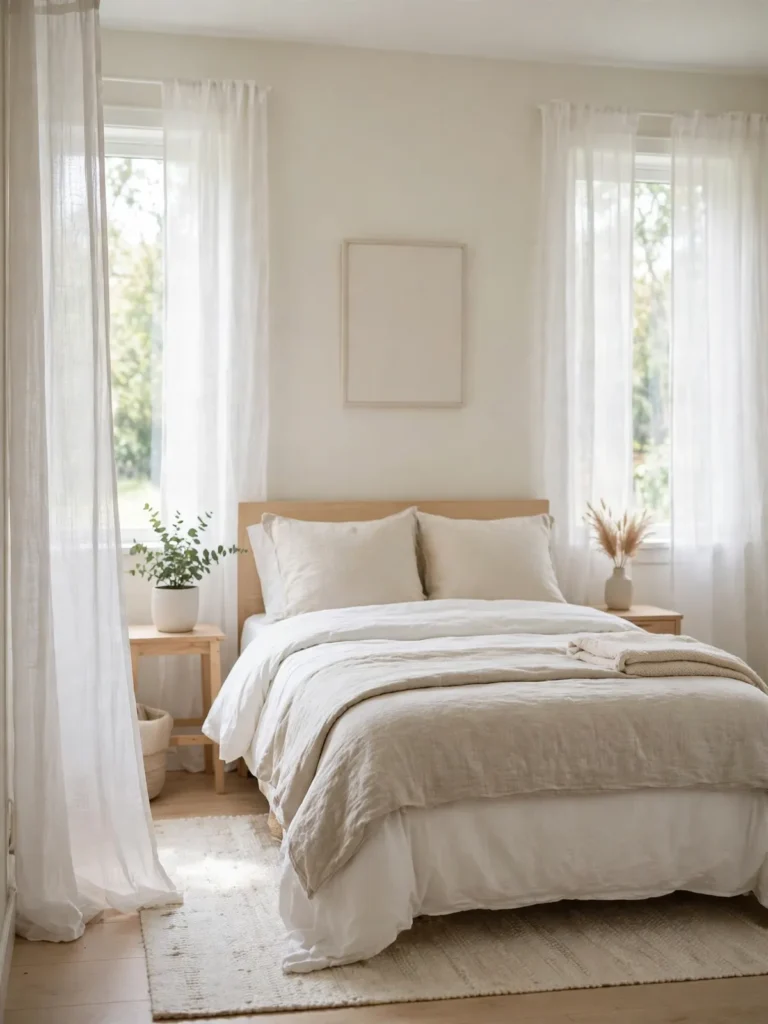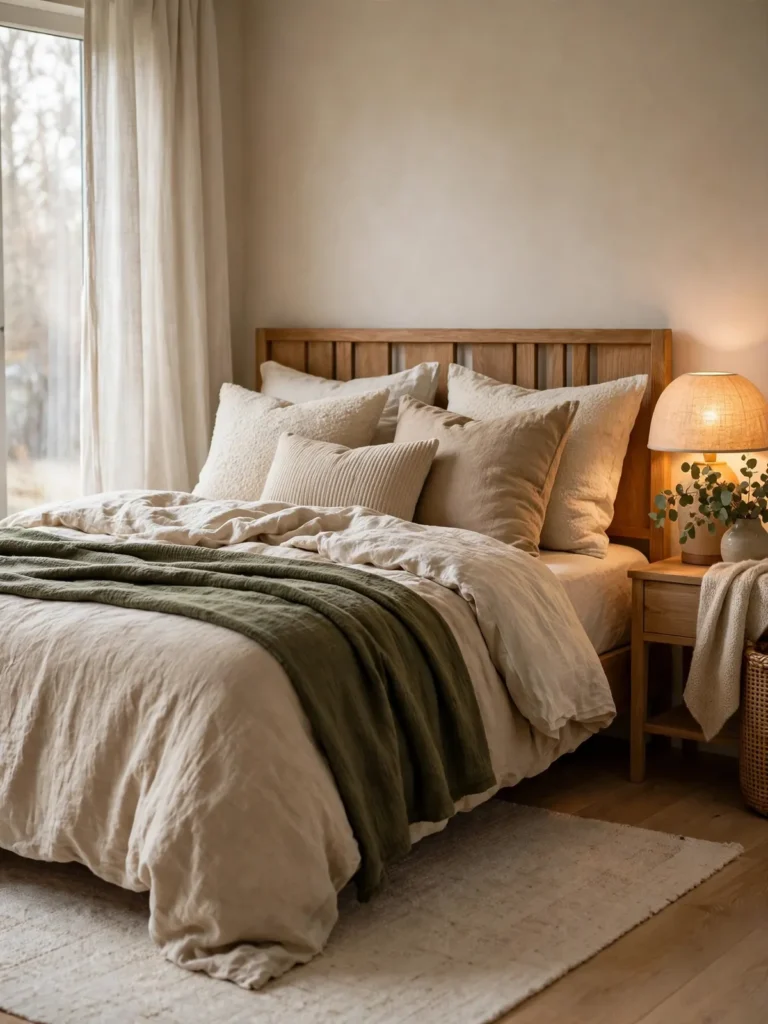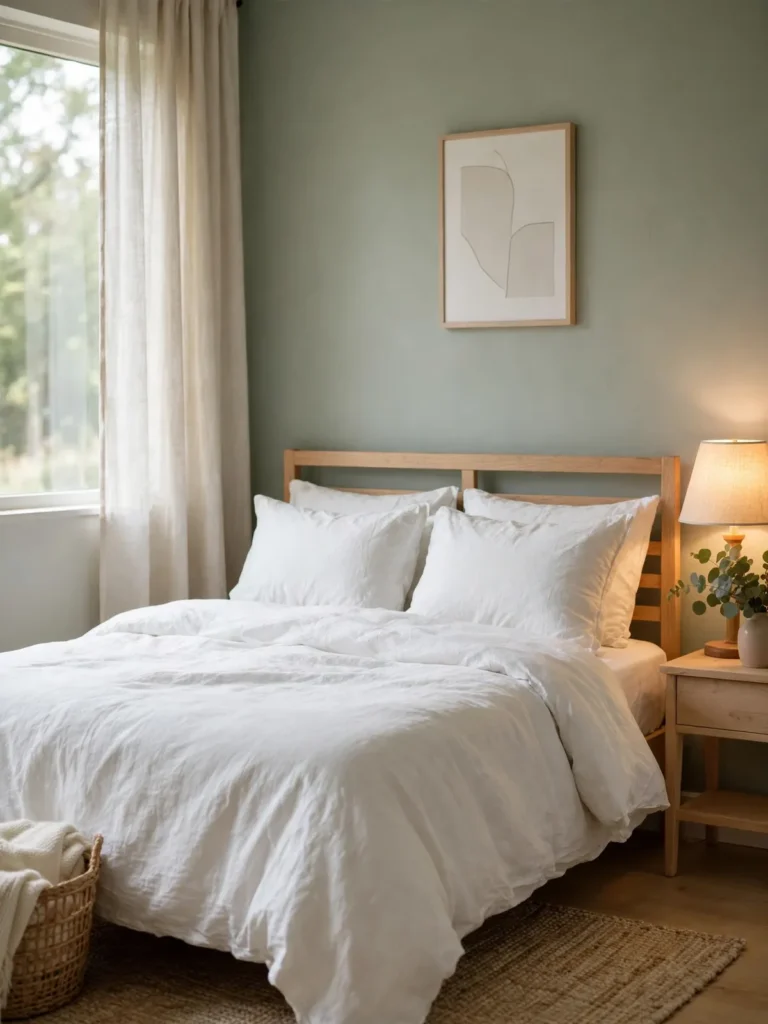
How to Choose the Right Bedroom Rug Size
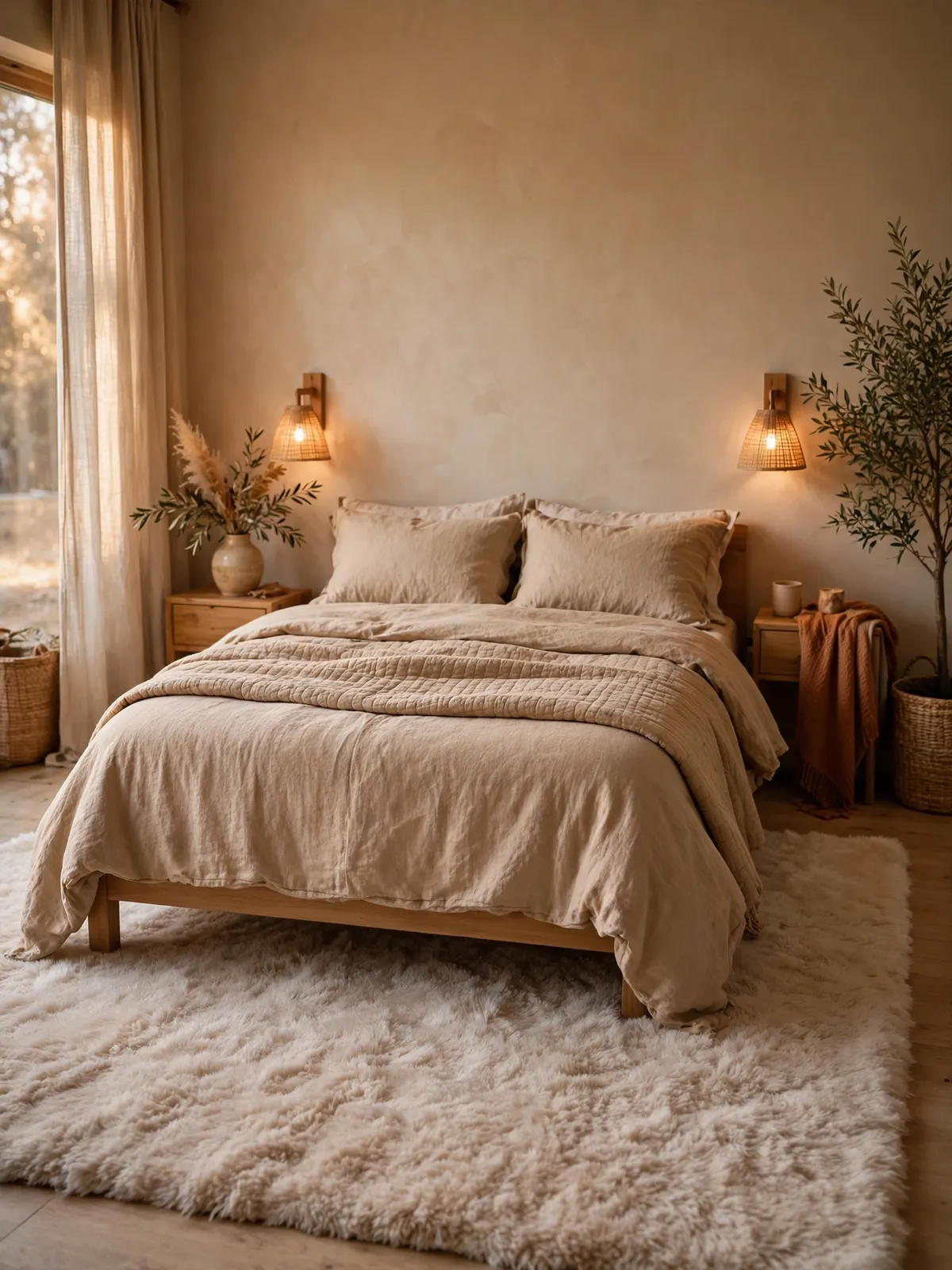
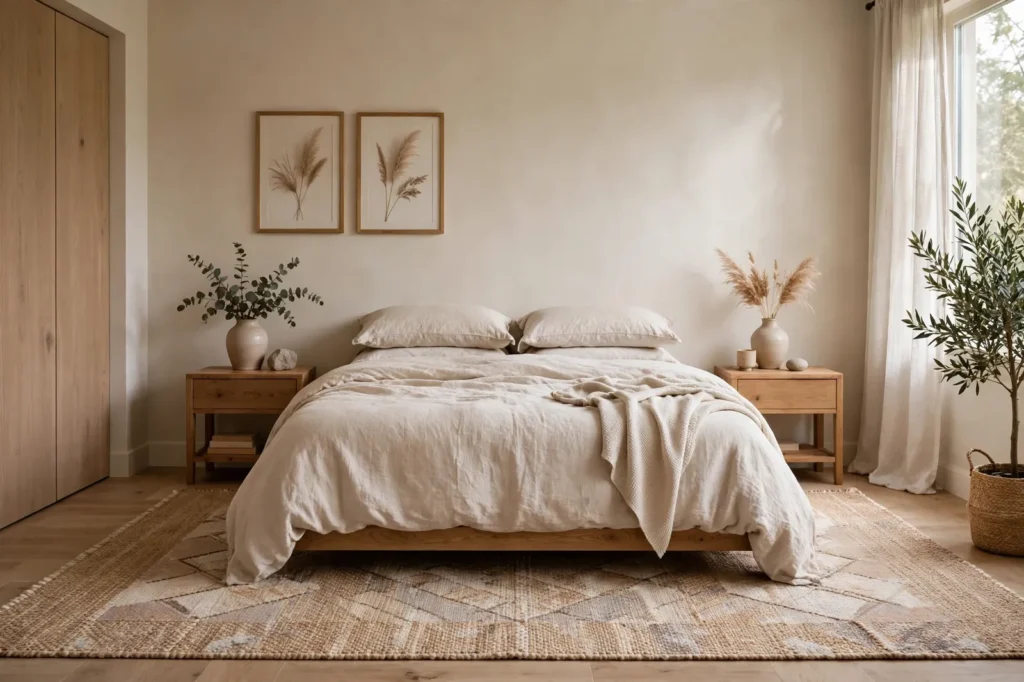
A bedroom rug should make the room feel warm and finished, and it should feel good under your feet first thing in the morning. But a rug that is too small can look like a mat lost in the middle of the floor, while one that is too big can swallow the room and bunch up under furniture.
Choosing the right size is mostly about measuring your bed and thinking about where your feet land when you get up. Once you know those two things, the rest is easy. This guide walks through the sizes, the placements, and the mistakes to avoid, so you can pick a rug with confidence.

1. Why Rug Size Matters So Much
A rug ties a bedroom together. It connects the bed, the nightstands, and the rest of the furniture into one group, instead of leaving them as separate pieces on a bare floor. When the size is right, the room looks calm and intentional. When it is wrong, even a pretty rug can make the room feel off.
Size also affects comfort. The best part of a bedroom rug is stepping onto something soft when you get out of bed. If the rug is so small that your feet miss it, you lose that benefit entirely. A rug that extends past the sides of the bed gives you that soft landing every morning.
2. Measure Your Bed First
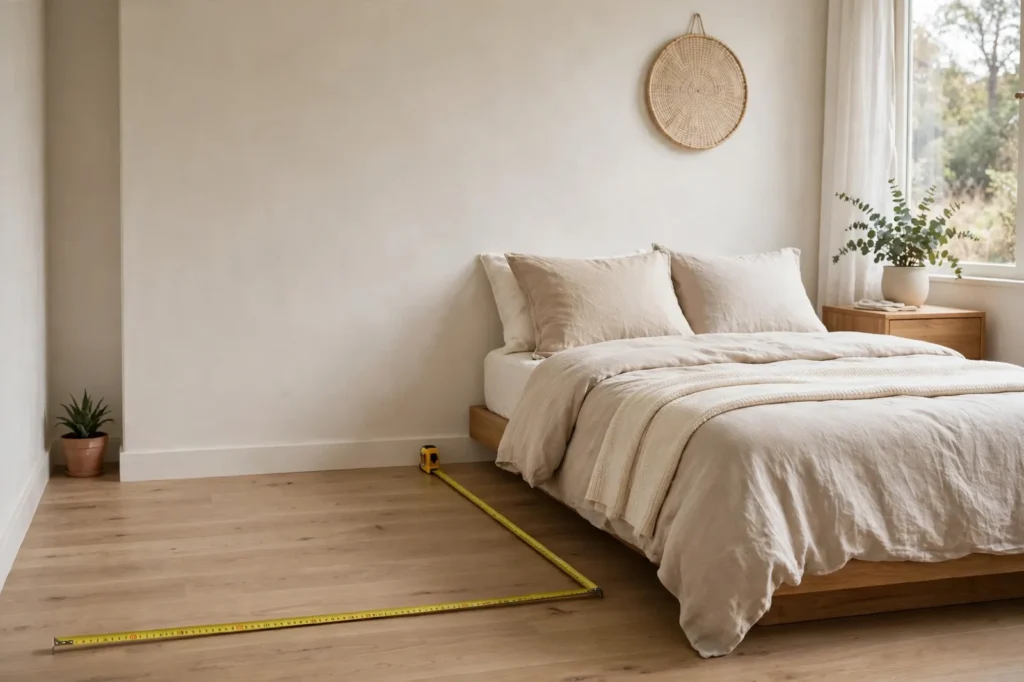
Before you shop, measure your bed, not just the mattress. Note the full width and length, including the frame, and note how far the bed sits from the wall. Those numbers decide which rug sizes will actually work in your room, and they stop you from guessing in the store.
Also measure the space around the bed: the distance to the door, the dresser, and the closet. A rug should leave a border of bare floor around it, usually at least 18 inches from the wall, so the room does not feel covered wall to wall. Write the numbers down and take them with you, or keep them on your phone while you shop online.
3. Standard Sizes by Bed Size
A few standard sizes cover most bedrooms. For a twin or single bed, a 3 by 5 foot rug beside the bed, or a 5 by 8 foot rug under the lower two-thirds, usually works. For a full or double bed, a 5 by 8 foot rug is a good starting point.
For a queen bed, the most popular choice is an 8 by 10 foot rug placed under the bed, with the top third under the bed and the rest extending past the sides and foot. For a king bed, a 9 by 12 foot rug is usually the right fit. If your room is small, you can go one size down, but do not go two sizes down, or the rug will look stranded.
4. Placement: Under the Bed or Beside It
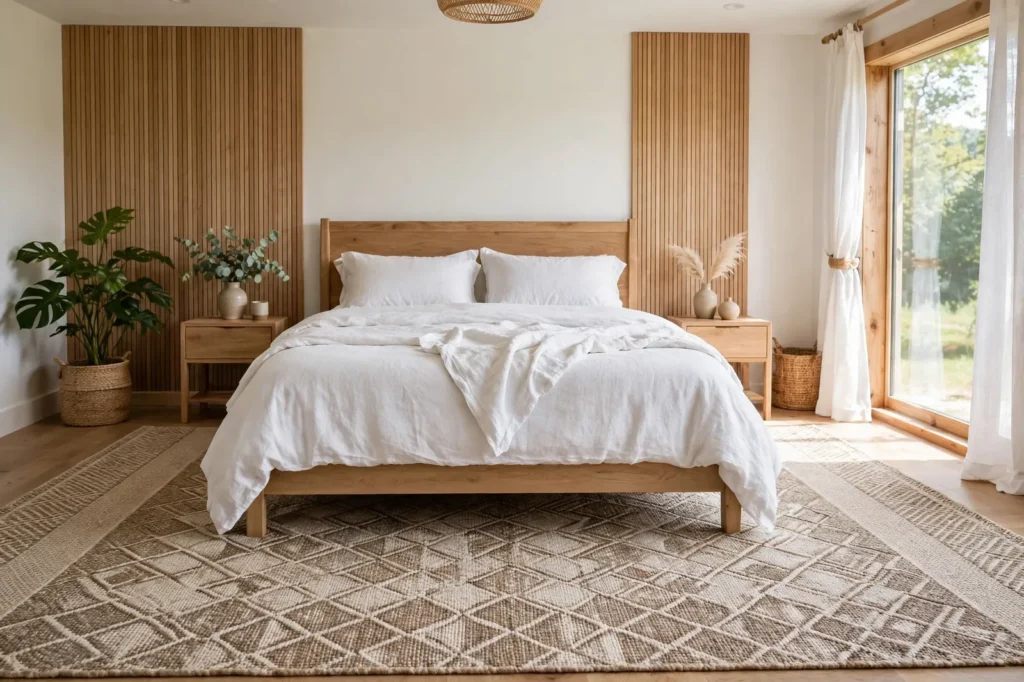
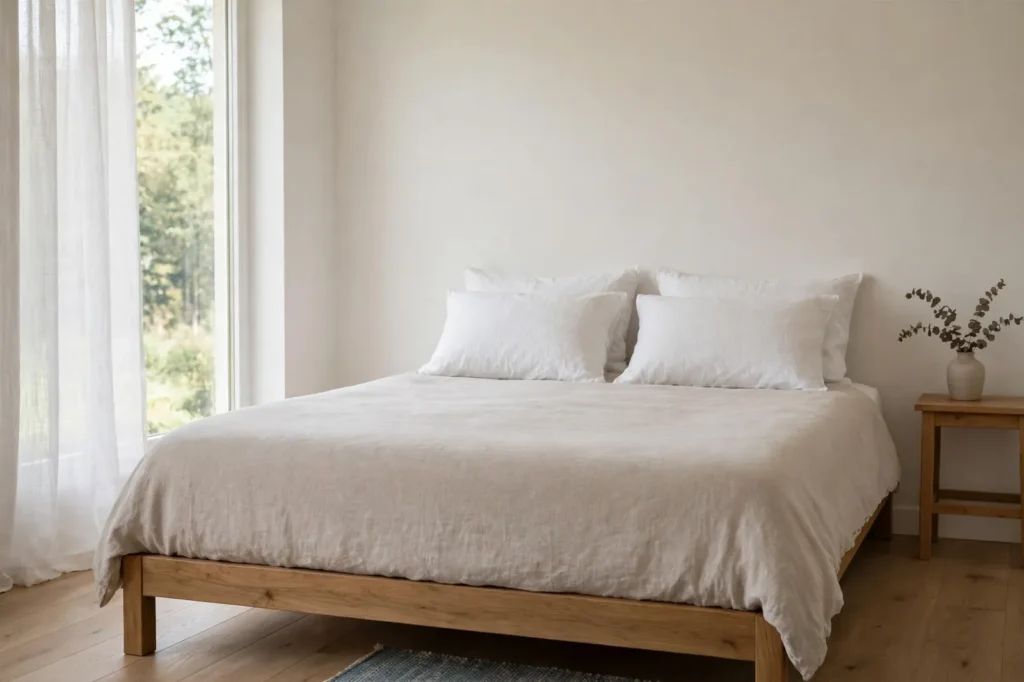
There are two main ways to place a bedroom rug. The classic way is under the bed: slide the rug so the top edge sits under the top third of the bed, near the headboard, and the rest extends out past the sides and the foot. That way the rug shows on three sides and feels generous.
The other way suits small rooms: place a runner or a small rug on each side of the bed, where your feet land. Runners are cheaper than one large rug and easy to wash, but they do not tie the room together as well as a single large rug. If you use runners, pick a pair that matches, so the two sides look balanced.

5. Small Bedroom Solutions
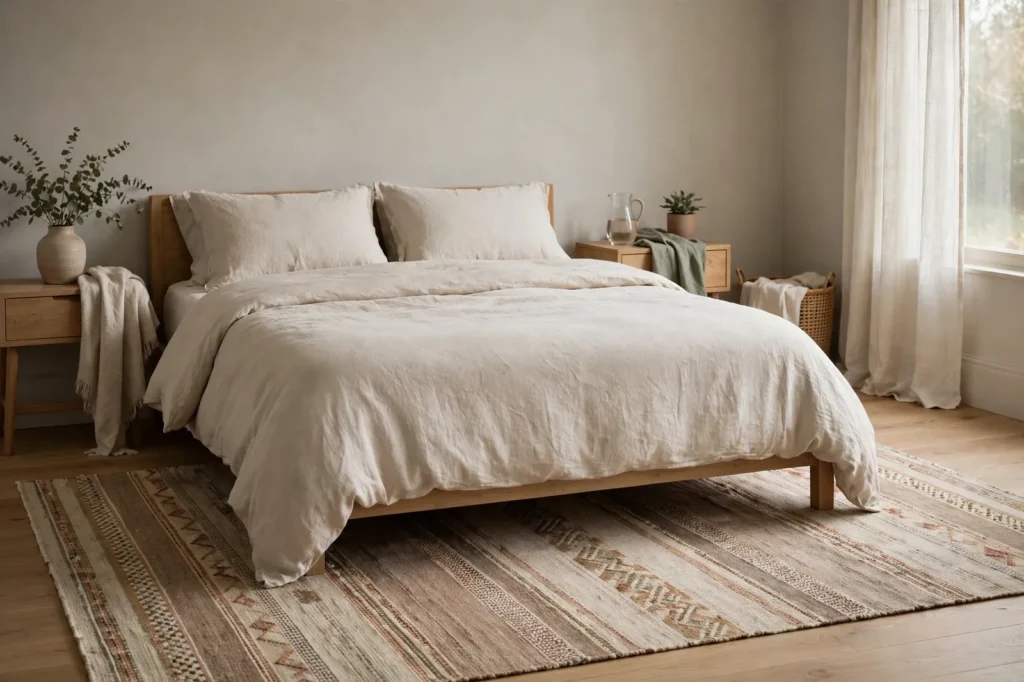
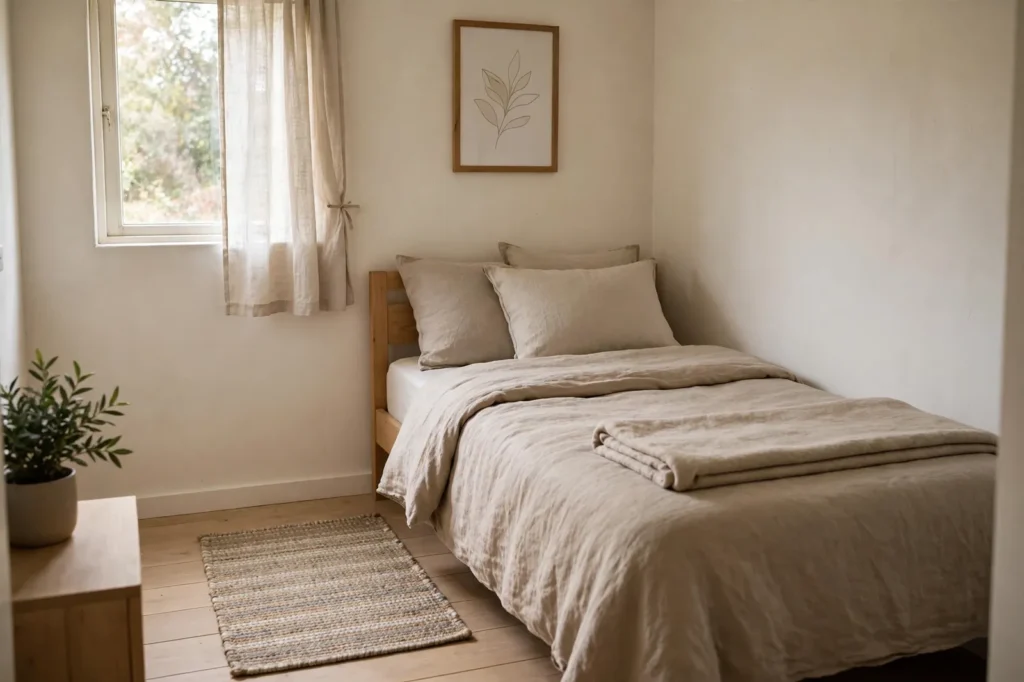
Small bedrooms need a different approach. A large rug can still work if the room is just big enough, but often a 5 by 8 foot rug under the lower two-thirds of the bed is the practical limit. Leave the area near the door clear so the rug does not become a trip hazard.
If even that feels tight, use one runner on the side you get out of bed, or a small round rug at the foot of the bed. A light-colored rug helps a small room feel bigger than a dark one, and a low pile is easier for doors to clear. The goal in a small room is softness where your feet land, not covering the whole floor.
6. Rectangle, Round, or Runner
Rectangles are the safest choice for most bedrooms because beds are rectangles, and a rectangular rug follows the shape of the bed. They suit almost every room and are easy to find in standard sizes.
Round rugs suit a specific spot: under a reading chair in the corner, or at the foot of the bed as an accent. They do not usually work as the main bedroom rug, because they leave awkward gaps beside a rectangular bed. Runners, as mentioned, are best beside the bed or in a long, narrow room. Pick the shape that matches the job, not just the shape you like in a photo.

7. Material and Pile for Bedroom Comfort
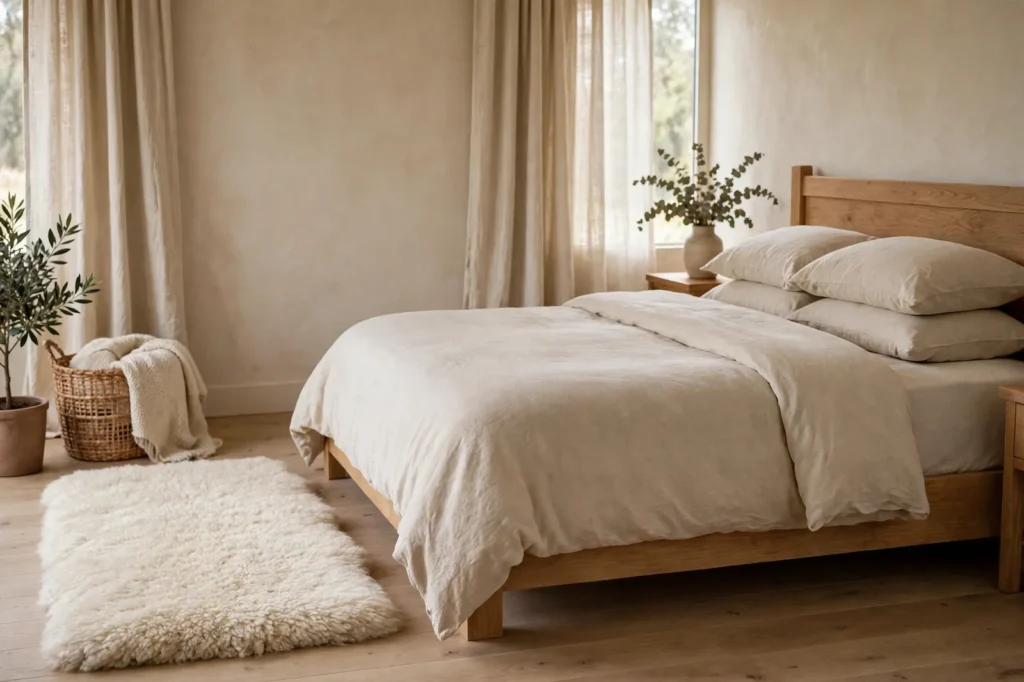
A bedroom rug does not take the heavy traffic a living room rug does, so you can choose softer materials. Wool is warm, durable, and easy to clean. Cotton is soft and washable, which suits a kids’ room or a home with pets. A plush, high-pile rug feels wonderful under bare feet but shows footprints and is harder to vacuum.
Low-pile rugs are easier to keep clean and safer for doors that swing over them. If you love a plush rug, keep it beside the bed rather than under heavy furniture, where it will flatten. Whatever material you choose, add a rug pad underneath: it stops slipping, adds softness, and helps the rug last longer.
8. Layering Rugs for a Softer Look
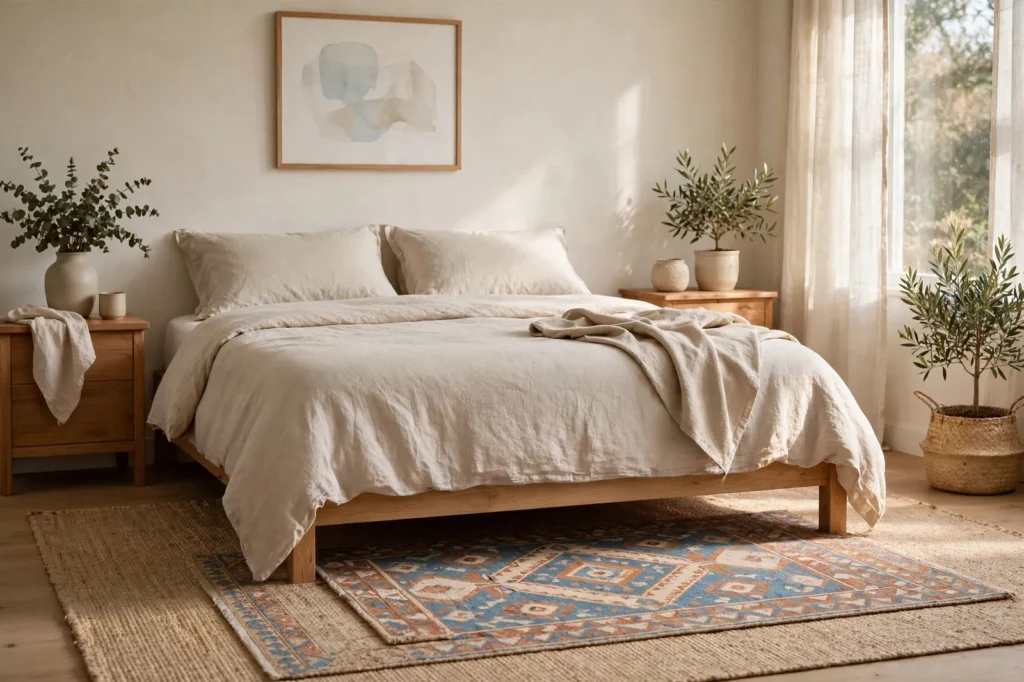
Layering — placing a smaller rug on top of a larger one — is a simple way to add texture and color without buying one expensive rug. A large, plain jute or wool rug underneath, with a smaller patterned rug on top near the foot of the bed, looks relaxed and stylish.
Keep the layers simple: one plain base and one patterned top, in colors that already appear in the room. Make sure the top rug is heavy enough not to slide, or fix it with a rug pad. Layering works best in larger bedrooms, where there is room for both rugs to show. In a small room, one well-chosen rug is usually better than two.
9. Common Mistakes to Avoid
The most common mistake is buying too small. If you are torn between two sizes, the larger one is usually right, as long as it leaves a border of floor around it and does not block a door. A rug that only peeks out from under the bed looks like an afterthought.
Other mistakes are easy to avoid: do not place a rug so it bunches under a dresser drawer, do not skip the rug pad, and do not pick a very light rug for a room with pets if you cannot wash it. Measure first, leave a floor border, and test the placement with painter’s tape on the floor before you buy, and you will avoid almost every rug-size regret.
Frequently Asked Questions
What size rug goes under a queen bed?
An 8 by 10 foot rug is the most popular choice for a queen bed. Place it with the top third under the bed, so it extends past both sides and the foot, giving you a soft landing when you get up.
Should a bedroom rug go under the whole bed?
It does not need to go under the whole bed. Placing the top third of the rug under the bed, near the headboard, is standard and looks generous. The headboard legs and nightstands usually sit off the rug, which is fine.
How much floor should show around a bedroom rug?
Leave at least 18 inches of bare floor between the rug and the wall where possible. That border keeps the room from looking carpeted wall to wall and helps the rug look like a deliberate choice.
Can I use two runners instead of one large rug?
Yes. A matching runner on each side of the bed works well in small rooms and is cheaper and easier to wash than one large rug. It does not tie the room together as well, but it gives you softness exactly where your feet land.
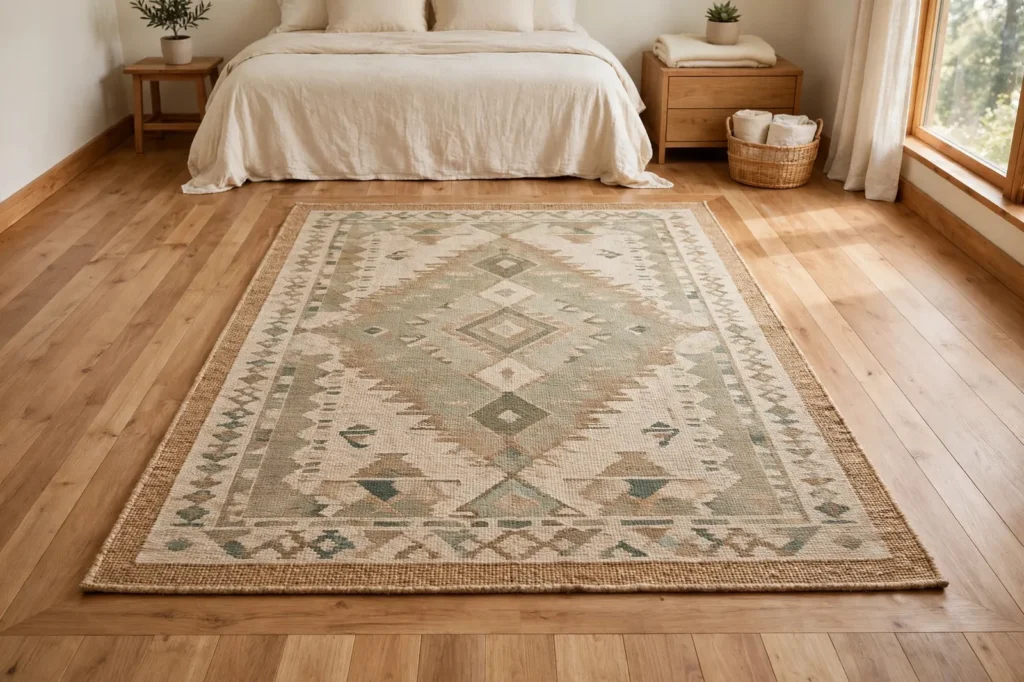
Related ideas
If you are styling the whole bedroom, these guides go well with this one. Start with these nightstand styling ideas for a beautiful bedroom for the tables beside the bed, then see these headboard ideas for every bedroom style for the frame behind it, and these small bedroom ideas to make a room feel bigger if space is tight.