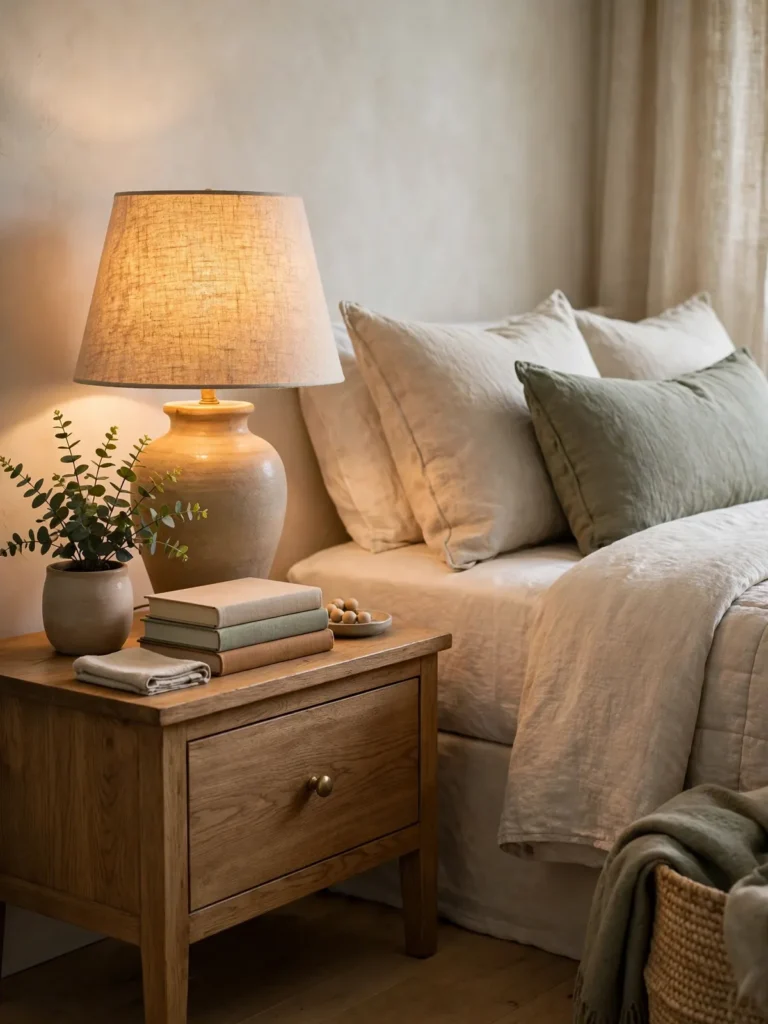
Bedroom Decorating Ideas for a Cozy and Stylish Space
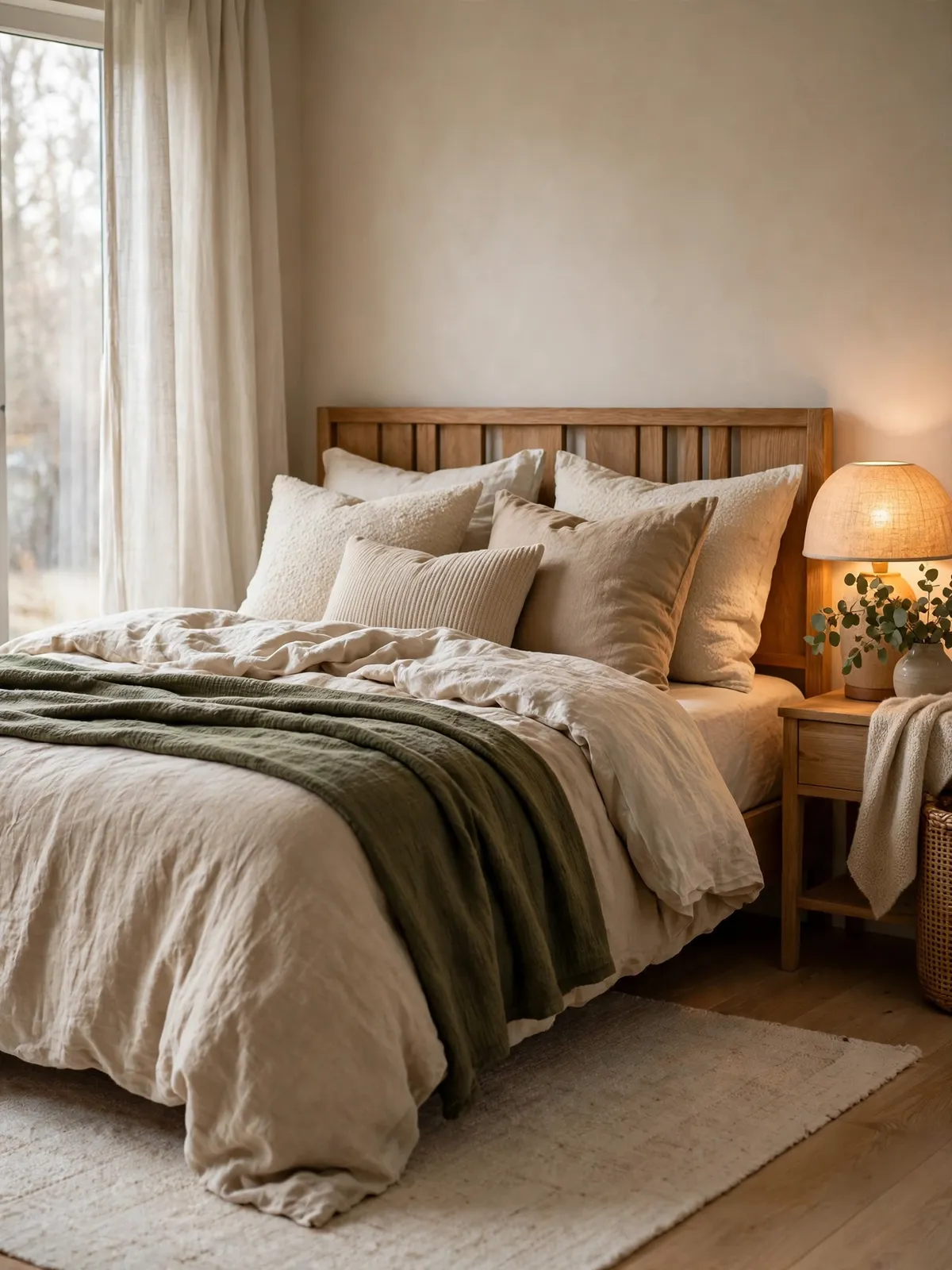
Your bedroom should be the easiest room in the house to relax in, but it is often the last one to get attention. It collects laundry chairs, old bedding, and furniture that was bought for another room. A few thoughtful changes, though, can turn it into a space that feels both cozy and stylish without a full renovation.
The trick is to focus on the things you touch and see every day: the bed, the lighting, and the colors around you. Get those right, and the rest of the room falls into place. These ideas work in big bedrooms and small ones, and most of them cost very little.
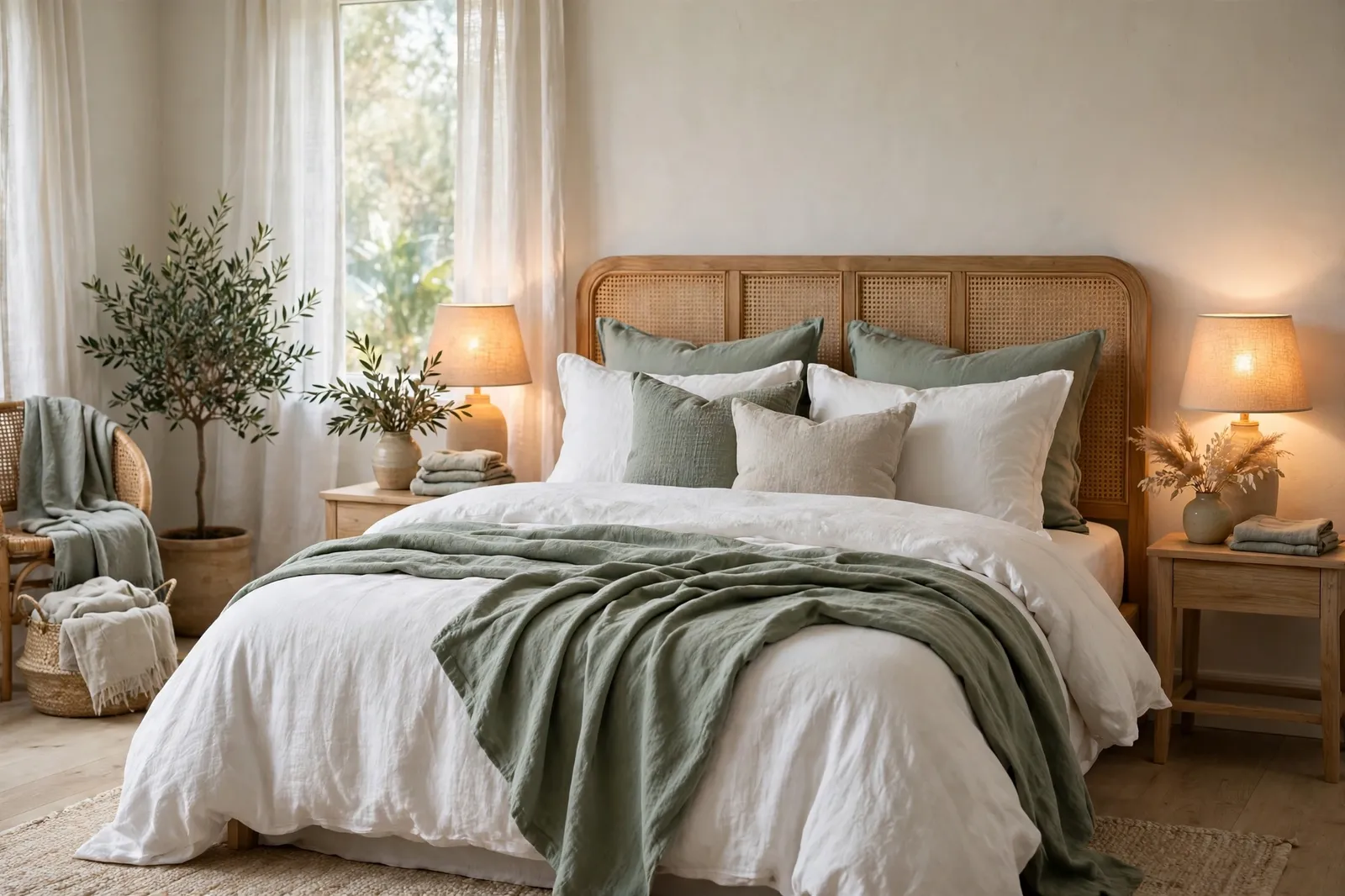
1. Start With Layers on the Bed
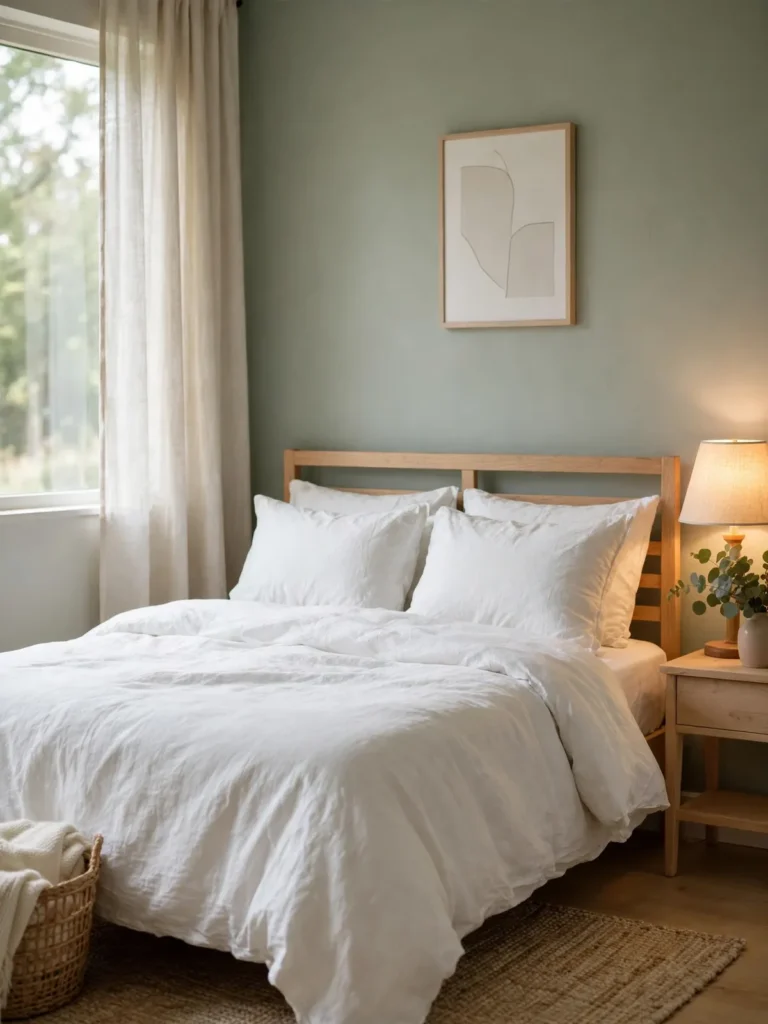
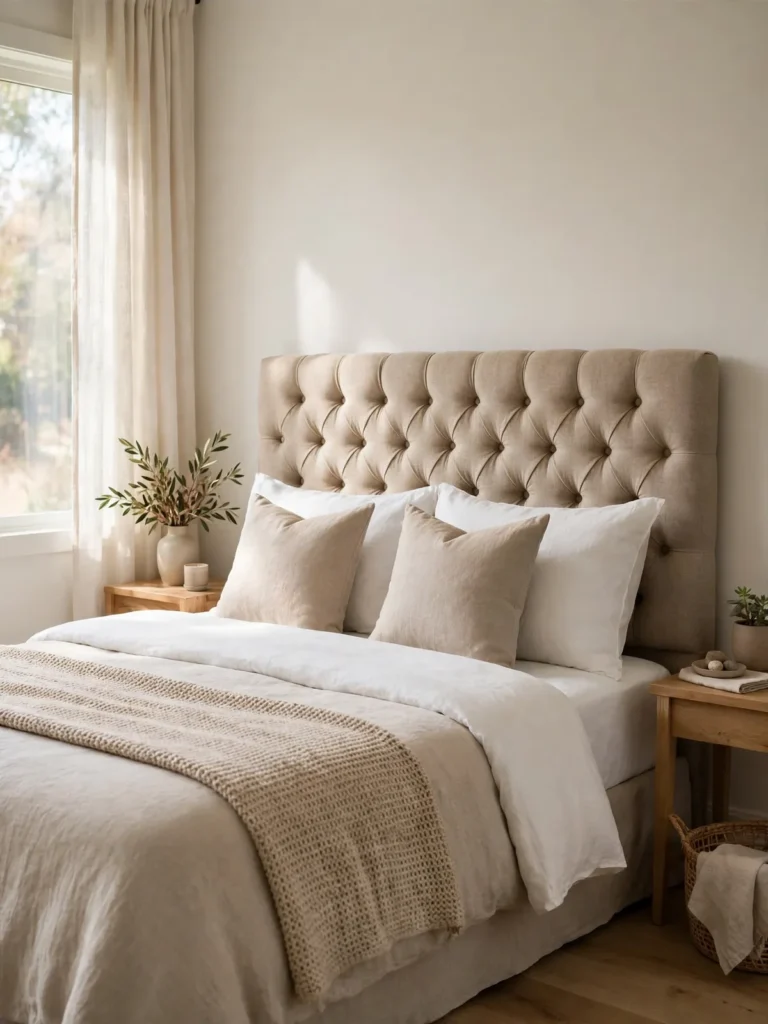
The bed is the biggest thing in the room, so it sets the tone for everything else. Start with good sheets, add a duvet or comforter, and finish with a throw and a couple of pillows. Layers make the bed look inviting, and they are practical too — you can peel one off on a warm night and add it back when it gets cold.
You do not need a dozen pillows. Two sleeping pillows, two standard pillows in front, and one or two decorative ones are enough for most beds. Stick to fabrics that feel good against your skin, like cotton or linen, and wash them regularly. A freshly made bed with clean, layered bedding makes the whole room feel cared for, even if nothing else changes.

2. Pick a Calm Color Palette
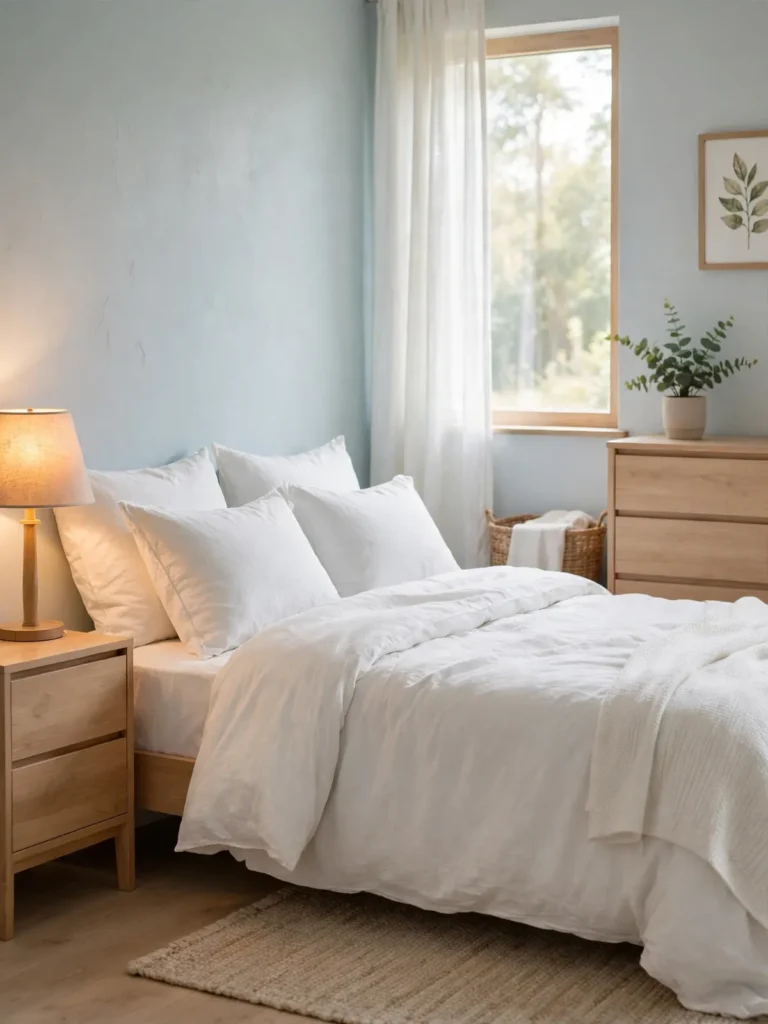
Bedrooms work best in calm colors. Soft whites, warm beige, sage green, dusty blue, and light grey all help a room feel restful, and they are easy to live with day after day. Pick one main color for the walls and bedding, one supporting color for pillows and art, and keep any bright color to small accents.
If repainting feels like too much, you can shift the palette with bedding and curtains alone. A white duvet with sage pillows reads very differently from the same bed dressed in grey and navy. Test colors in the room’s own light before committing, because a shade that looks soft in the store can turn cold or yellow at home.
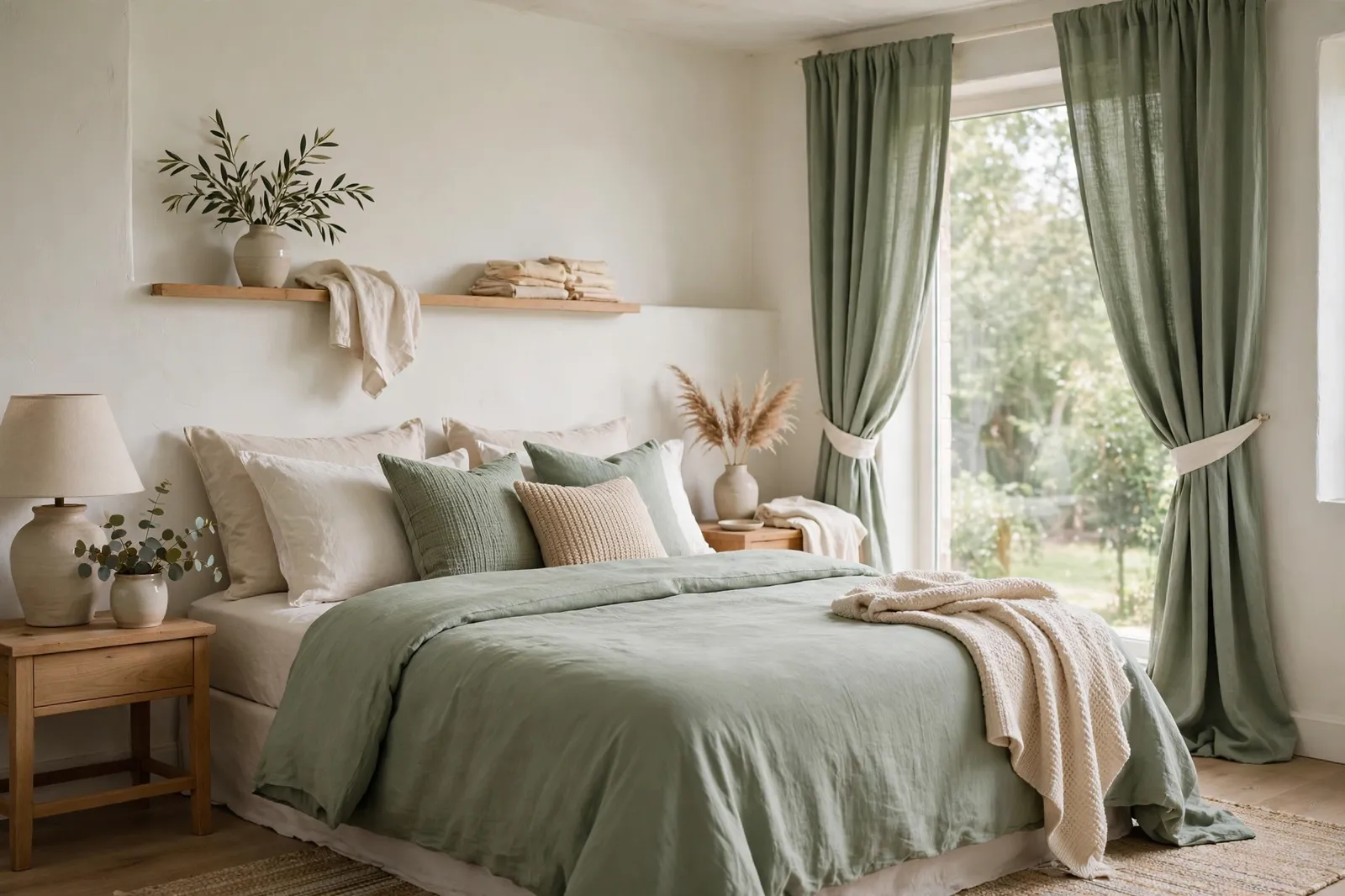
3. Use Warm Lighting, Not Just One Ceiling Light
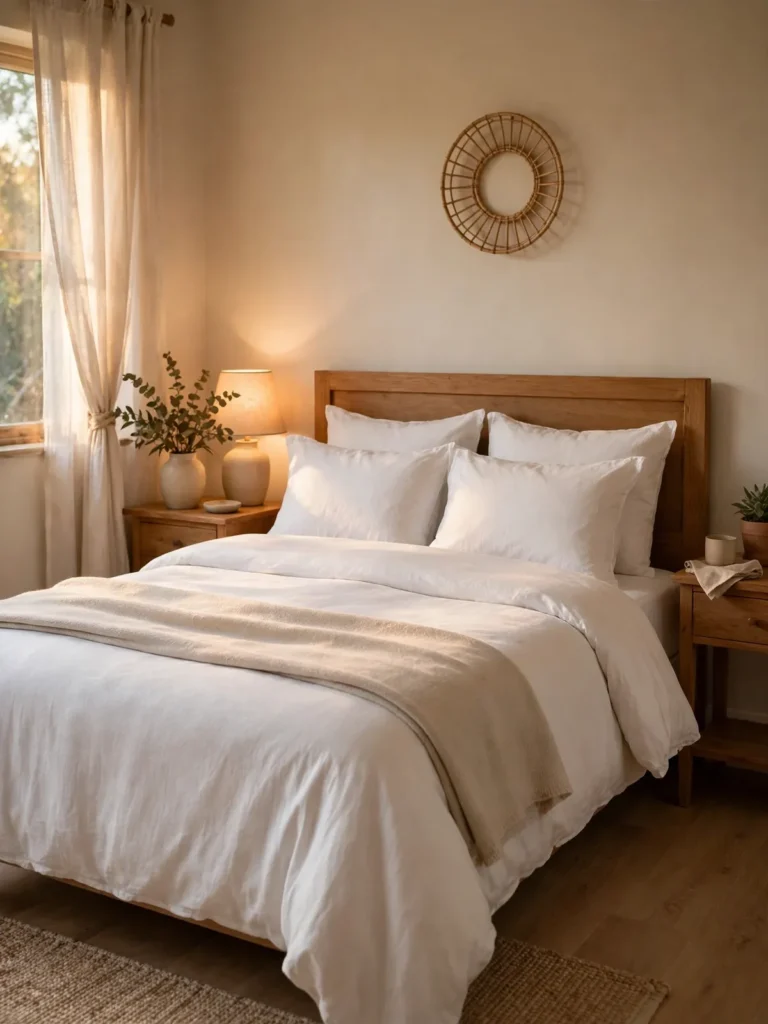
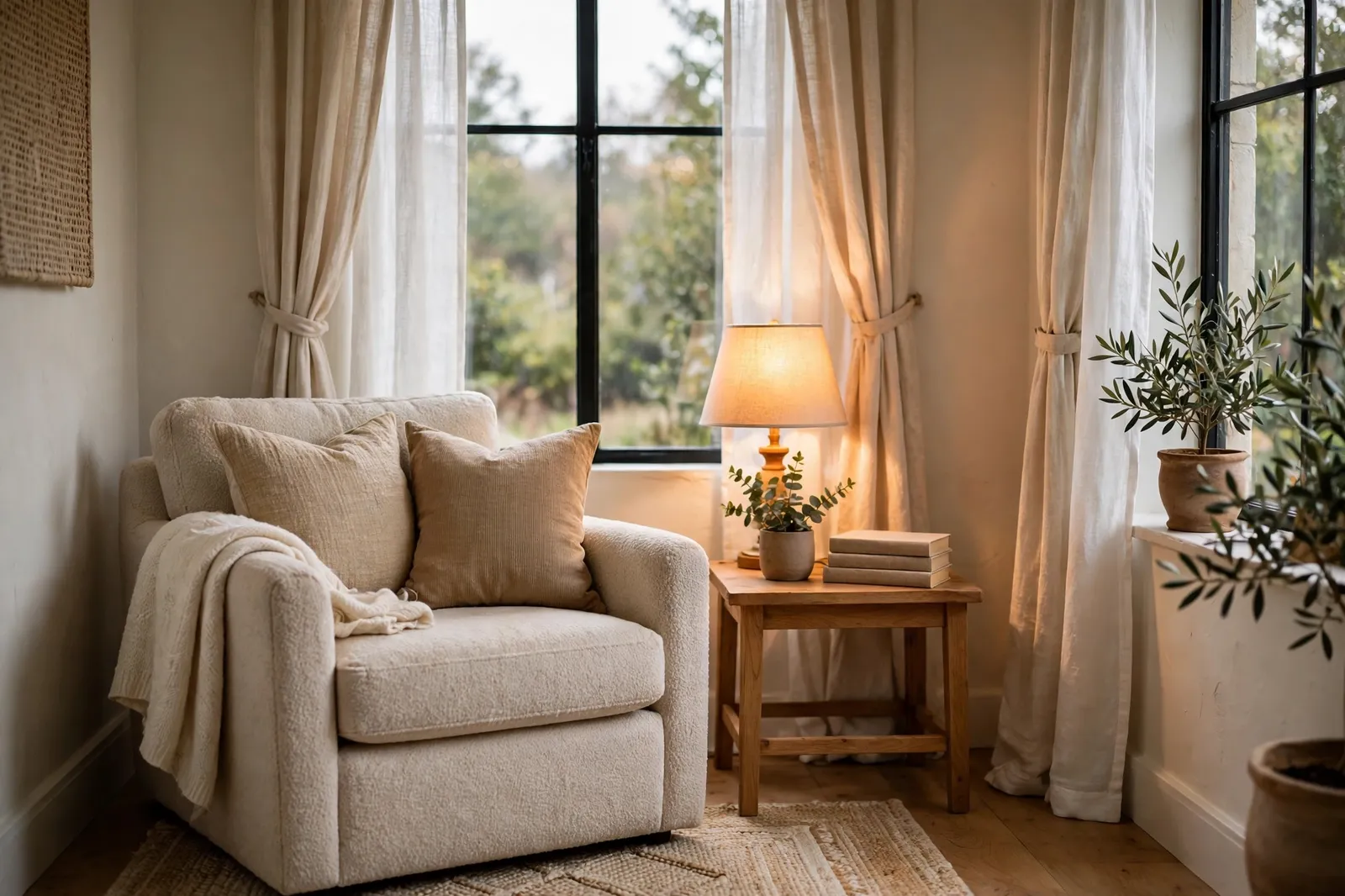
One bright ceiling light is the fastest way to make a bedroom feel harsh. Instead, aim for warm, low lighting: bedside lamps for reading, a small lamp on the dresser, and a dimmer on the overhead light if you can add one. Warm bulbs, around 2700K, make skin tones and bedding look soft in the evening.
Put a lamp on each side of the bed if you have the space, so both people can read without disturbing each other. A lamp with a fabric shade spreads light gently, while a bare bulb glares. If you like falling asleep to soft light, a small plug-in night light or a lamp on a timer does the job without keeping you awake.

4. Choose a Headboard That Anchors the Room
A headboard gives the bed a finished look and stops pillows from sliding down the wall. Upholstered headboards feel soft and cozy, wooden ones add warmth, and a simple rattan or fabric panel works in a relaxed room. The headboard should be about as wide as the bed, or slightly wider, and tall enough to lean against comfortably.
If a new headboard is not in the budget, there are simple stand-ins: a large piece of art hung at headboard height, a woven wall hanging, or even a row of framed prints. What matters is giving the wall behind the bed a focal point, so the bed looks intentional rather than pushed against a blank wall.
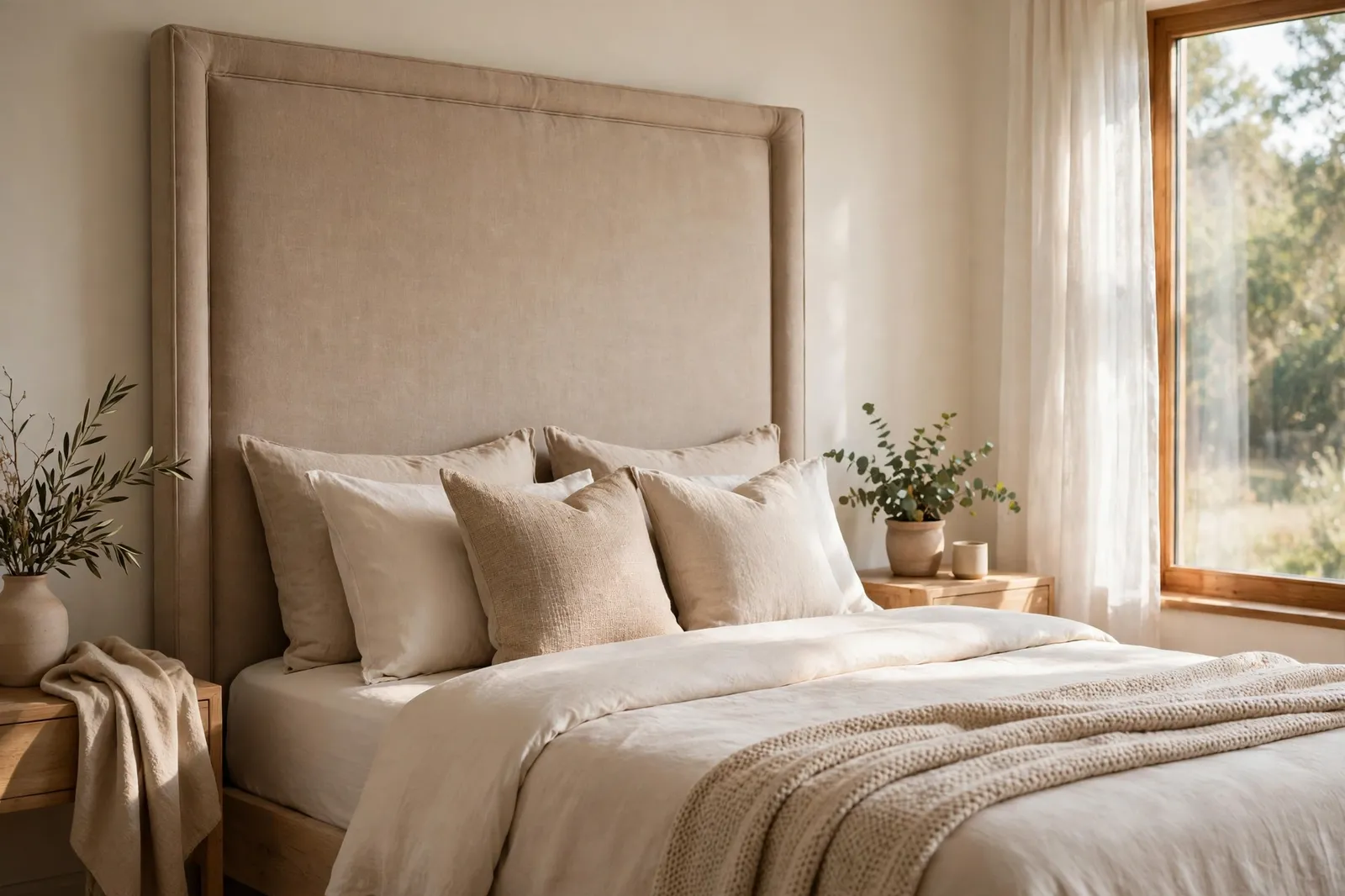
5. Make Your Nightstands Actually Work
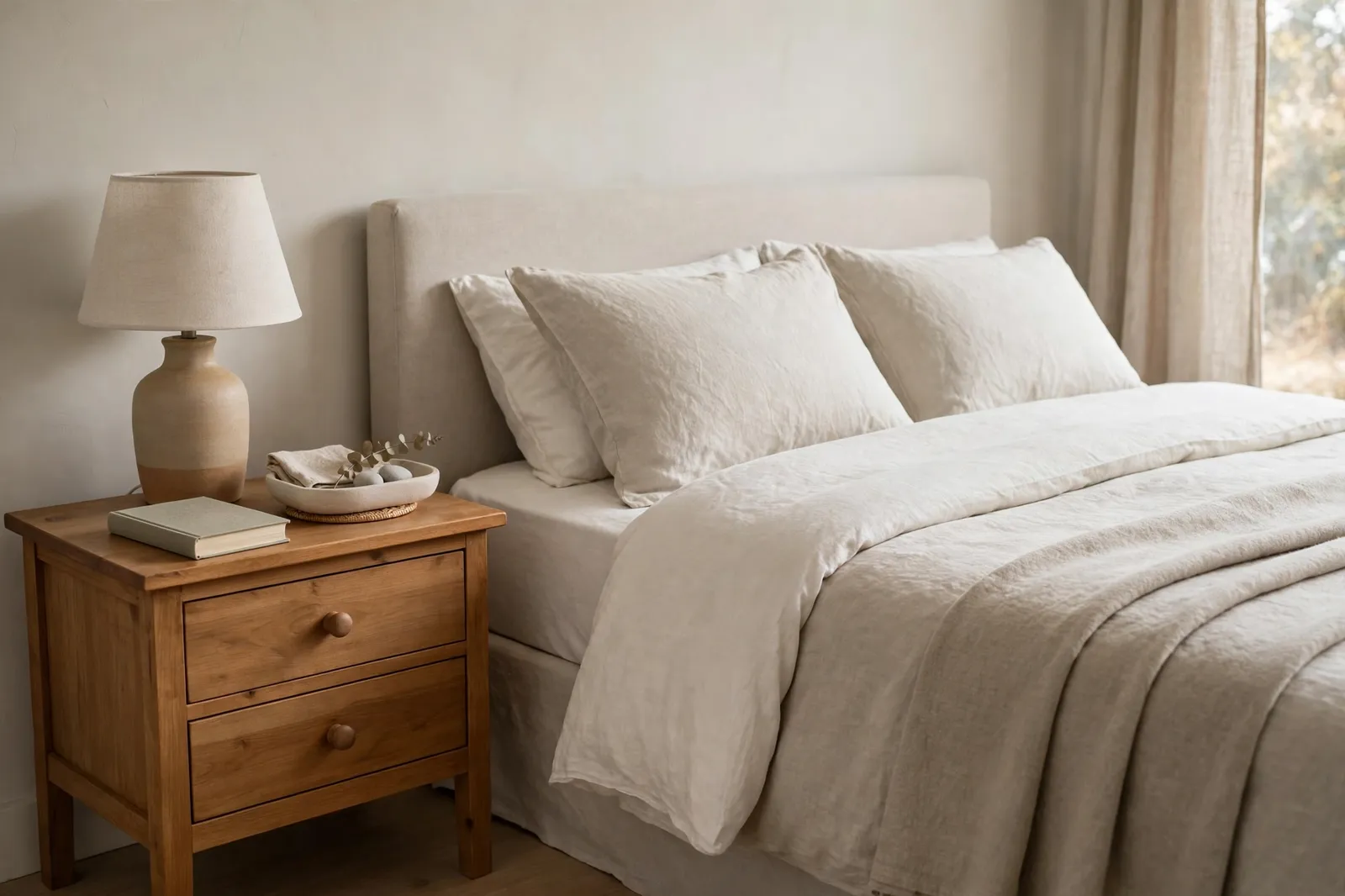
Nightstands are small, but they get used every night, so they should hold what you actually reach for: a lamp, a glass of water, a book, and a phone charger. A nightstand with a drawer or a shelf hides the clutter — chargers, medicines, and spare earbuds — that otherwise piles up on top.
Keep the surface mostly clear. One lamp, one book, and a small tray for little items are enough. If your nightstand is too small for a lamp, a wall-mounted light above it frees up the surface and looks smart. Matching nightstands look tidy, but two different ones in a similar wood tone can look more collected and personal.
6. Put a Rug Under the Bed
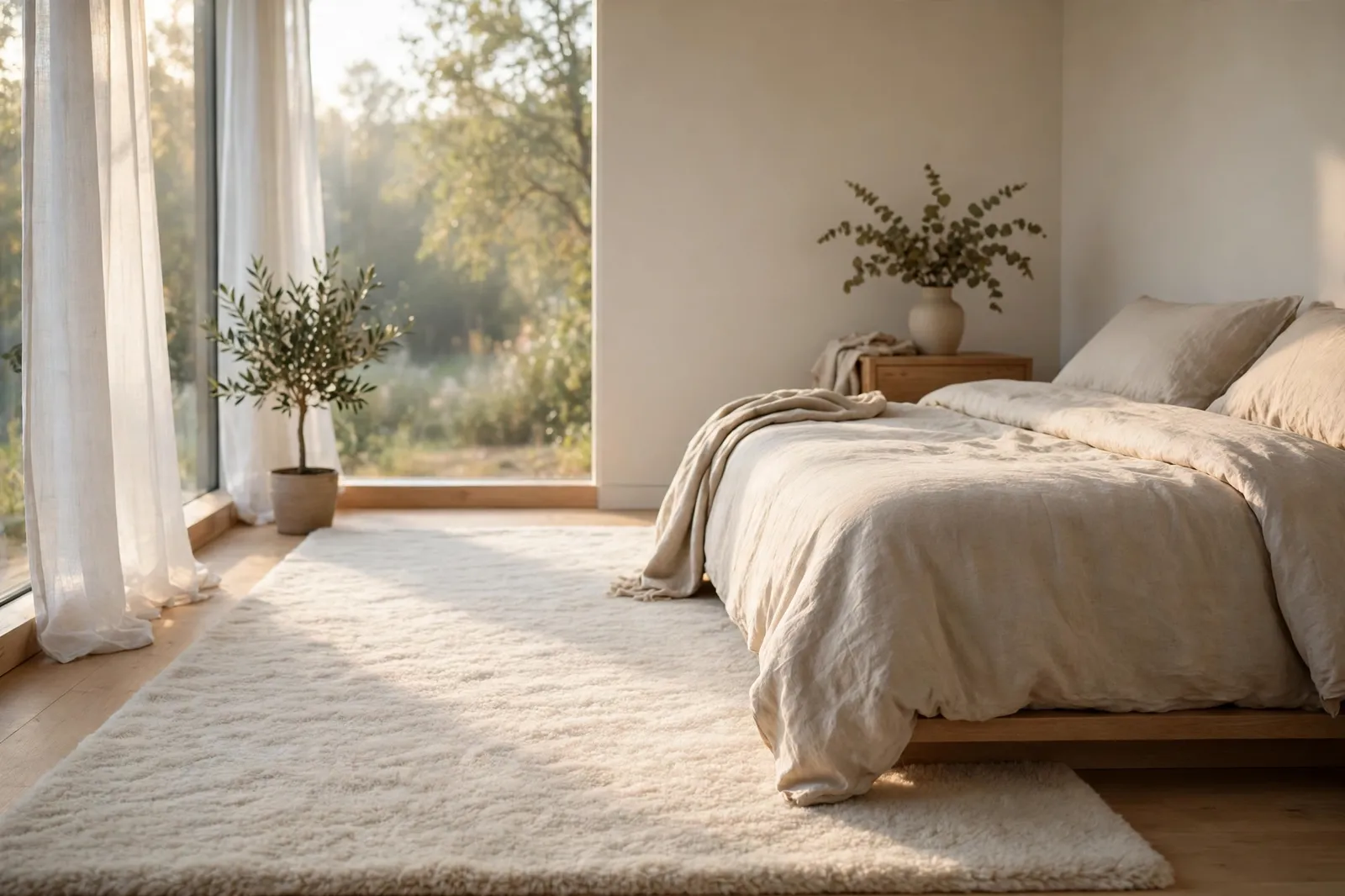
A rug under the bed makes the first step in the morning much nicer, and it ties the room together visually. The rug should extend at least 18 inches beyond the sides of the bed so your feet land on something soft, and it should run far enough toward the foot of the bed that it does not look like a small mat peeking out.
A low-pile rug is easier to clean and less likely to trip you than a thick shag, though a plush rug feels wonderful underfoot. If a full-size rug is too expensive, two runners on either side of the bed give you the same soft landing for less money. Washable rugs are a smart pick if you have pets that sleep in the bedroom.
7. Dress the Windows for Sleep and Light
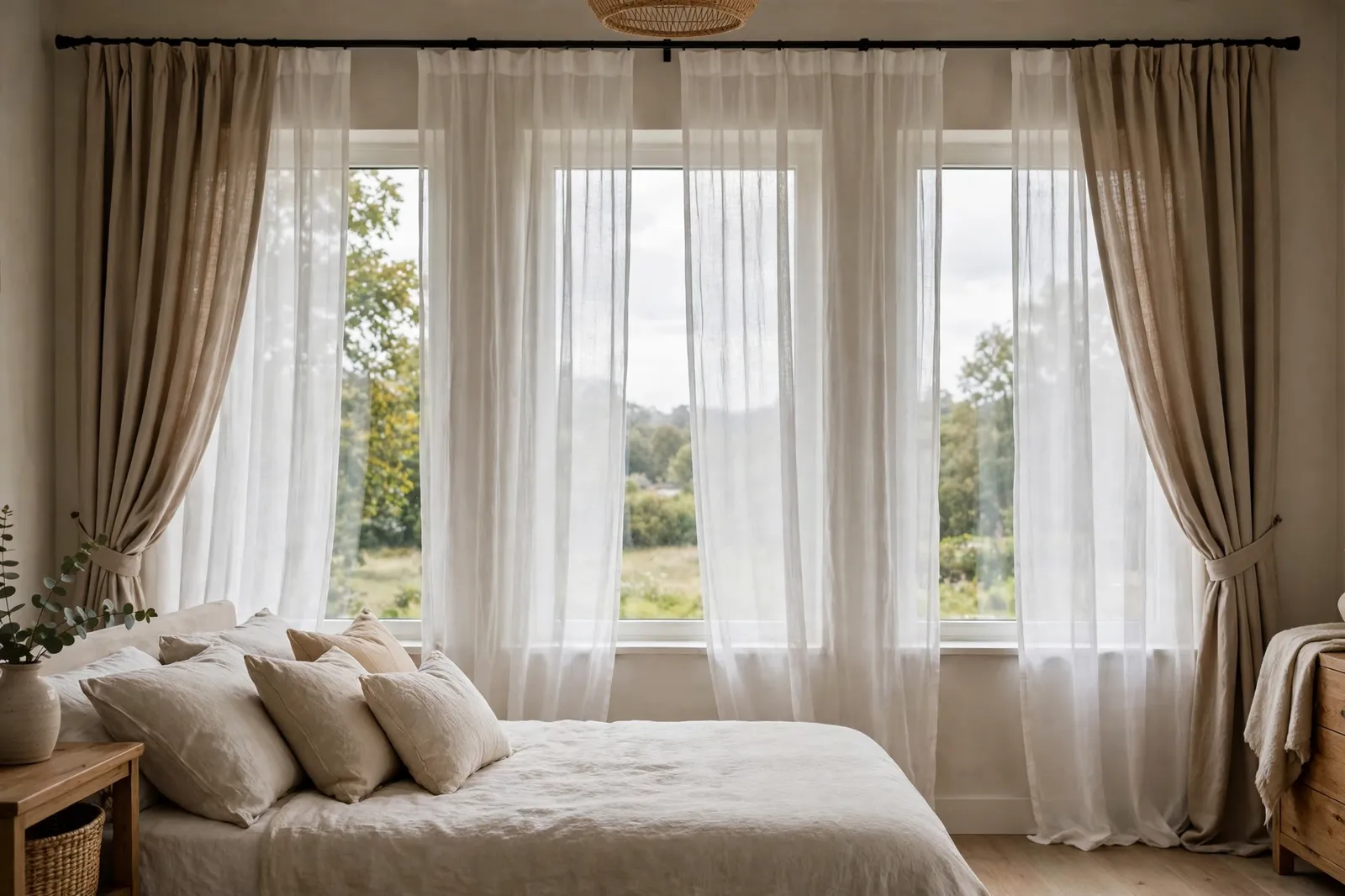
Curtains do two jobs in a bedroom: they block light when you want to sleep, and they soften the room during the day. A layered approach works well — sheer curtains for daytime privacy, plus heavier drapes or a blackout lining for sleeping. Hang the curtain rod high and wide, so the curtains frame the window rather than covering part of it.
If you are a light sleeper, blackout curtains or a blackout lining are worth the money. They also help keep the room cooler in summer. Choose a fabric that matches the room’s palette rather than a bold pattern, so the windows feel calm. A simple, well-hung curtain usually looks better than an expensive one hung too low or too narrow.
8. Add Personal Touches Without Clutter
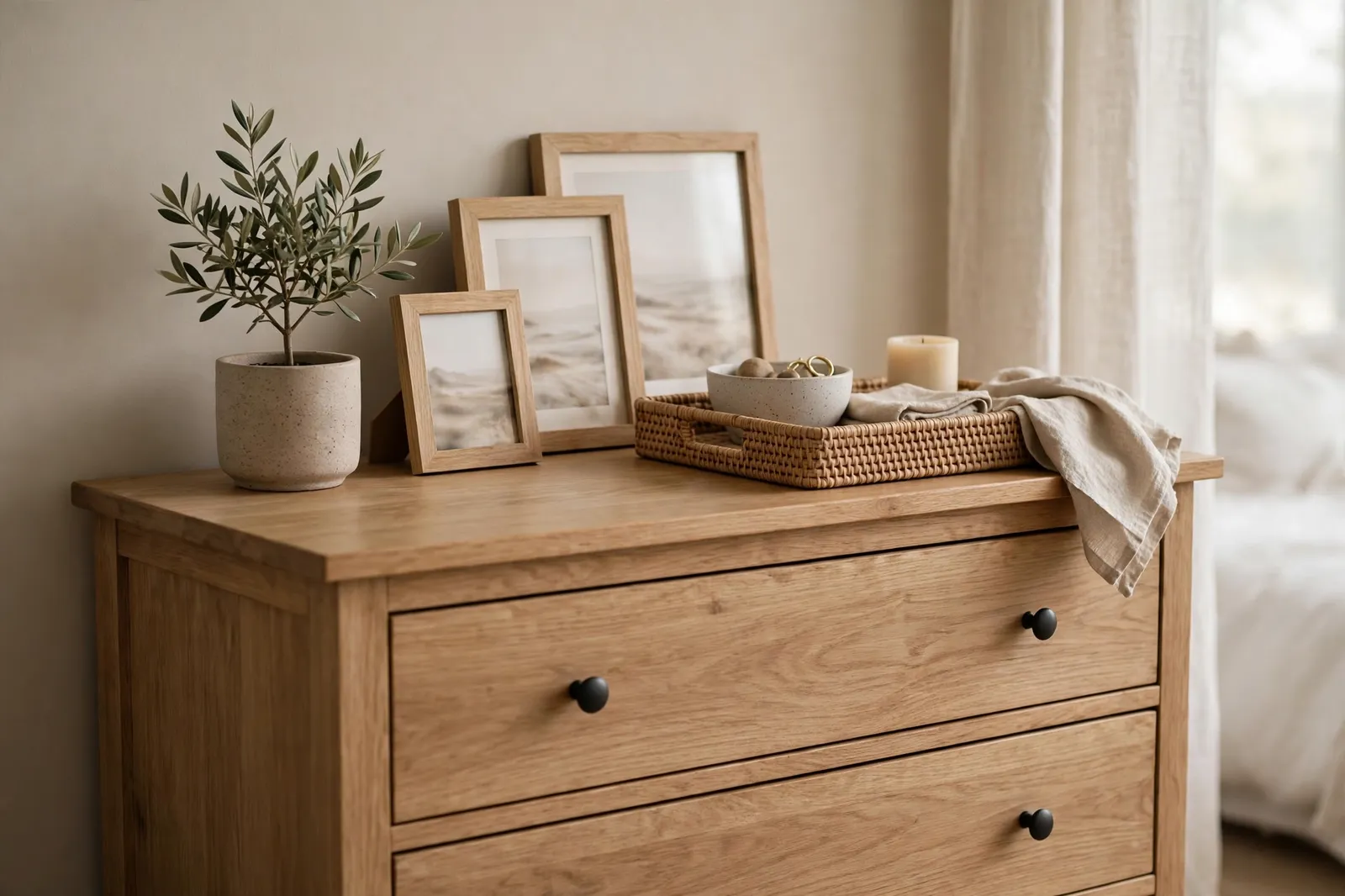
A bedroom should feel like yours, not like a hotel room. A few personal pieces — framed photos, a favorite piece of art, a plant, a candle — make the room feel lived in. The key is choosing a few things you love and giving them space, rather than covering every surface.
Pick one wall for art or photos, and keep the dresser top to a small group of items: a tray with perfume or a watch, a plant, and one decorative piece. Rotate items seasonally if you like change; swapping a print or a throw is cheaper than redecorating. If a surface starts to collect random things, a basket or a box gives them a home without a big clean-up.
9. Keep It Tidy With Simple Storage
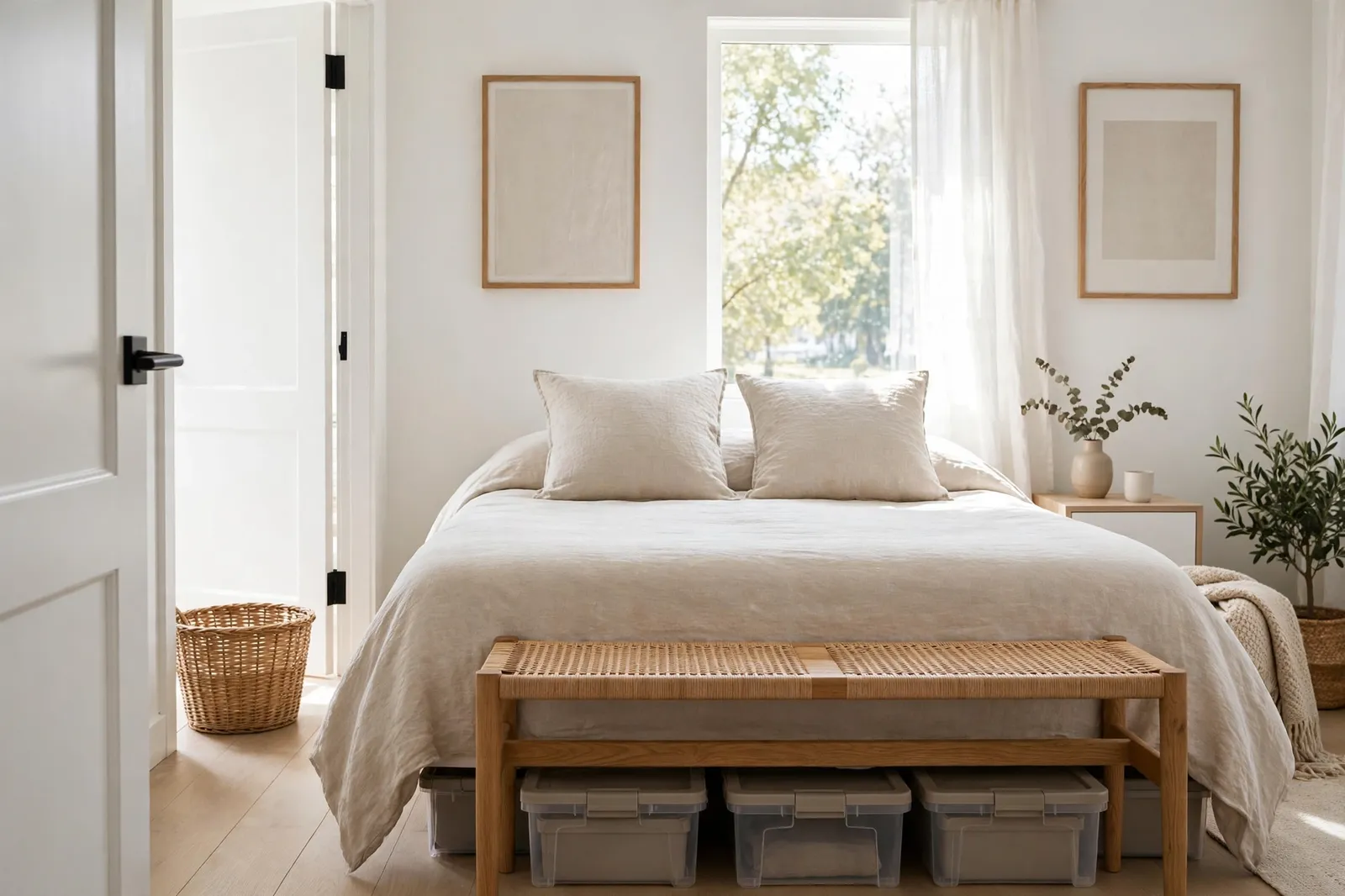
A cozy bedroom is hard to enjoy when it is messy, but storage does not have to be complicated. Under-bed boxes hold off-season clothes, a basket by the door catches laundry, and a small bench at the foot of the bed gives you a place to lay out tomorrow’s clothes. Hooks behind the door handle bags and robes that would otherwise end up on a chair.
Do a quick reset each evening: make the bed in the morning, put clothes away instead of on the chair, and clear the nightstand once a week. These small habits take a few minutes and keep the room feeling calm. A bedroom that is easy to tidy stays cozy, because you are not fighting clutter every time you walk in.

Frequently Asked Questions
What colors are best for a cozy bedroom?
Soft, calm colors work best: warm white, beige, sage green, dusty blue, and light grey. Pick one main color and one supporting color, and keep bright colors to small accents like a pillow or a throw. Warm tones usually feel cozier than cool ones, especially in a room that does not get much sun.
How do I make my bedroom look stylish on a budget?
Start with the bed: fresh, layered bedding in a calm palette changes the whole room for relatively little money. Add warm bedside lamps, hang curtains high and wide, and clear clutter from surfaces. Paint is the next best value if you want a bigger change — one calm wall color transforms the space.
Should bedroom furniture match?
It does not have to match exactly, and a room often looks better when pieces are close in tone but not identical. A matching bed and nightstands look tidy, but a different wood tone on the dresser or a rattan chair can add character. Keep the overall wood tones in the same family so the room feels pulled together.
How can I make a bedroom feel cozy without making it dark?
Layer warm lighting instead of relying on one ceiling light, and use light colors on the walls with warm accents in bedding and wood. Sheer curtains let daylight in while keeping privacy, and a soft rug and throw add warmth without darkening the room. Mirrors opposite a window also bounce light around.
Related ideas
If you are planning the rest of your home around a calmer, cozier feel, these guides go well with this one. Start with these cozy living room ideas for the same warm, layered approach in the living room, and see these neutral living room ideas for a palette that works across both rooms. For the big picture on decorating room by room, these living room decorating ideas show how to pull a whole home together. For a smaller bedroom, these small bedroom ideas show how to make a tight room feel bigger.