Neutral Living Room Ideas That Never Go Out of Style
A neutral living room is one of the safest choices you can make, and also one of the easiest to get wrong. Done well, it feels calm, warm, and welcoming, and it never looks dated. Done badly, it can feel cold, plain, or a little like a blank showroom. The difference is rarely about spending more money — it is about layering the right shades, textures, and small touches so the room feels lived in.
The good news is that neutrals are very forgiving. You can start with what you already have, add a few warm layers, and fix the flat spots one at a time. Whether your room is big or small, bright or a little dark, these ideas will help you build a neutral living room that still feels like home years from now.
1. Start With Warm Neutrals, Not Stark White
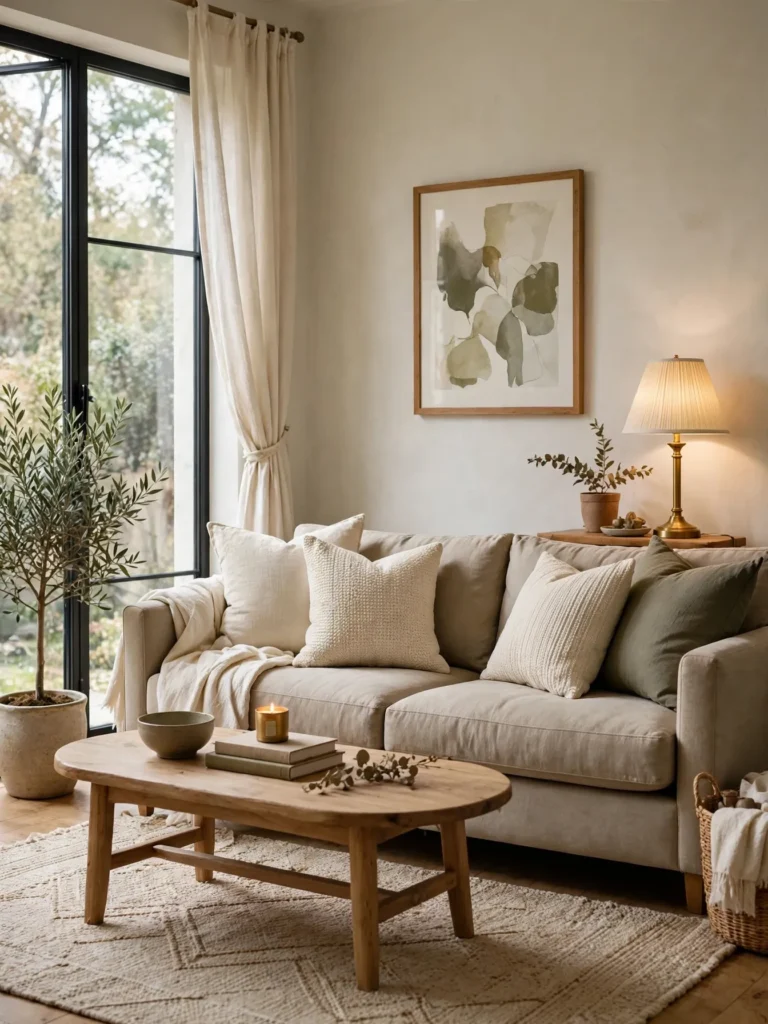
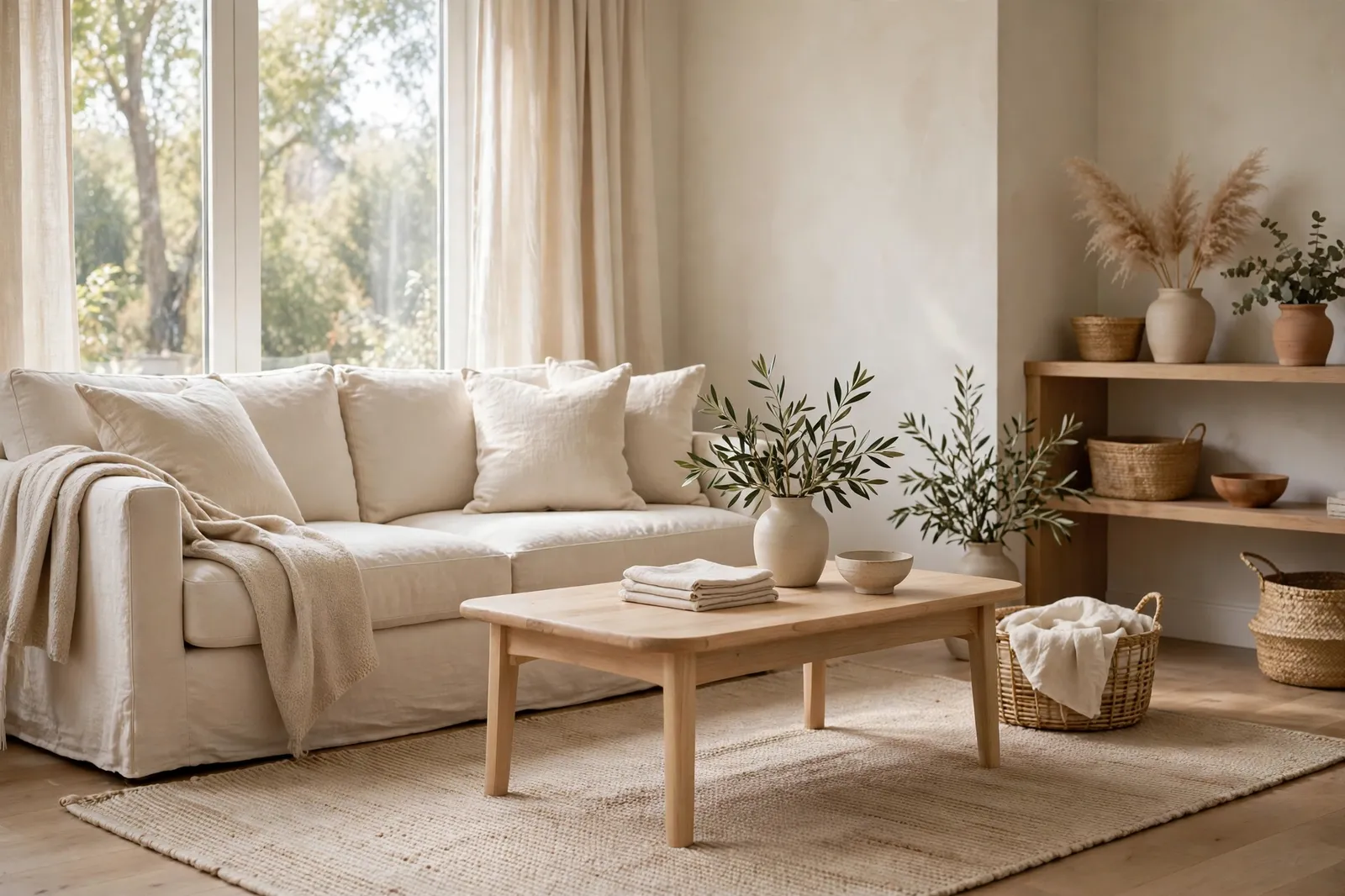
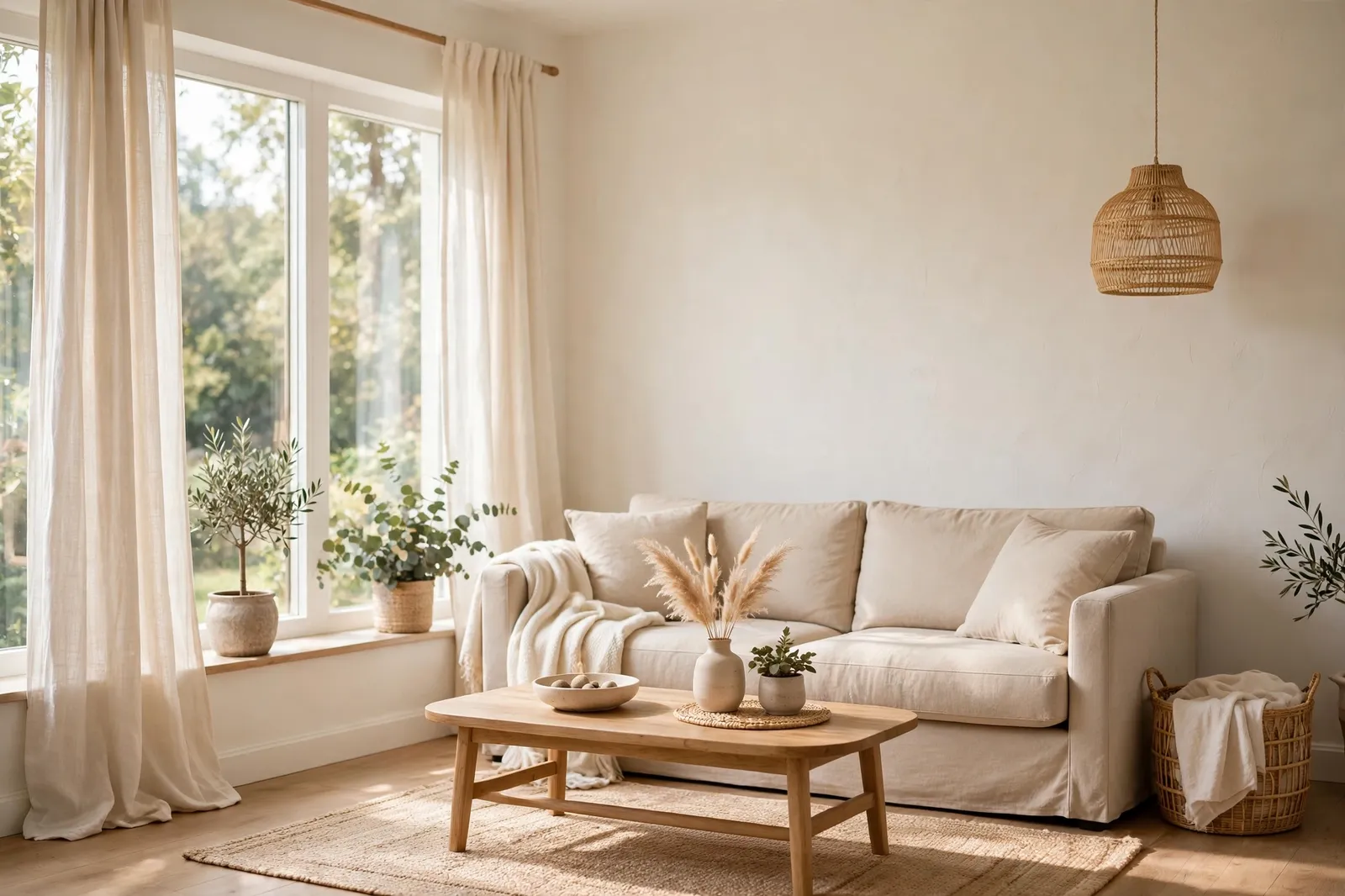
The first step is picking the right base color, and warm neutrals are almost always easier to live with than stark white. Shades like warm white, cream, beige, greige, and soft taupe feel welcoming, while a very bright, cool white can make a room feel cold, especially if it does not get much sun. If your walls already feel too cold, you do not have to repaint the whole room — warm it up with cream curtains, a beige rug, or wood-toned furniture.
Look at your room in both daylight and evening light before you commit to a shade. A color that looks soft in the store can turn grey or yellow at home. Hold a few paint swatches against your sofa and your floor, and live with them for a day or two. The right warm neutral should make the room feel calm, not washed out, and it should work with the furniture you already own.
2. Mix Warm and Cool Neutrals the Right Way
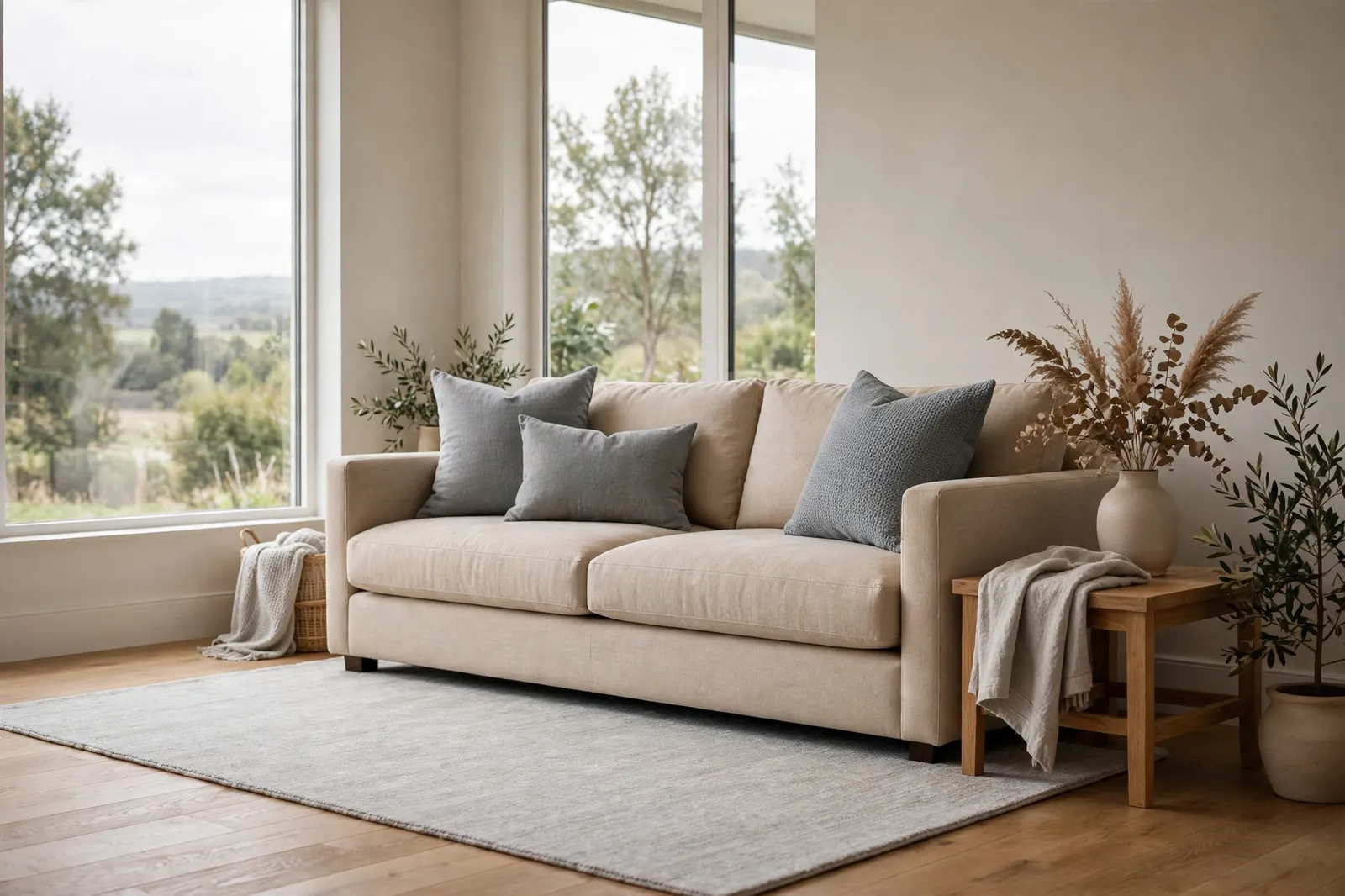
You do not have to pick just one side of the neutral family. Warm and cool neutrals can work together, as long as one side leads and the other plays a smaller part. For example, a warm beige sofa pairs well with cool grey throw pillows, or a cool grey rug can ground a room full of warm wood and cream. The trick is keeping the mix simple — one main neutral, one supporting neutral, and not much more.
If the room starts to feel muddled, step back and look for the odd one out. Often it is one pillow, one throw, or one piece of art pulling in a different direction. Swap that one piece for something closer to your main palette, and the whole room usually settles down. Keeping the big pieces — sofa, rug, curtains — in your main neutral makes it easy to mix smaller accents without the room looking messy.
3. Layer Textures So the Room Does Not Feel Flat
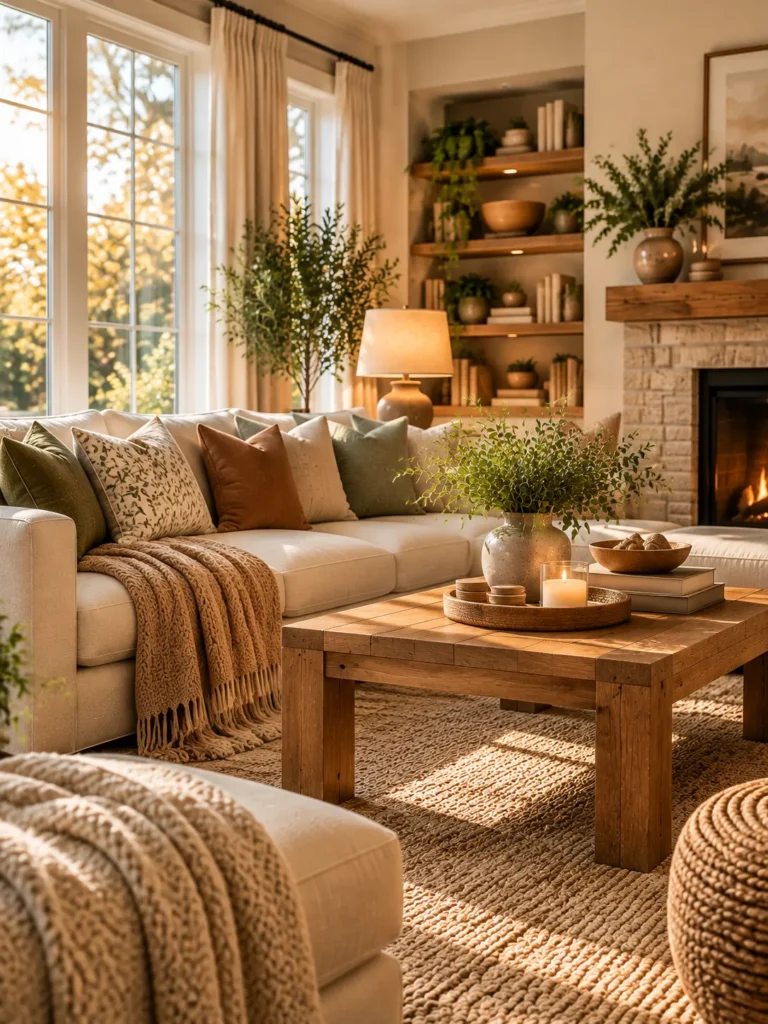
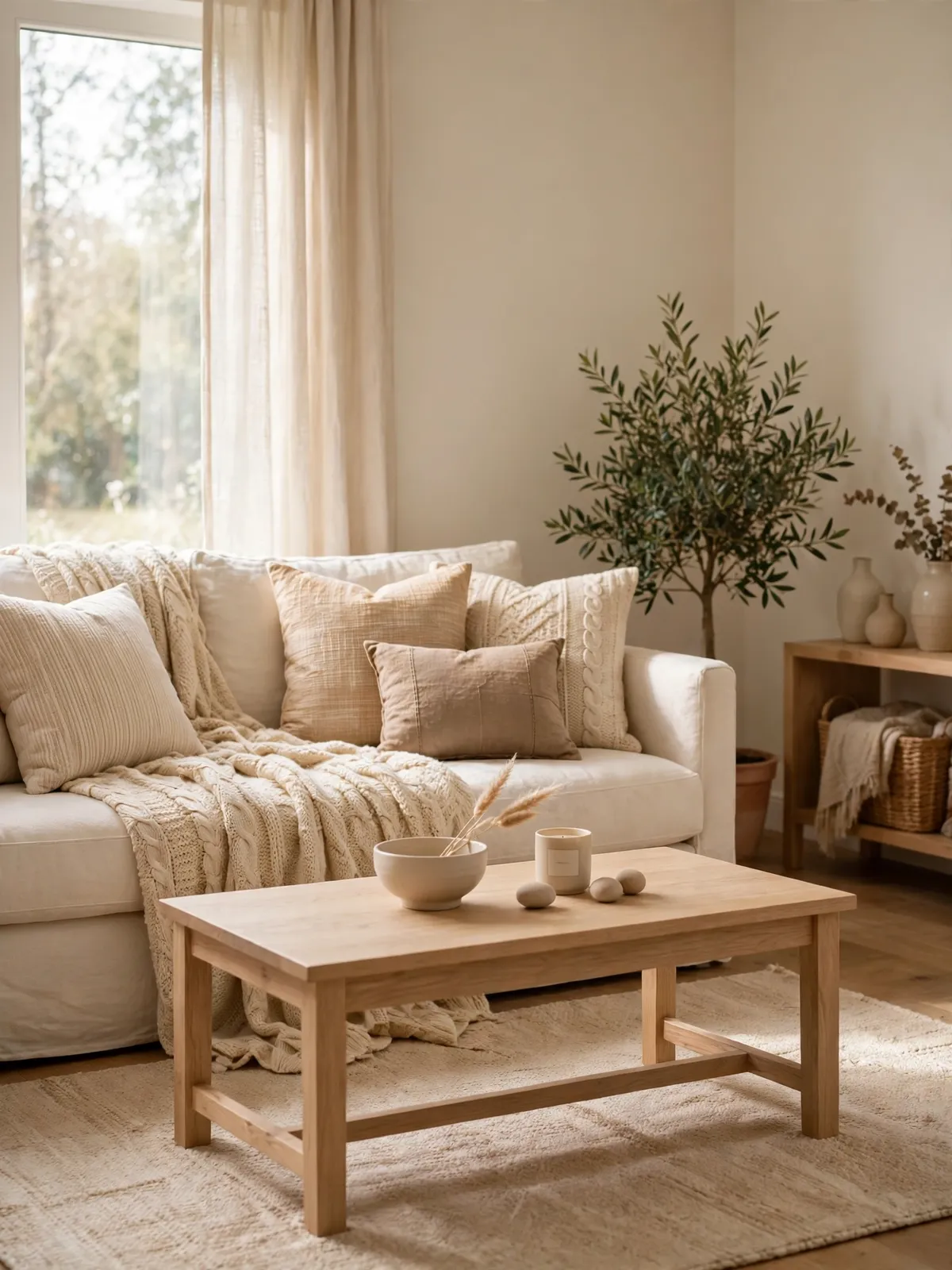
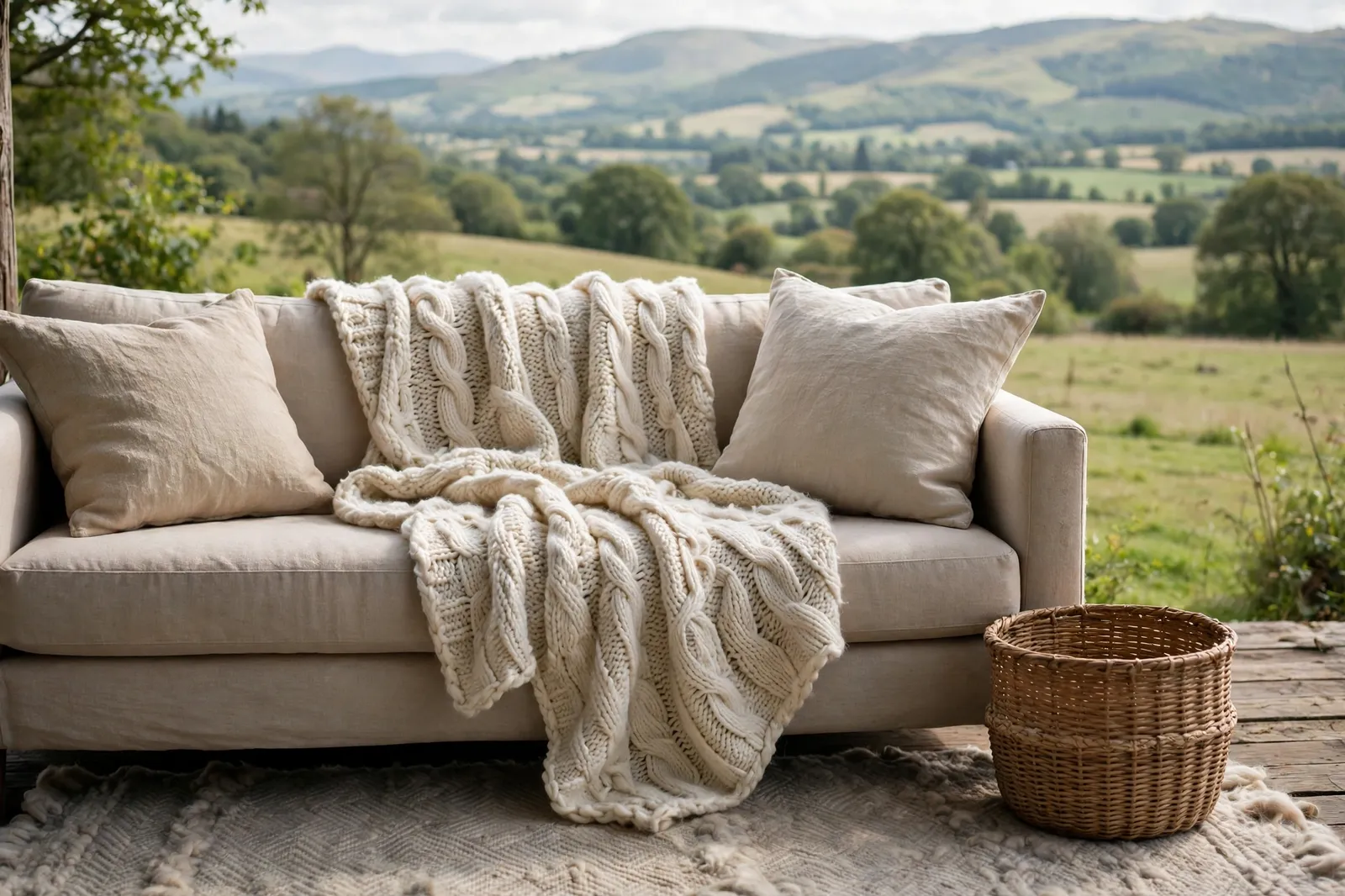
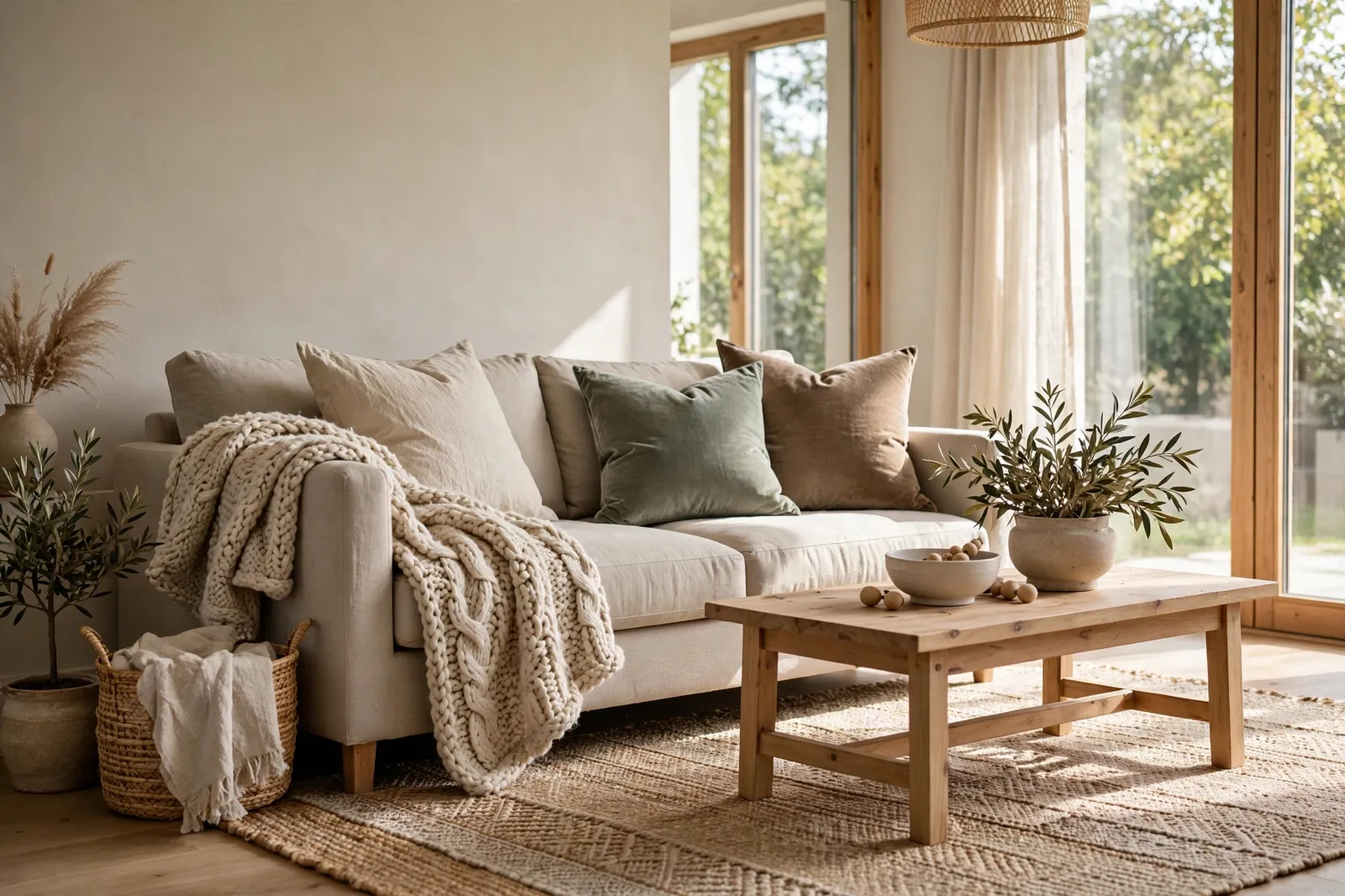
Texture is what keeps a neutral room from looking boring. When everything is the same color, your eyes need something else to notice: a chunky knit throw, a linen pillow, a woven basket, a soft wool rug. Two or three different textures in one seating area are usually enough. You do not need a dozen — just enough that the sofa does not look like one big, smooth block of beige.
Start with what you already have. A smooth leather chair next to a nubby linen sofa already gives you two textures. Add a woven throw basket or a cotton throw, and you have three. Natural materials work best here — wood, wool, cotton, rattan, and linen all add warmth without adding color. If the room still feels flat, add one rougher texture, like a jute rug or a raw wood side table, and it usually comes to life.
4. Let Wood Tones Do the Warming Up
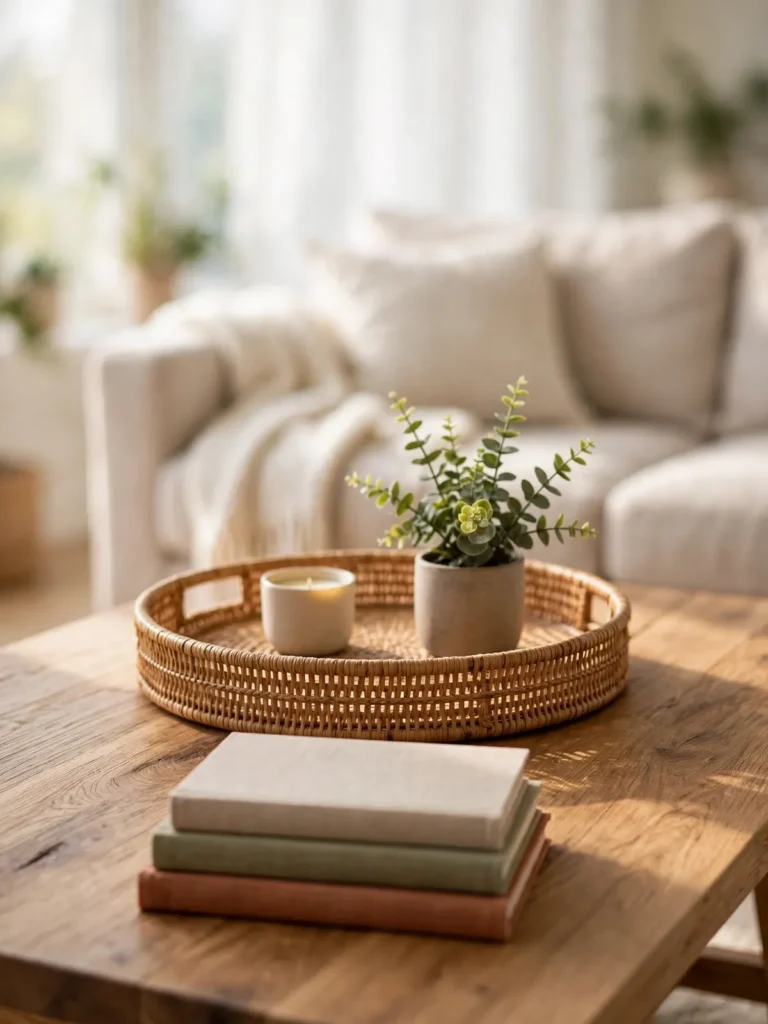
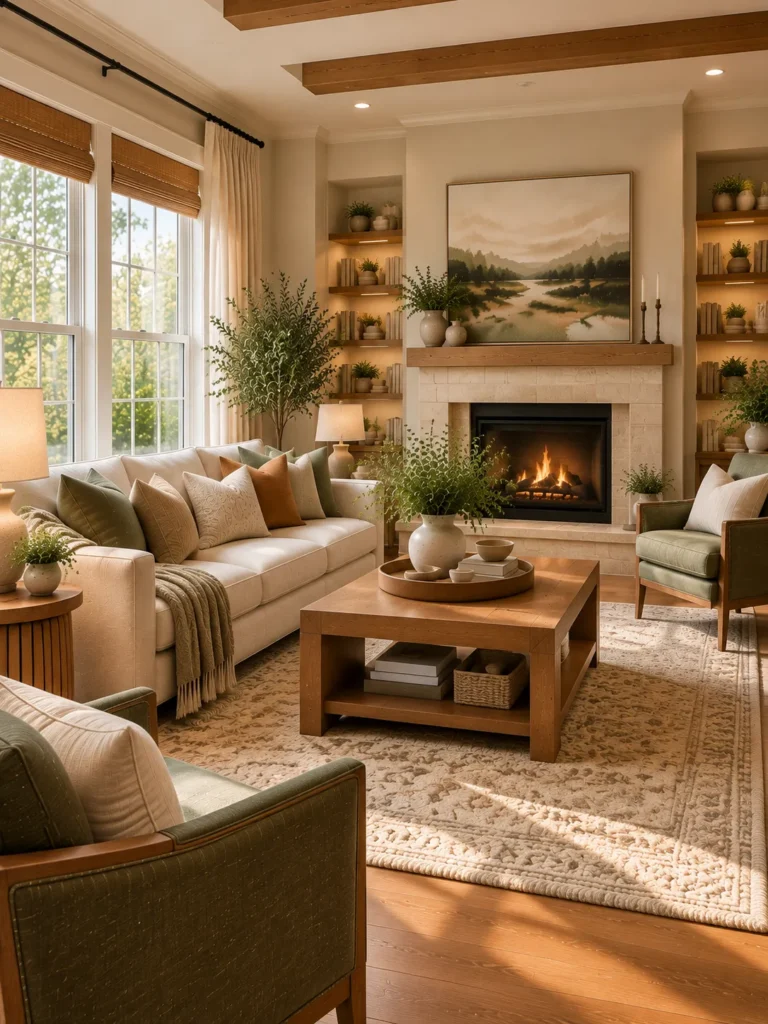
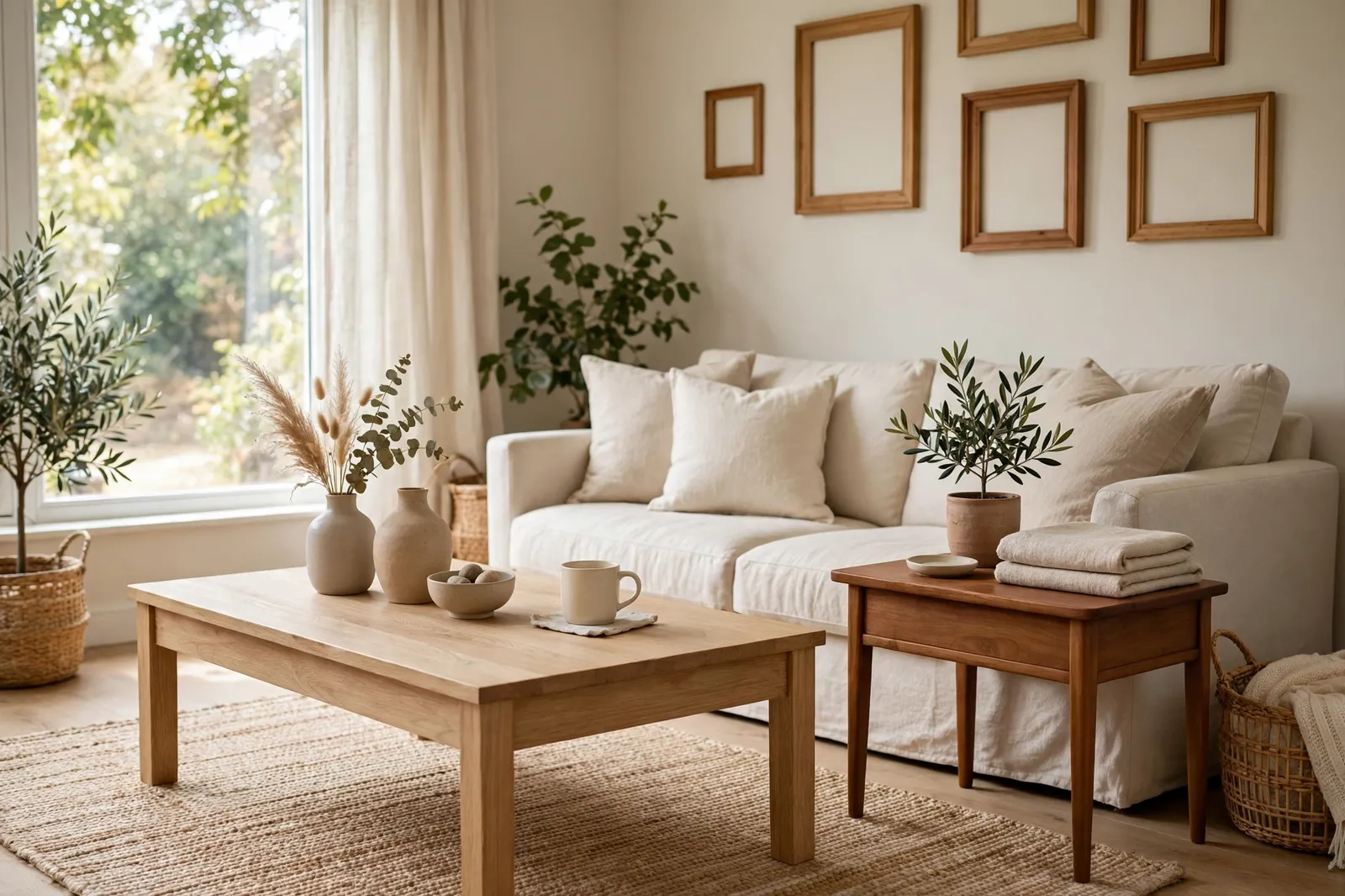
Wood is the easiest way to warm up a neutral room. A wooden coffee table, open shelves, picture frames, or a side table adds warmth that paint and fabric alone cannot give. Light woods like oak and maple keep the room feeling bright and airy, while darker woods like walnut add depth and a more grounded feel. Either works — just try to keep your wood tones in the same family so they do not fight each other.
You do not need matching furniture sets. In fact, a room often looks better when the woods are close but not identical — an oak coffee table with walnut frames, for example. What matters is the overall tone: mostly light woods for a bright room, mostly darker woods for a cozier one. If you have one piece that sticks out, a wood-toned tray or a basket nearby can help tie it back into the room.
5. Add Just One Accent Color
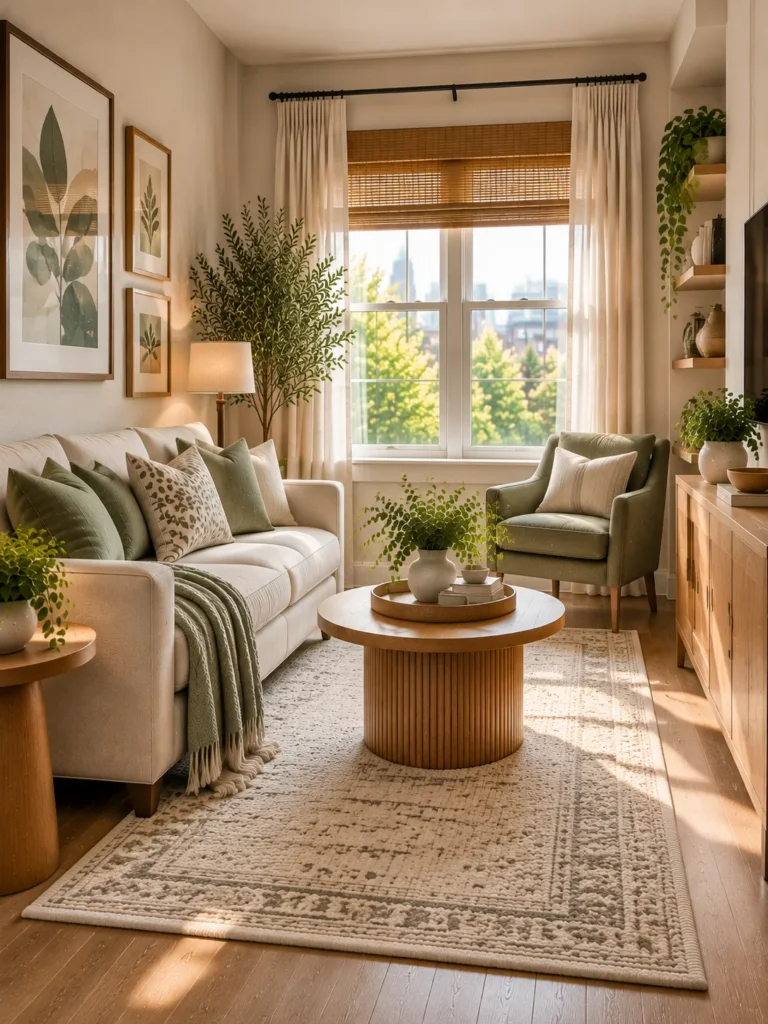
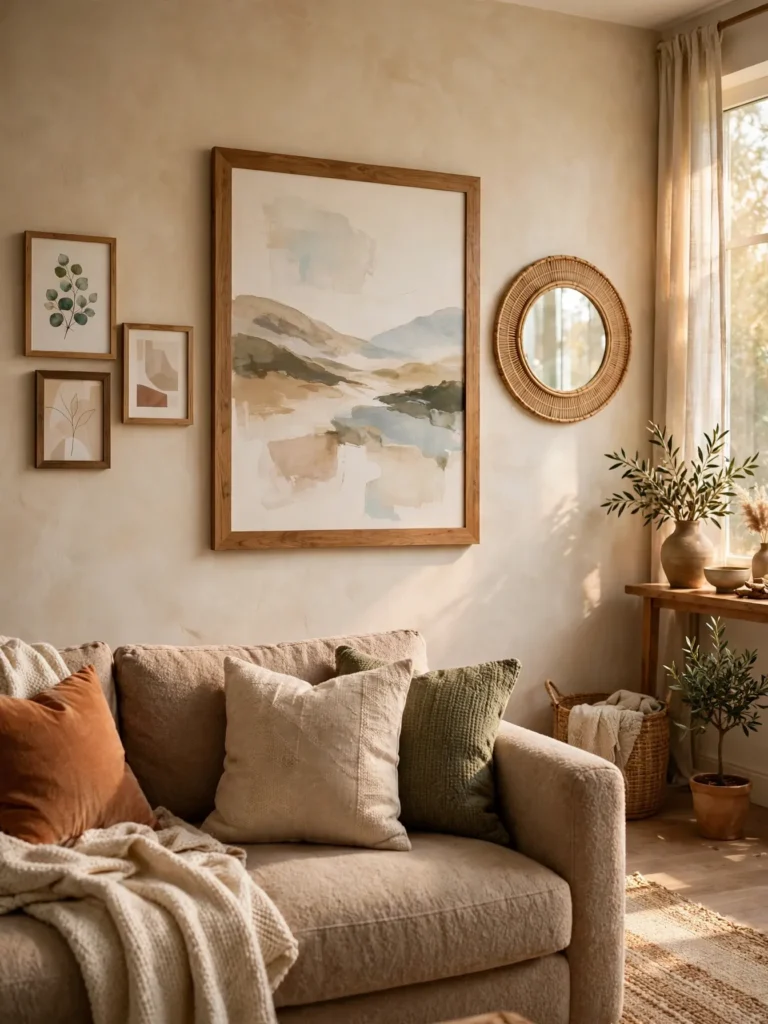
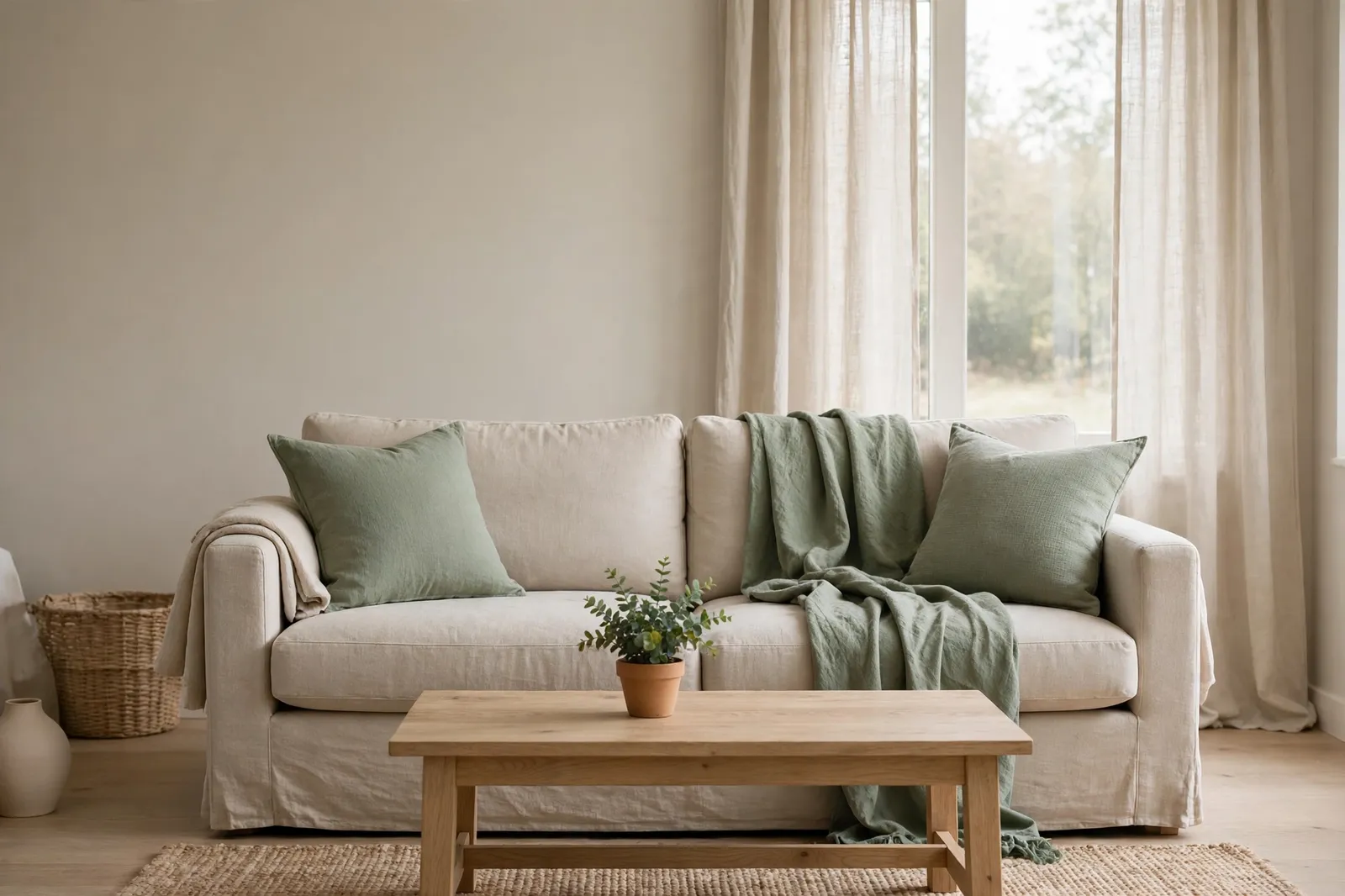
A neutral room does not have to be color-free, but it works best with just one accent color. Pick one shade you love — sage green, dusty blue, terracotta, or mustard — and use it in small doses: a couple of pillows, a throw, a vase, or a piece of art. That one color gives the eye somewhere to land, and because everything else is neutral, it stands out without shouting.
Keep the accent to about a tenth of the room, and repeat it two or three times so it looks intentional rather than random. One green pillow on its own can look like a mistake; two green pillows and a small green plant look like a plan. If you get tired of the color, it is cheap and easy to change — swap the pillows and the throw, and the whole room gets a new feel without repainting anything.
6. Get the Lighting Right, Layer by Layer
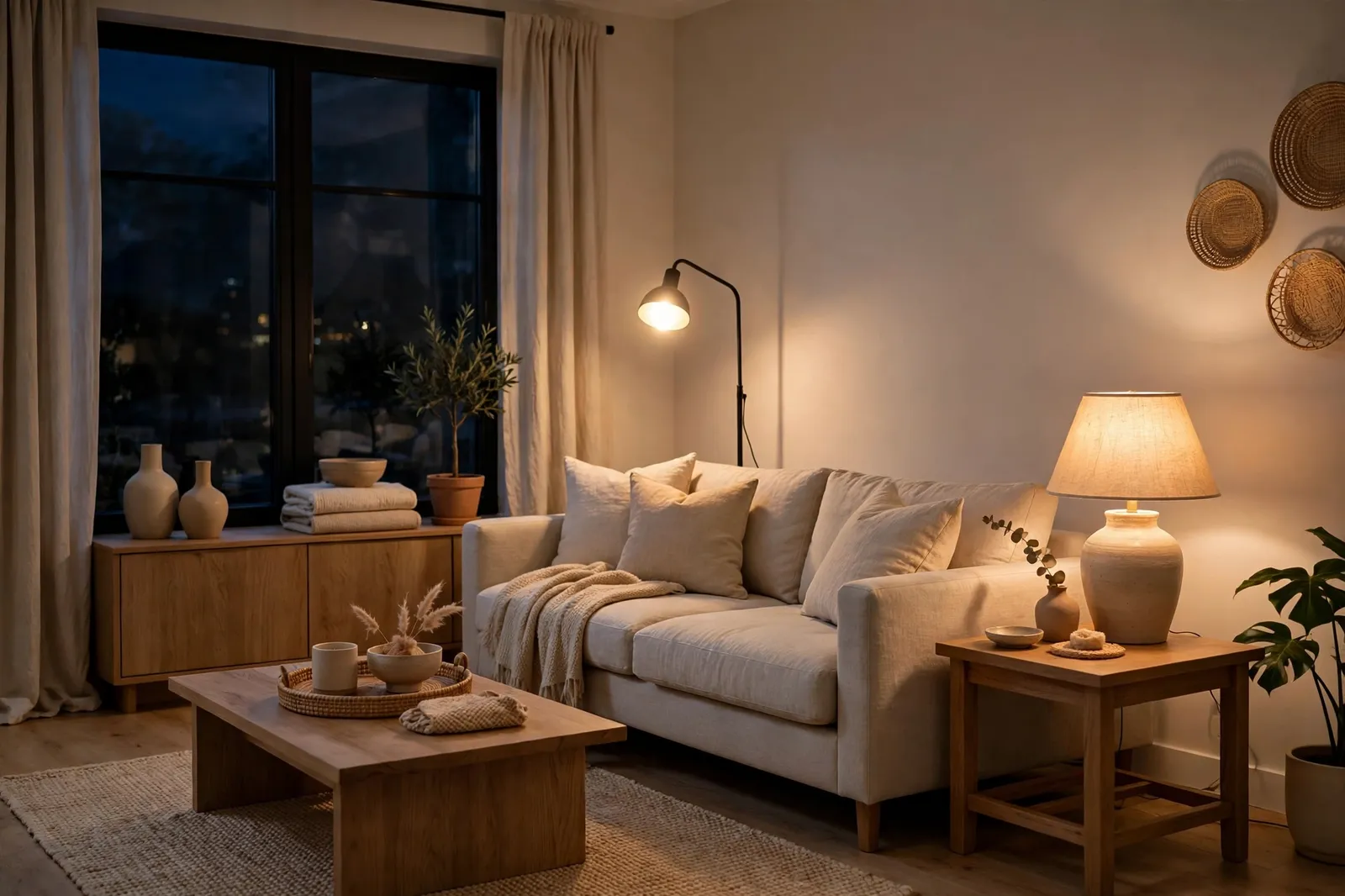
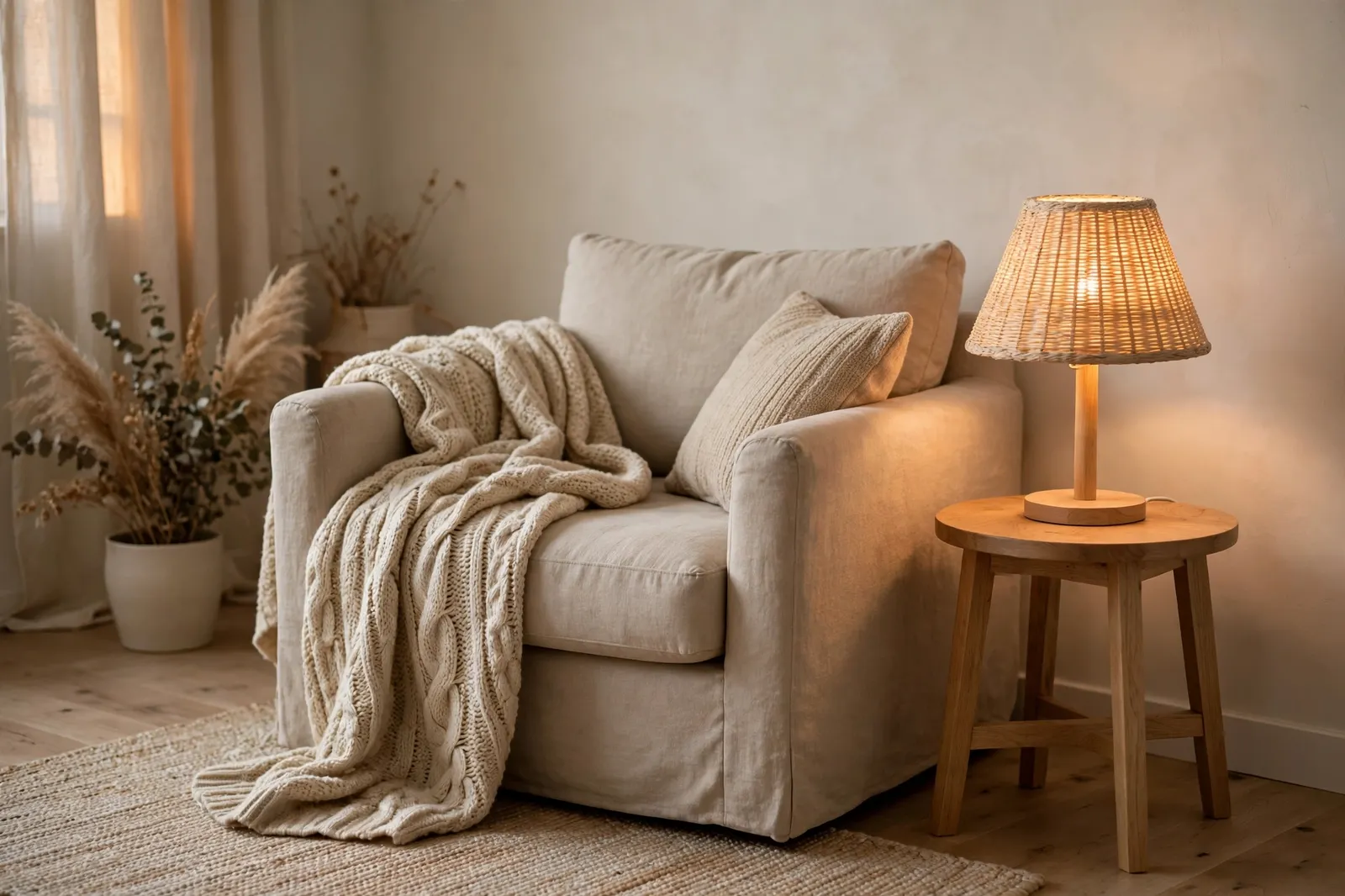
Lighting makes or breaks a neutral room, because soft light warms up pale colors and harsh light flattens them. Aim for three layers: overhead light for general brightness, table or floor lamps for warmth, and a small accent light like a candle or a picture light for coziness in the evening. Warm bulbs (around 2700K) suit neutral rooms far better than cool, bluish bulbs.
Put lamps where you actually sit — beside the sofa, on a side table, near a reading chair — rather than relying on one bright ceiling light. A dimmer switch on the overhead light is a small change that makes a big difference, since you can turn it down in the evening and let the lamps do the work. If the room feels dull during the day, sheer curtains help too: they soften the daylight without blocking it, so the neutrals glow instead of glaring.
7. Choose Furniture That Fits the Room, Not Just the Style
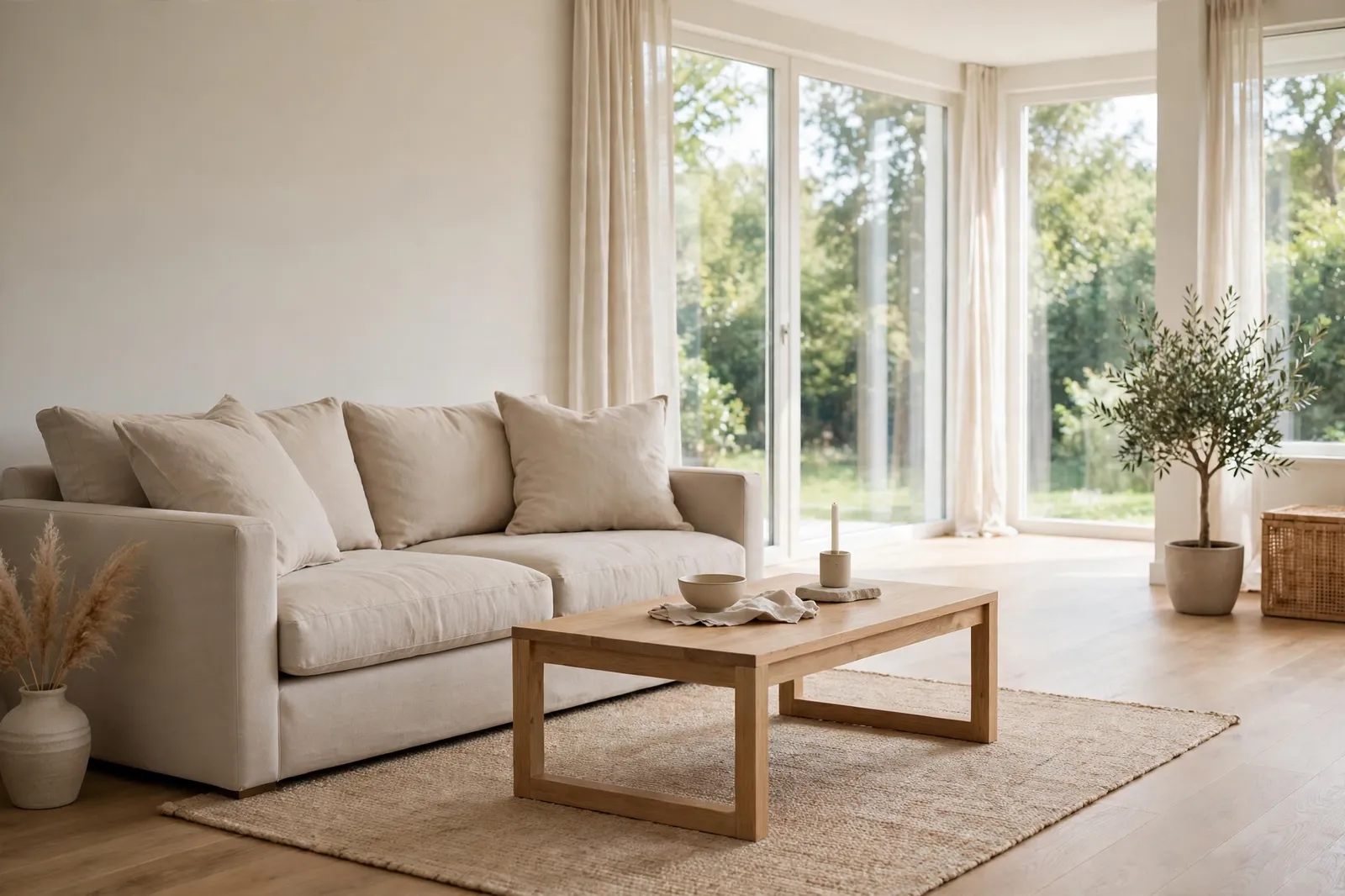
In a neutral room, furniture shapes matter more than usual, because there is no bold color to distract from a piece that is too big or too small. A sofa that fills the whole wall can make a small room feel cramped, while a tiny loveseat in a big room can look lost. Measure your room and your main pieces before you buy, and leave enough space to walk around comfortably — about 18 inches between the coffee table and the sofa is a good guide.
Simple, clean-lined furniture tends to age best in a neutral room. A classic sofa shape, a sturdy wood coffee table, and one comfortable accent chair will still look right in ten years, while a very trendy shape can date quickly. Comfort matters too: a neutral room should invite you to sit down, not just look pretty. Test the seat depth and the cushion firmness, and pick fabrics that can handle everyday life — washable slipcovers or performance fabric if you have kids or pets.
8. Pick Walls and Paint That Stay in the Background
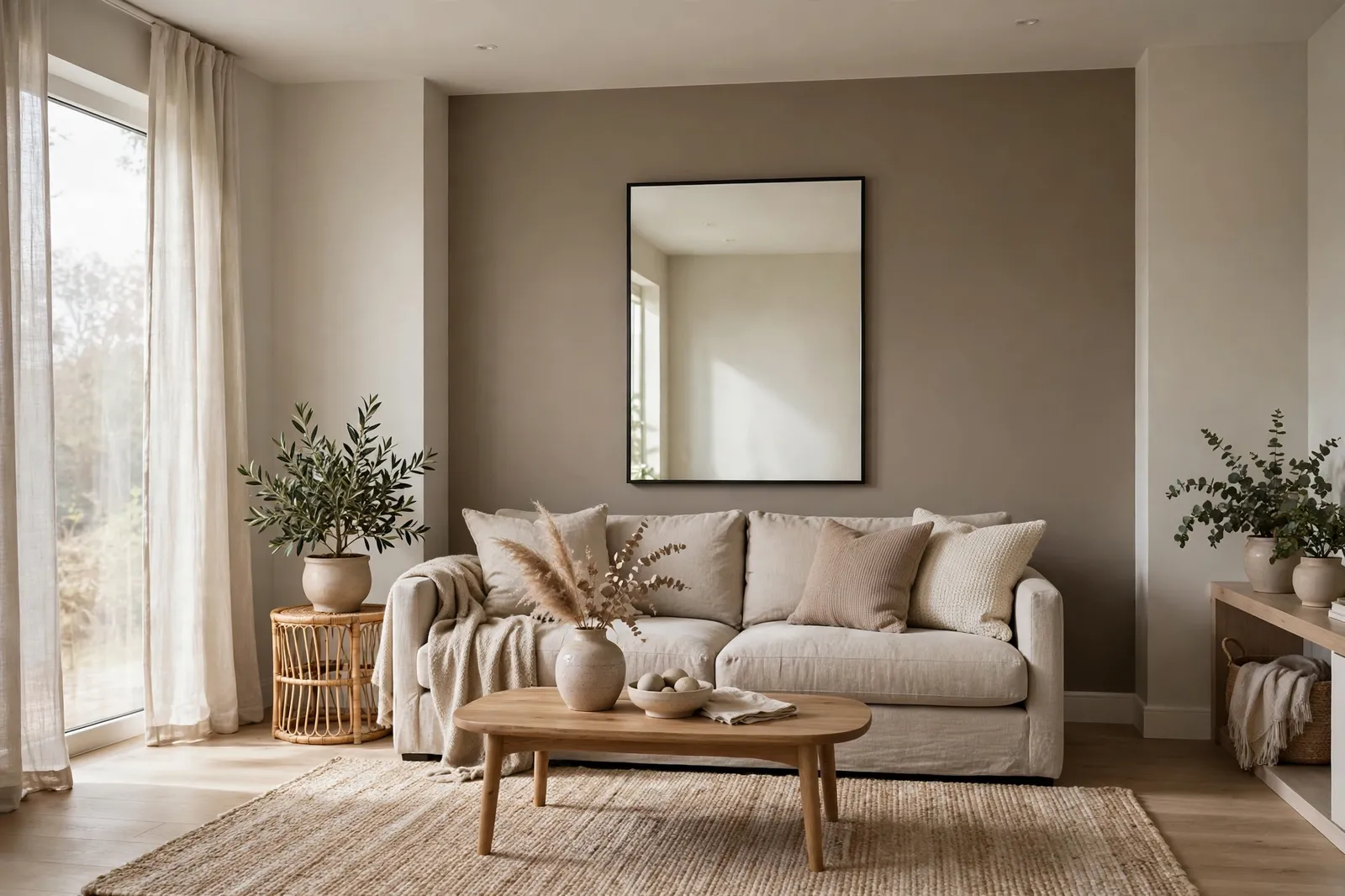
Walls in a neutral room should support the furniture, not compete with it. A warm white or light greige on all four walls is the simplest choice, and it makes the room feel bigger and calmer. If you want a little more interest, try a slightly darker neutral on one accent wall behind the sofa — a warm taupe or soft mushroom — but keep the other walls light so the room does not feel closed in.
When choosing paint, test it on the wall, not just on a small card. Paint a large swatch and watch it through the day, because neutrals shift a lot with light. A shade that looks perfect at noon can turn pink or grey by evening. Matte or eggshell finishes work best in living rooms: they hide small wall flaws and give a soft, calm look, while glossy paint can make a neutral wall look harsh. If repainting feels like too much, new art or a large mirror can refresh the walls without a paintbrush.
9. Use Throws, Pillows, and Rugs to Finish the Look
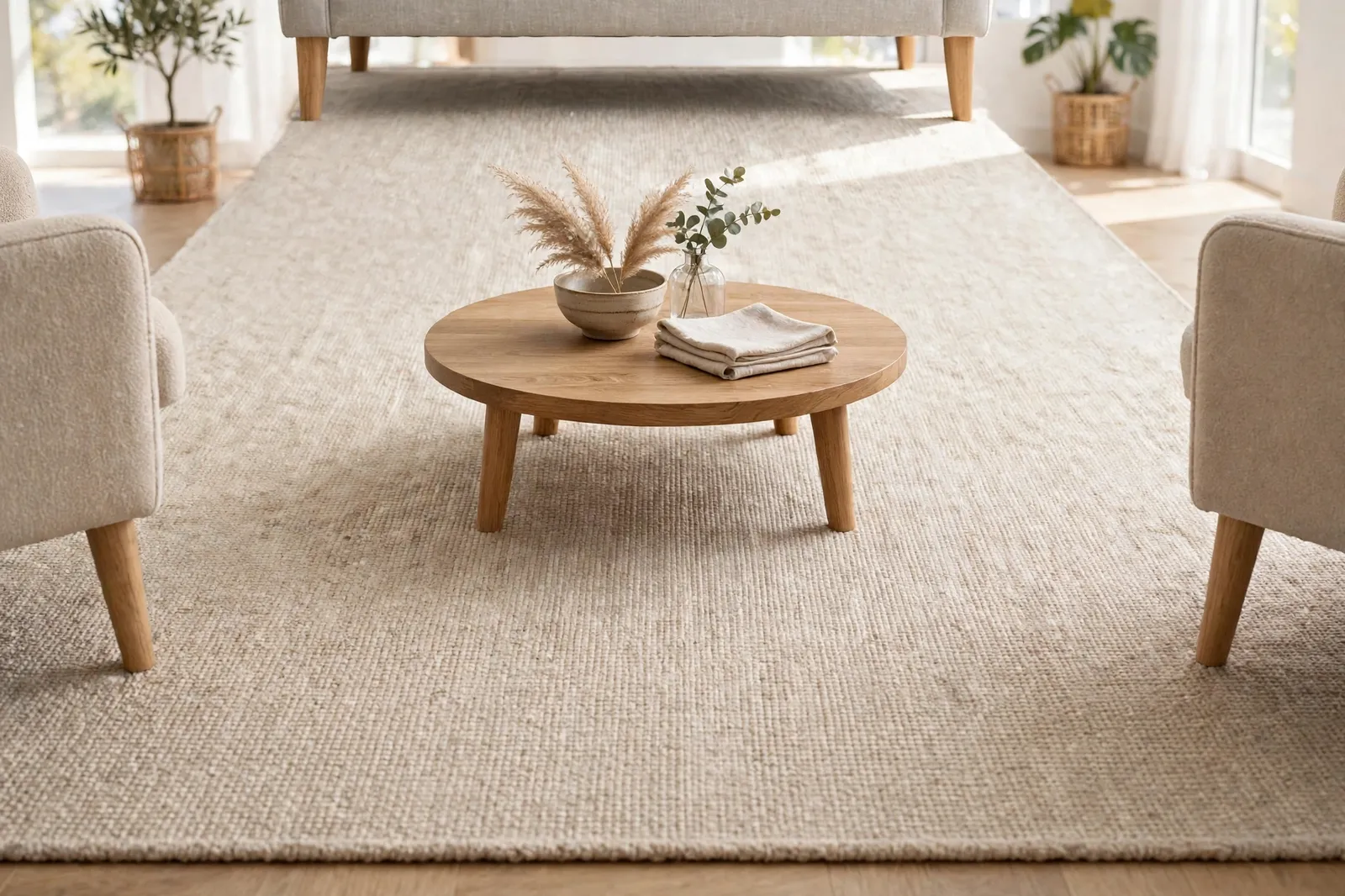
Throws, pillows, and rugs are where a neutral room gets its personality, and they are the cheapest way to change the feel of the room. A chunky knit throw draped over the sofa arm, two or three pillows in your accent color, and a rug that anchors the seating area can turn a plain room into a cozy one in an afternoon. The rug should be big enough that the front legs of the sofa and chairs sit on it — a too-small rug is one of the most common mistakes in living rooms.
Do not overdo the pillows. Three to five on a standard sofa is plenty; more than that, and you spend half your time moving them just to sit down. Mix pillow sizes and textures — a larger linen pillow, a smaller velvet one, a woven lumbar pillow — but keep the colors in your palette. And if the room still feels a little flat after all this, check the rug: a rug with a subtle pattern or a woven texture often adds just enough interest without breaking the calm, neutral feel.
Frequently Asked Questions
What colors go with a neutral living room?
Almost any soft color works, but one accent at a time looks best. Sage green, dusty blue, terracotta, and mustard are all easy choices because they sit well against beige, cream, and grey. Pick one accent, repeat it in two or three small pieces, and keep the big furniture neutral so you can change the accent later without much cost.
How do I keep a neutral living room from looking boring?
Layer textures and vary the shades instead of using one flat color everywhere. Mix linen, wool, wood, and woven pieces, and use a few tones of your main neutral — light cream, mid beige, and a darker taupe — so the room has depth. Warm lighting and one accent color also help a lot; a room with texture and soft light rarely looks boring, even in all neutrals.
Are neutral living rooms still in style?
Yes, neutrals have stayed popular because they are easy to live with and easy to update. Trends come and go — cool greys were big a few years ago, warm beiges are more popular now — but a warm, layered neutral room does not date the way a bold color scheme can. The key is choosing warm tones and natural textures rather than a single cold, flat shade.
Should all my neutrals match exactly?
No, and trying to match everything exactly often makes a room look flat, like a furniture showroom. It looks better when neutrals are close but not identical — cream with beige, grey with greige, light oak with walnut. Keep the big pieces in the same family, vary the smaller pieces a little, and the room will feel collected and natural rather than staged.
Related ideas
If you are planning the rest of the room around a neutral palette, these guides go well with this one. Start with these living room decorating ideas for the big picture, then see how to arrange living room furniture for better flow so your seating works with the new colors. For a warmer, softer finish on top of your neutrals, these cozy living room ideas show how texture and lighting pull everything together. Also explore small living room decorating ideas, living room wall decor ideas, coffee table styling ideas, how to choose the right living room rug size, and living room curtain ideas.