Living Room Curtain Ideas for Different Window Types
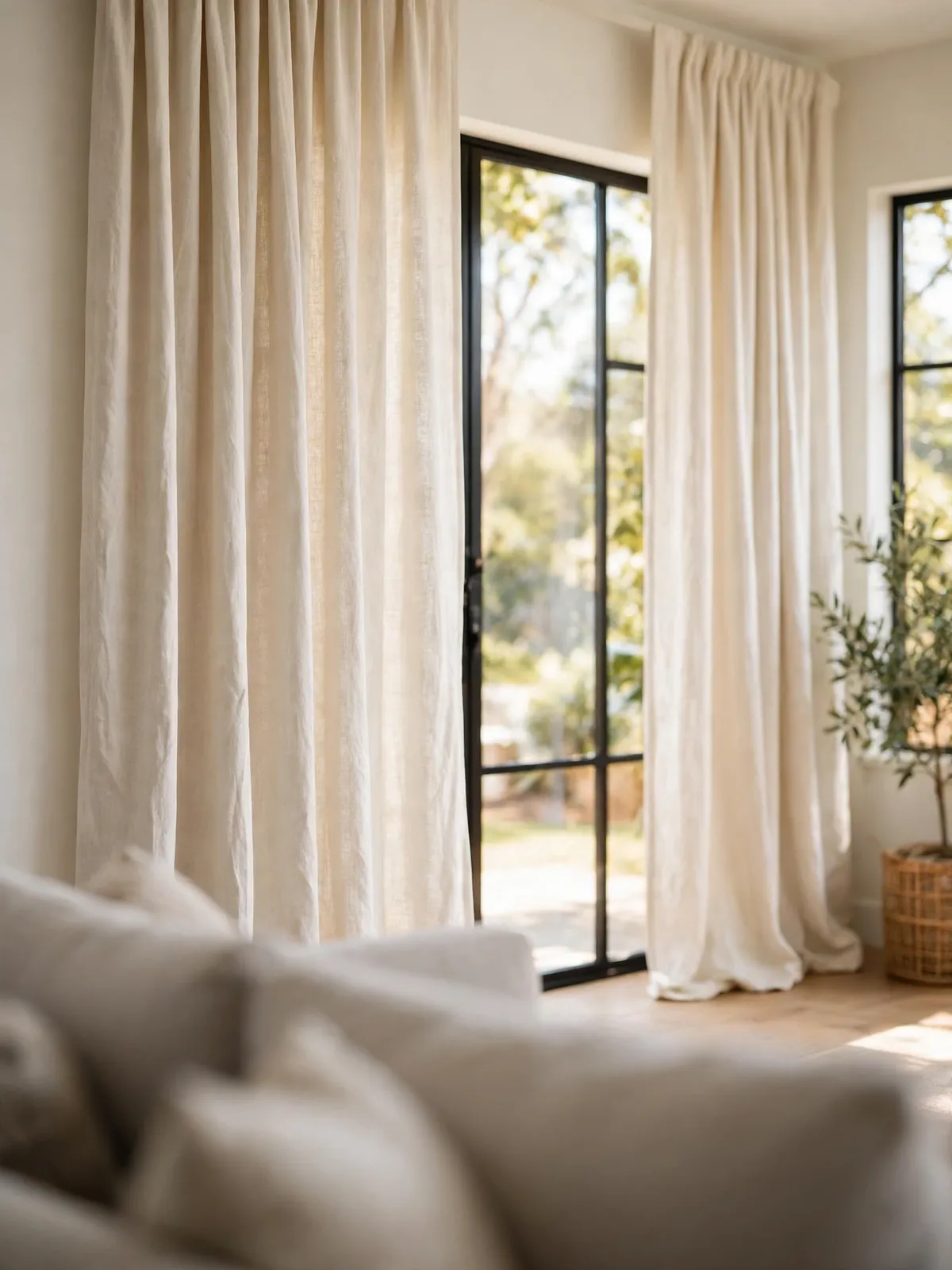
Curtains can change a living room more than almost anything else, and they do it for a lot less money than new furniture. The right curtains make a window look bigger, soften a bare wall, and pull the whole room together. The wrong ones — too short, too narrow, or the wrong fabric — can make even a nice room feel a bit off.
The tricky part is that not every window wants the same treatment. A big picture window, a small bedroom-style window, a bay window, and a sliding glass door all need a slightly different approach. These ideas cover the most common window types, plus the fabric, rod, and layering choices that work across all of them, so you can pick what fits your room and get it right the first time.
1. Start With the Hang High and Wide Rule
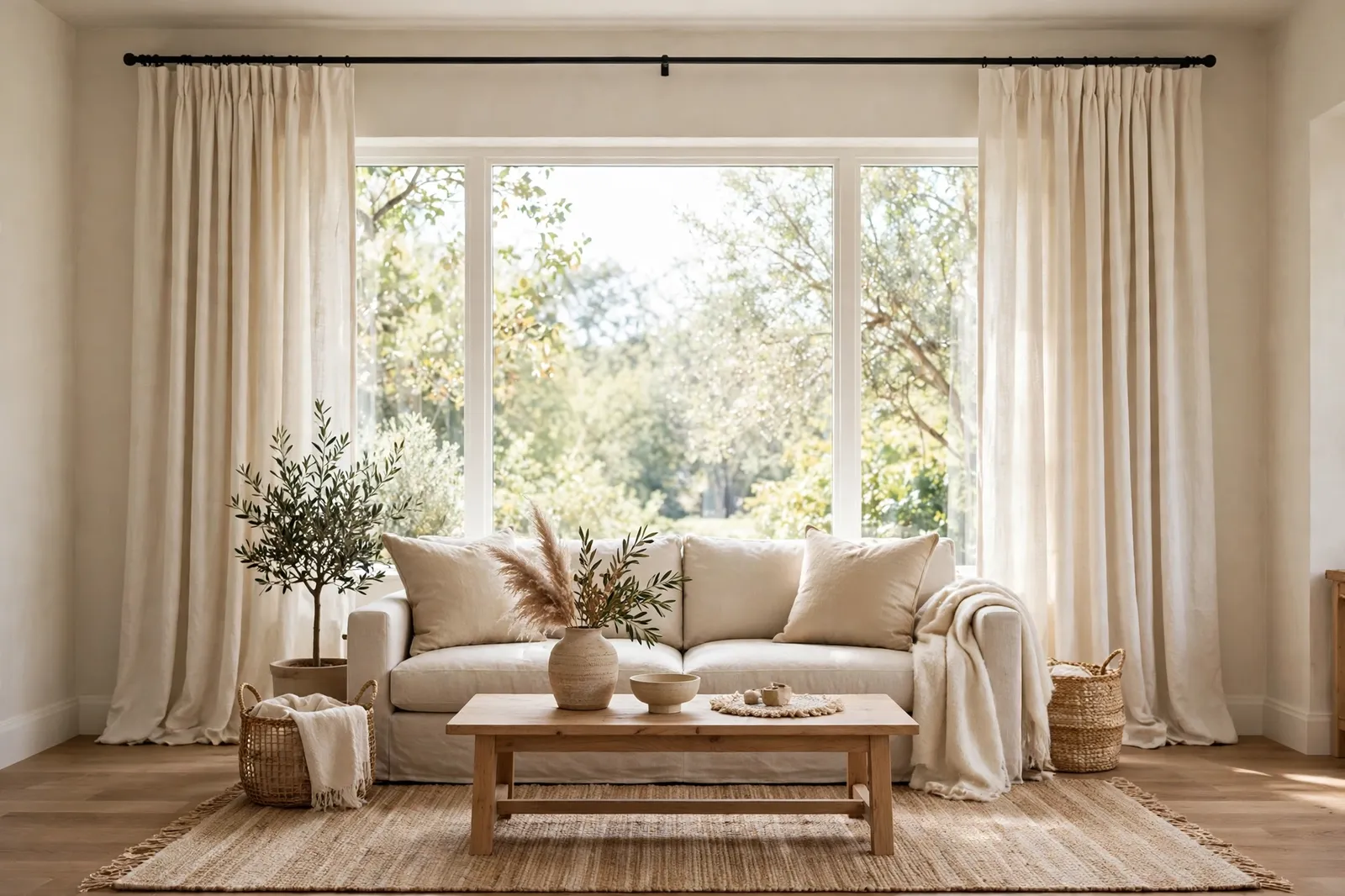
If you remember only one curtain rule, make it this one: hang the rod high and wide. Mount the rod four to six inches above the window frame, or close to the ceiling if you have the space, and extend it eight to twelve inches past each side of the frame. That way the curtains frame the window instead of covering it, and the window looks taller and wider than it really is.
The other half of the rule is length. For most living rooms, curtains should just brush the floor or puddle very slightly — about half an inch. Curtains that stop at the sill or float a few inches above the floor tend to look unfinished, unless you have a radiator or a piece of furniture right under the window. Measure from the rod down to the floor before you buy, since standard lengths are not the same everywhere.
2. Large Picture Windows: Keep Them Simple
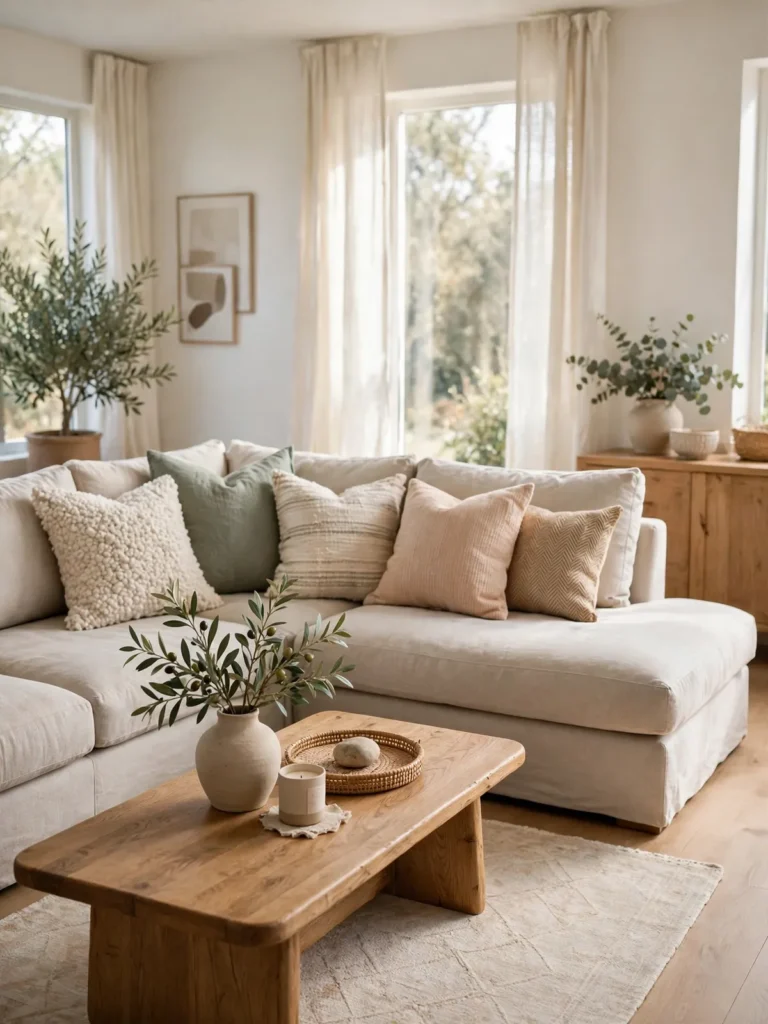
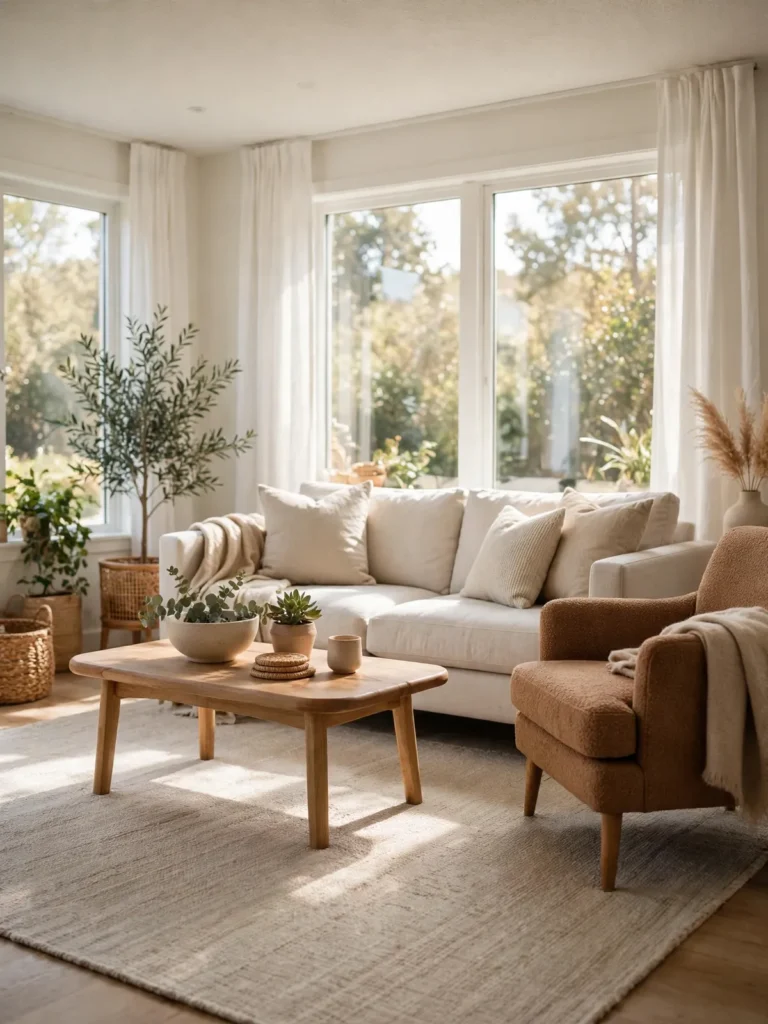
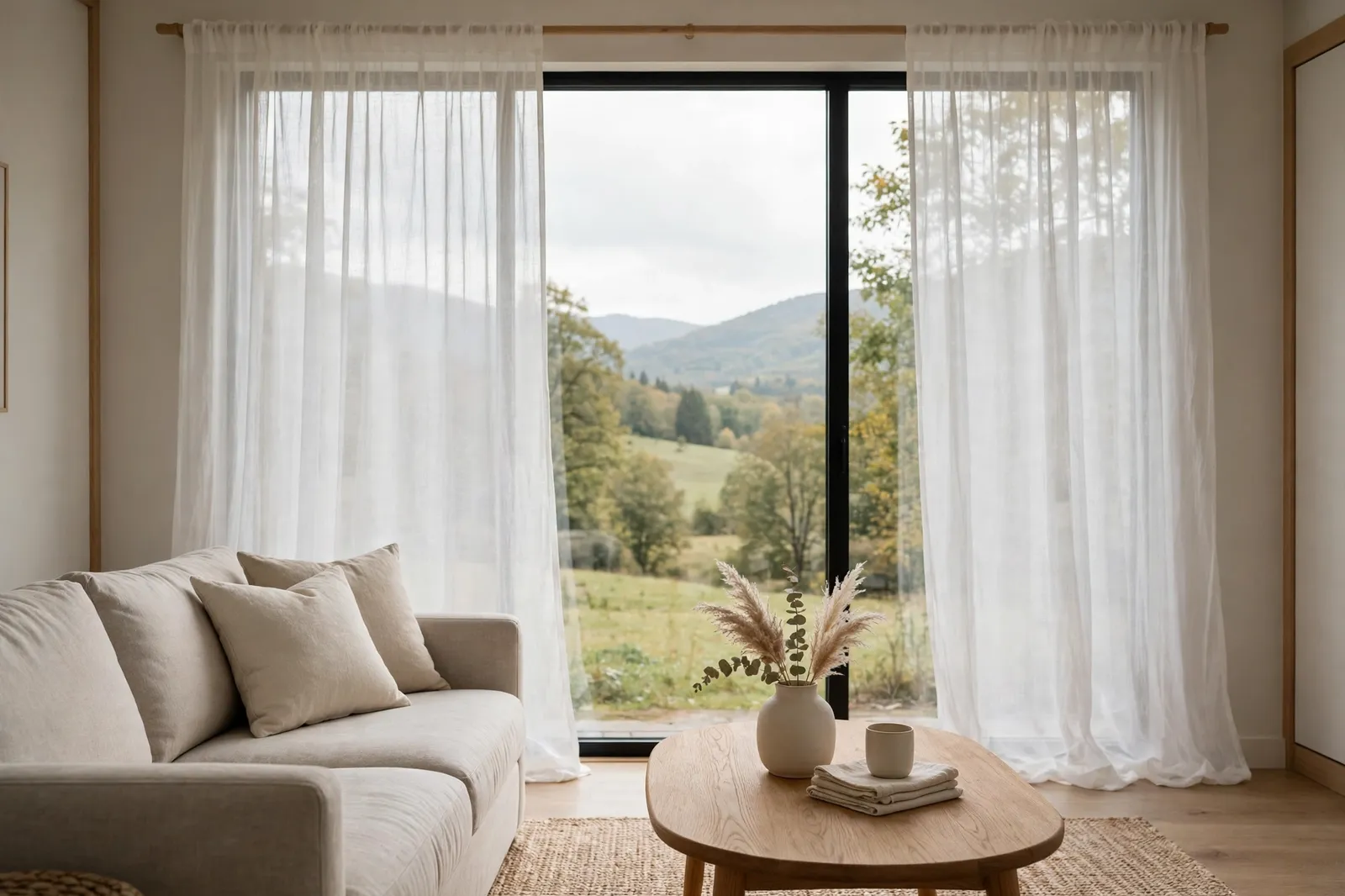
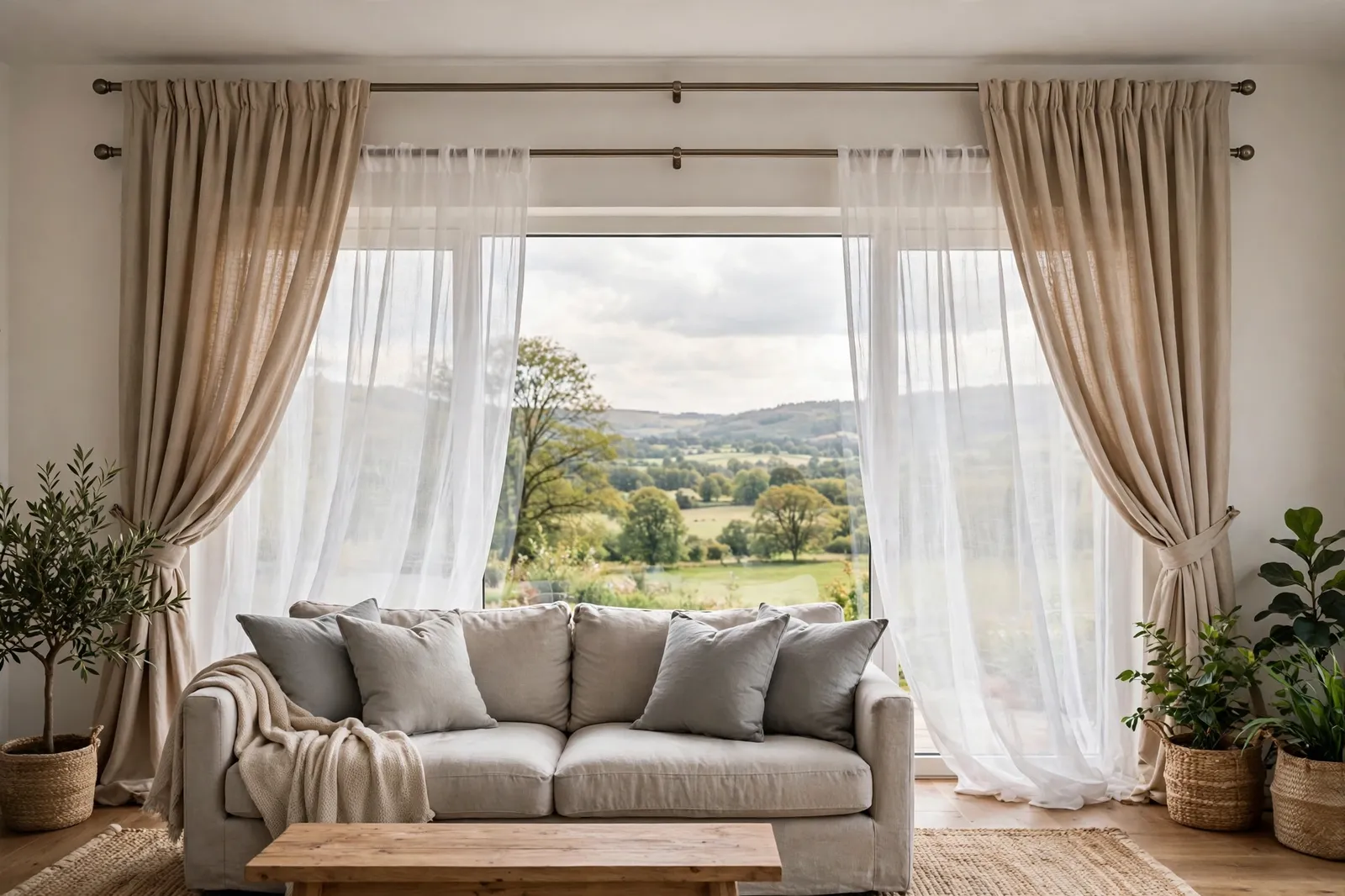
A large picture window is already a feature, so the curtains should dress it without hiding it. Sheer panels are a great choice here because they soften the light and add privacy during the day while still letting you enjoy the view. If you want more coverage at night, add a second layer of heavier drapes on a double rod, or hang the sheers on their own and close them only when you need to.
Use wide panels for a picture window, and make sure they are full enough to look good when they are open. A good guide is that the panels should be one and a half to two times the width of the window when gathered. Two wide panels that meet in the middle when closed will look much better than two skinny ones that barely cover the glass.
3. Bay Windows: Follow the Shape of the Bay
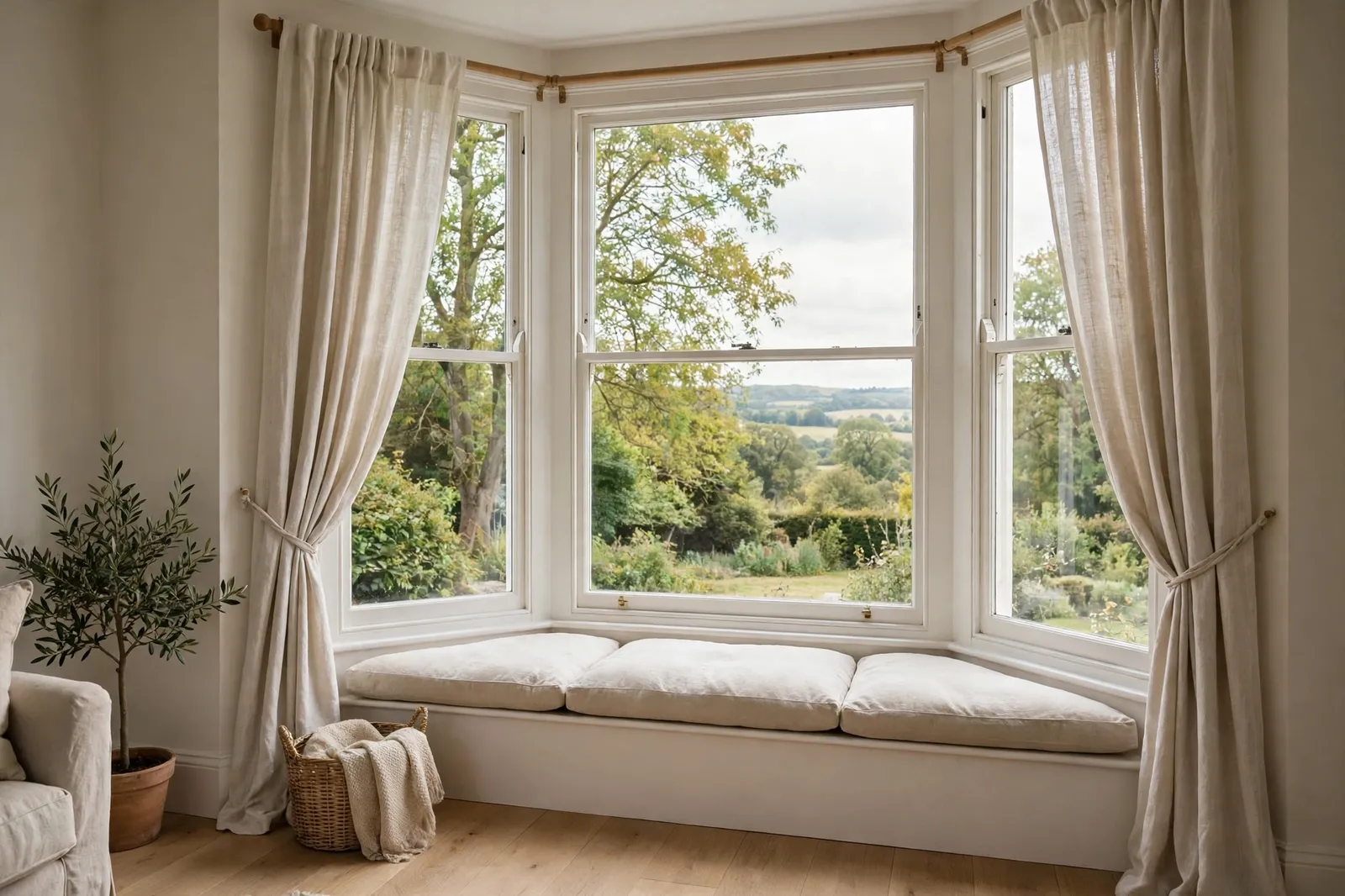
Bay windows look wonderful, but they can be a headache to dress because of the angles. The easiest option is a flexible bay window rod or a set of short rods that follow each section of the bay. That lets the curtains follow the shape of the window and still open and close properly. If the bay is deep enough for a seat, keep the curtains shorter — sill length or just below the sill — so they do not cover the seat.
If you want a simpler look, you can also hang one straight rod across the front of the whole bay, wall to wall. This turns the bay into one big framed opening and makes the room feel wider. It works best when you do not need to use the window seat every day, since the curtains will hang in front of it. Either way, light fabrics like linen or voile keep a bay from feeling heavy or closed in.
4. Small Windows: Make Them Look Bigger
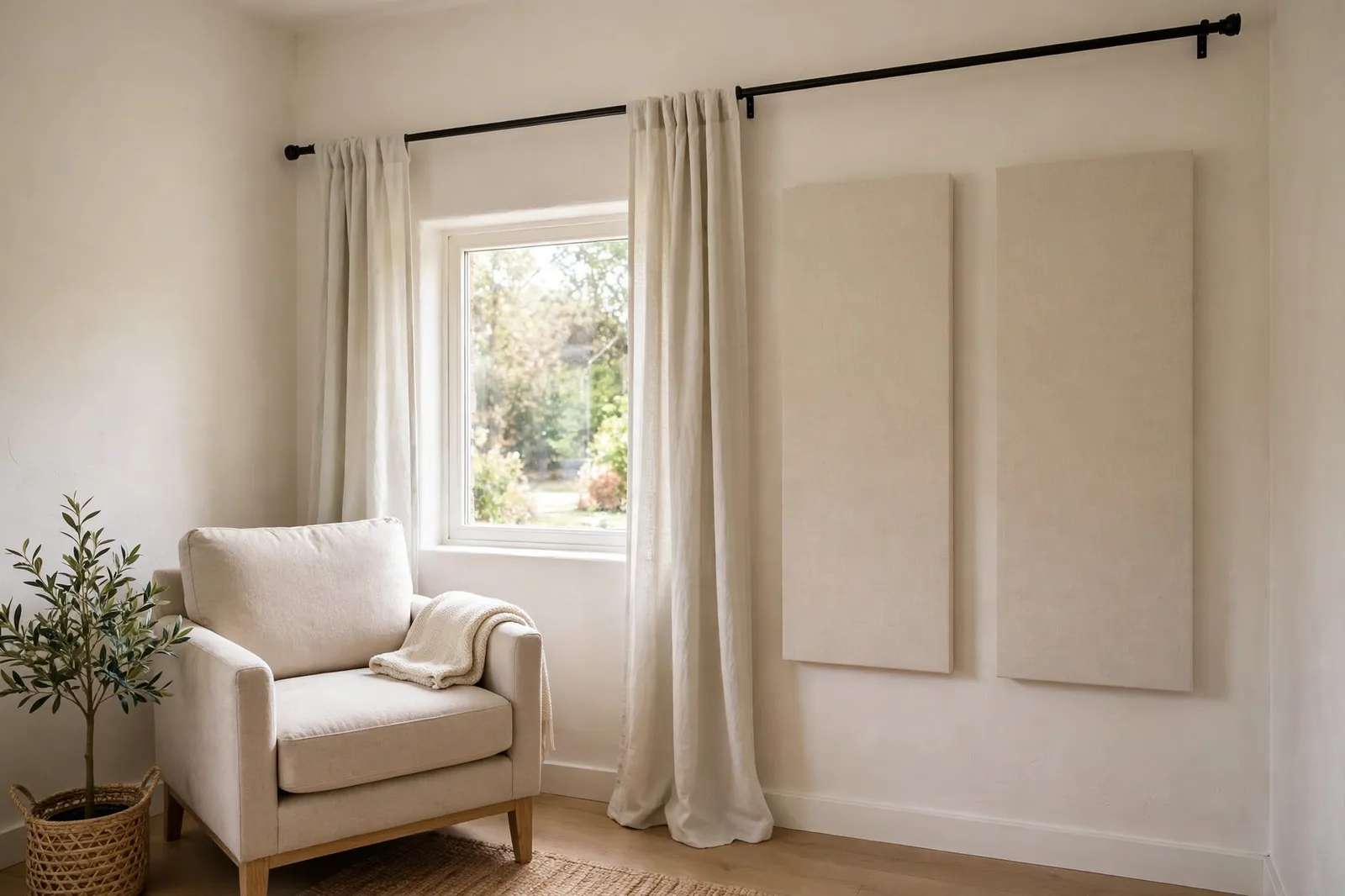
Small windows are where the hang high and wide rule really pays off. Mount the rod well above and well beyond the frame, and use panels that are wider than the window itself. When the curtains are open, they will sit on the wall beside the window, not on the glass, so all the light still comes in — but the window will look much larger from across the room.
Stick to one panel on each side and keep the fabric light. Heavy, dark curtains can swallow a small window and make the wall feel busy. A simple solid color or a small, quiet pattern works best. If the window is very narrow, a single panel pulled to one side can look neat and intentional, and it leaves the other side of the wall free for a picture or a lamp.
5. Sliding Glass Doors: Pick Curtains That Slide Easily
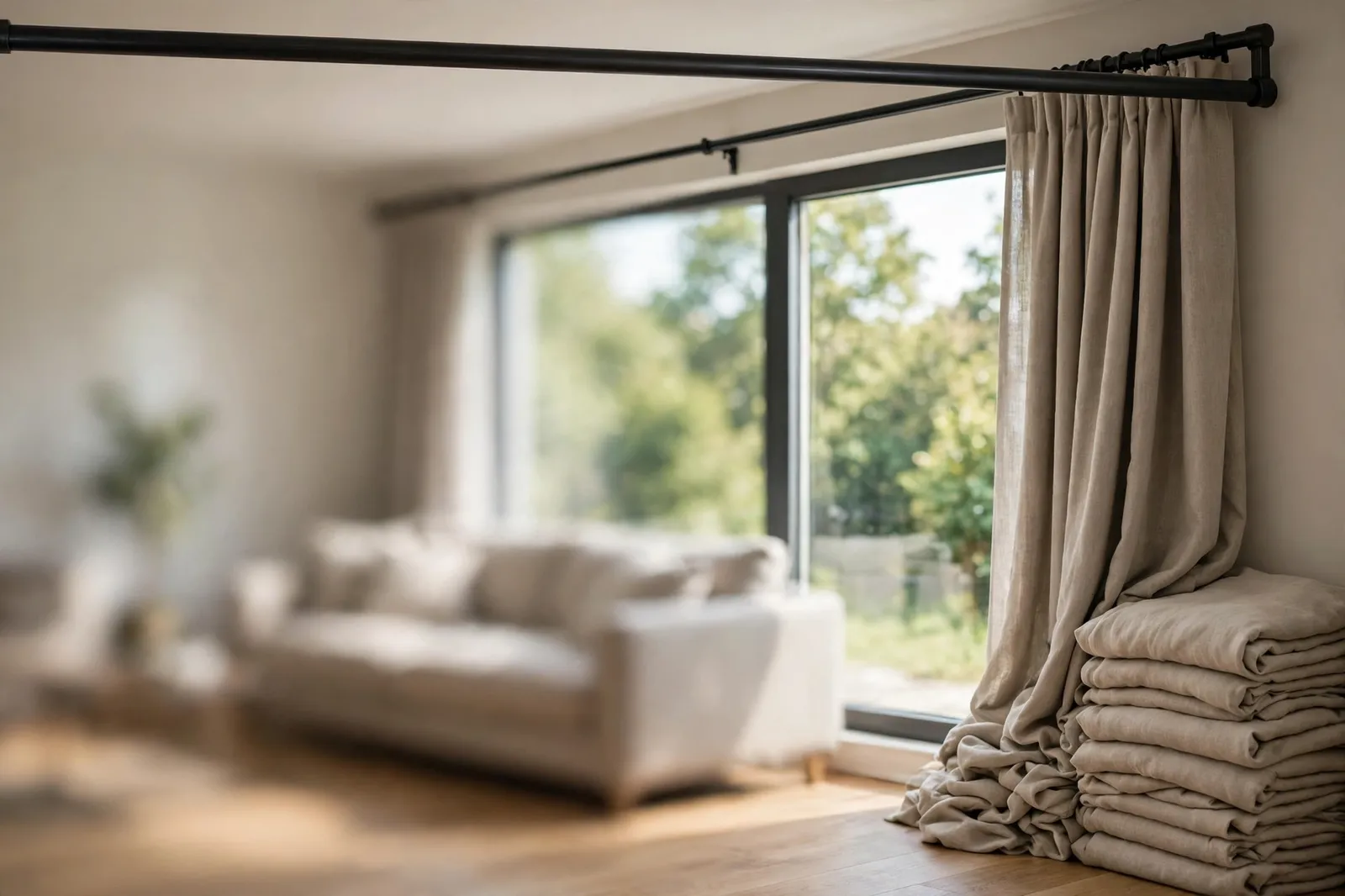
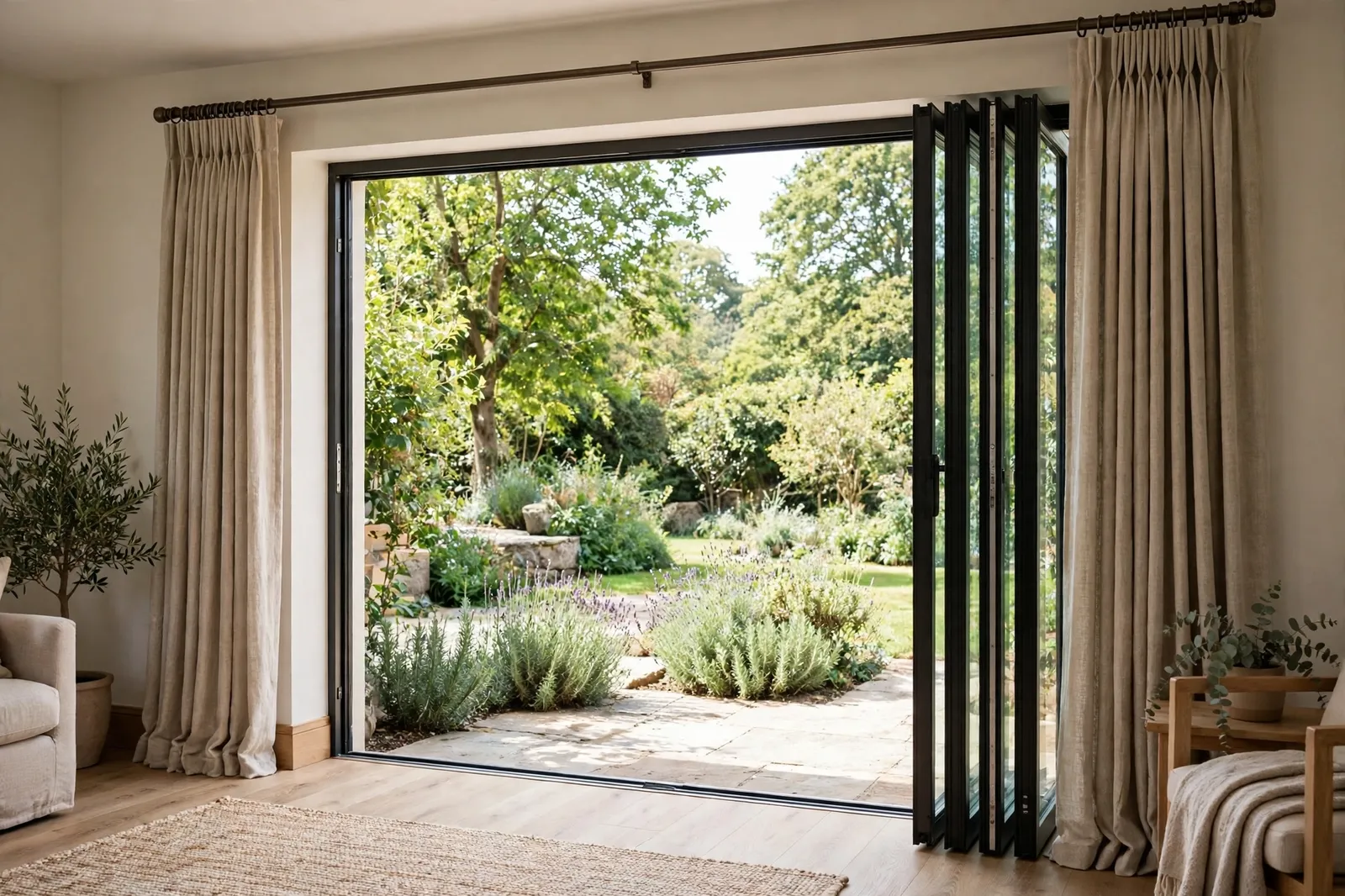
Sliding glass doors need curtains that move. You will be opening and closing them every day, so choose panels that glide smoothly on the rod and a rod that is sturdy enough for the weight. A traverse rod, or a regular rod with rings and clips, makes daily use much easier than panels that stick or bunch up on the rod.
Hang the rod wide enough that the panels stack completely clear of the door when they are open. If part of a panel always hangs over the glass, the doorway will feel narrow and you will keep brushing against the fabric. For a door that gets a lot of sun, a light-filtering fabric works well during the day, with a heavier panel you can pull across at night for privacy.
6. Arched Windows: Work With the Curve, Not Against It
Arched windows are beautiful, and the best curtain ideas for them keep the arch visible. Hanging a straight rod above the arch — at the point where the curve starts, or a little higher — and letting the panels fall on either side is the simplest approach. The arch stays open, the light comes in, and the room still gets the softness of curtains.
What you usually want to avoid is a rod that cuts straight across the middle of the arch, since that hides the shape that makes the window special. If you need privacy on an arched window, a sheer panel across the lower, rectangular part of the window gives you coverage without covering the curve. For a tall arch, long panels that reach the floor will make the whole wall feel grand.

7. Fabric Choices: Sheer vs Blackout vs Linen
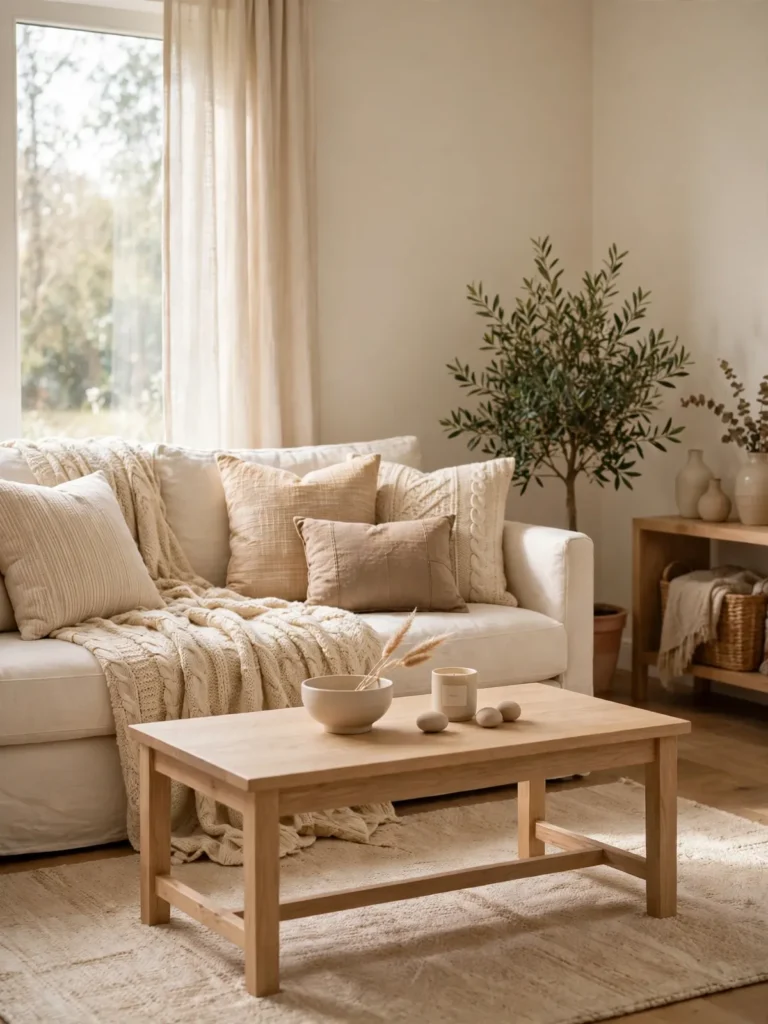
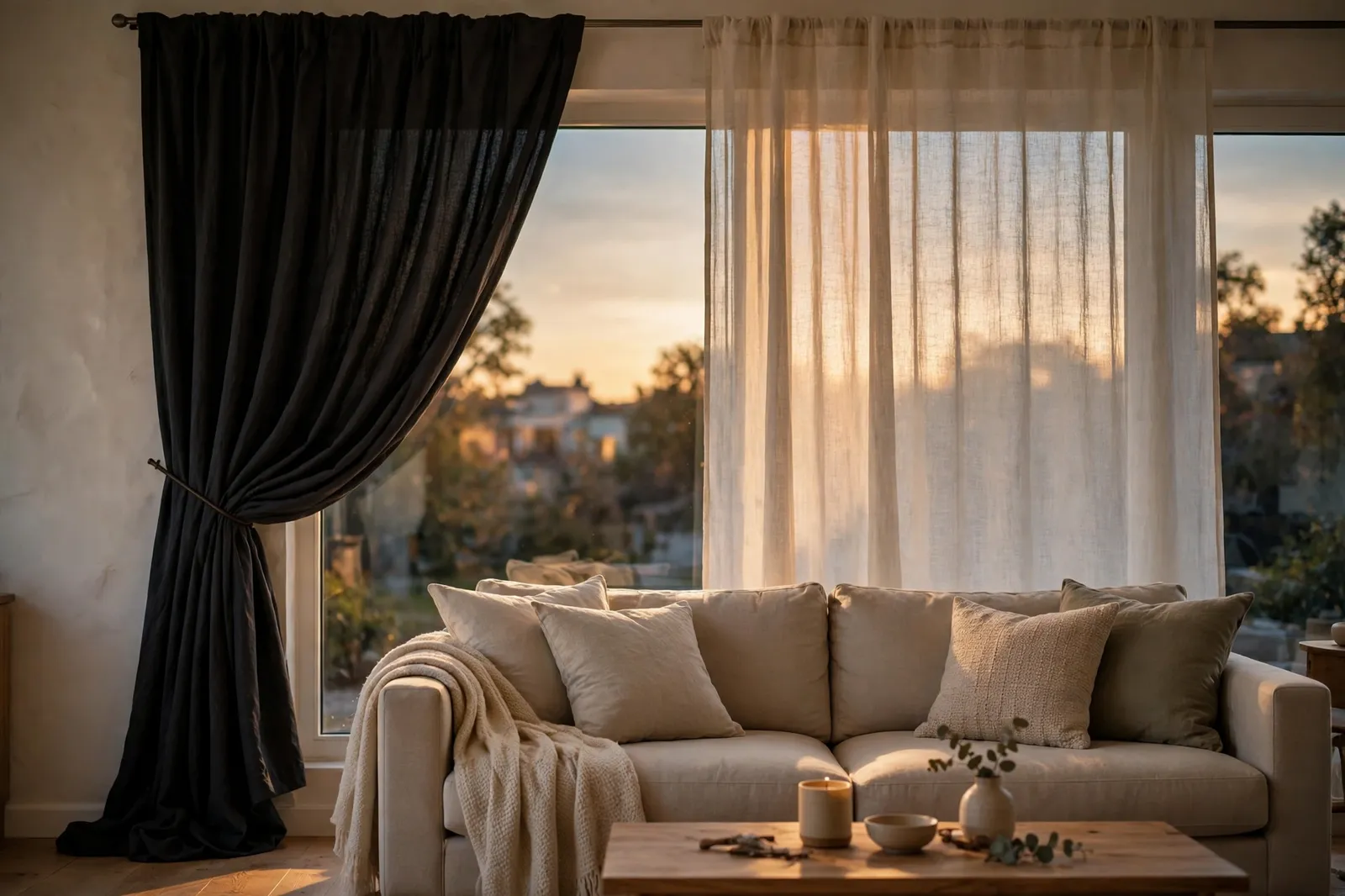
Fabric changes how a curtain looks and how it behaves, so it is worth thinking about before you buy. Sheers are light and airy. They let in daylight, soften the view from outside, and work well in rooms where you want brightness. They do not give much privacy at night, though, so they are best paired with another layer or used in rooms that face a garden rather than a street.
Blackout curtains block most light and give full privacy, which makes them a good pick for rooms that face the street or get harsh afternoon sun. They are heavier, so they need a strong rod. Linen sits in the middle: it filters light softly, hangs with a relaxed, natural drape, and suits most living rooms. Linen wrinkles a bit, but that relaxed look is part of its charm. If you are unsure, linen or a linen blend is a safe, good-looking middle ground.

8. Rods and Hardware: Small Details That Make a Big Difference
Rods and finials are easy to overlook, but they show, so they should suit the room. A simple matte black or brushed nickel rod works in most modern living rooms, while a warm wood rod fits a traditional or farmhouse style. Match the finish to something else in the room — a lamp, a picture frame, or a door handle — and the whole room will feel more pulled together.
Make sure the rod is strong enough for your curtains, especially for heavy blackout panels or wide windows. A rod that sags in the middle ruins the look and makes the curtains hard to move. For very wide windows, use a center support bracket. And check the finials: they stop the rings from sliding off and they add a finished touch, so pick ones that are simple rather than fussy.
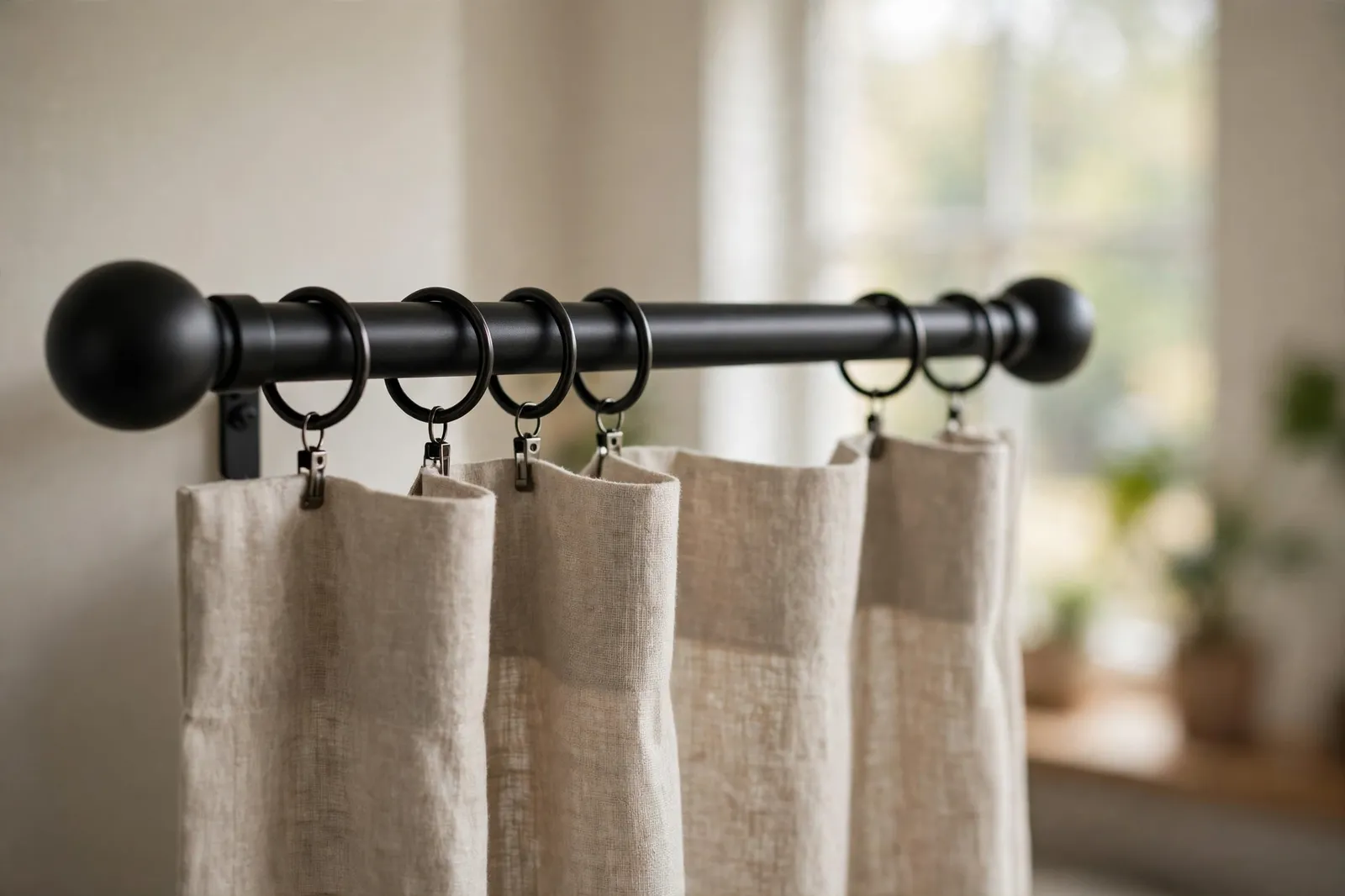
9. Layering Sheers With Drapes: The Best of Both Worlds
Layering is the trick that solves the day-versus-night problem. Hang sheer panels on a rod closest to the window and heavier drapes on a rod in front of them. During the day, keep the drapes open and the sheers closed for soft light and daytime privacy. At night, pull the drapes closed for full privacy and a cozier feel.
You do not need a fancy setup for this. A double rod is the easiest option, and it works on most windows. Keep the colors in the same family — white or cream sheers with drapes in a color from your rug or sofa — so the layers look like they belong together. Layering also lets you change the feel of the room with the seasons: light sheers on their own in summer, and the heavier drapes doing more work in winter.
Frequently Asked Questions
How high should I hang living room curtains?
Hang the rod four to six inches above the window frame, or close to the ceiling if you have room. Higher placement makes the window and the ceiling look taller. Just make sure the panels are long enough to reach the floor from that height, and measure before you buy.
What curtain length looks best in a living room?
For most living rooms, floor length is best — panels that just brush the floor or puddle by about half an inch. This looks finished and elegant. Shorter curtains work only when something sits under the window, like a radiator or a window seat, where long panels would get in the way.
Should curtains touch the floor?
Yes, in most cases they should just touch the floor or puddle very slightly. Curtains that stop a few inches short tend to look like they shrank in the wash. The exception is a window with a seat or a heater underneath, where sill length or just-below-sill length is more practical.
Do sheer curtains give enough privacy at night?
Not on their own. Sheers soften the view during the day, but at night, when the lights are on inside, people outside can see in more easily. For night privacy, layer sheers with heavier drapes you can close, or use blackout panels on windows that face the street.
Related ideas
If you are giving your living room a fresh look, curtains are just one piece of the puzzle. Start with these living room decorating ideas for the big picture, then see how to arrange living room furniture so your seating works with your windows instead of blocking them. For a smaller room, where curtain choices matter even more, these small living room decorating ideas show how to keep the space feeling open and bright. Also explore cozy living room ideas, living room wall decor ideas, coffee table styling ideas, how to choose the right living room rug size, and neutral living room ideas.